Do Dermatology Practices Need Separate Pages for Every Skin Condition? Reading the Condition Pages, the Five Steps and the Sample Consultation Growth
A question-and-answer guide to dermatology SEO in the United States: why skin condition searches go to other clinics, 5 organic steps, a weak vs stronger table, a sample consultation chart, advertising rules and FAQs.
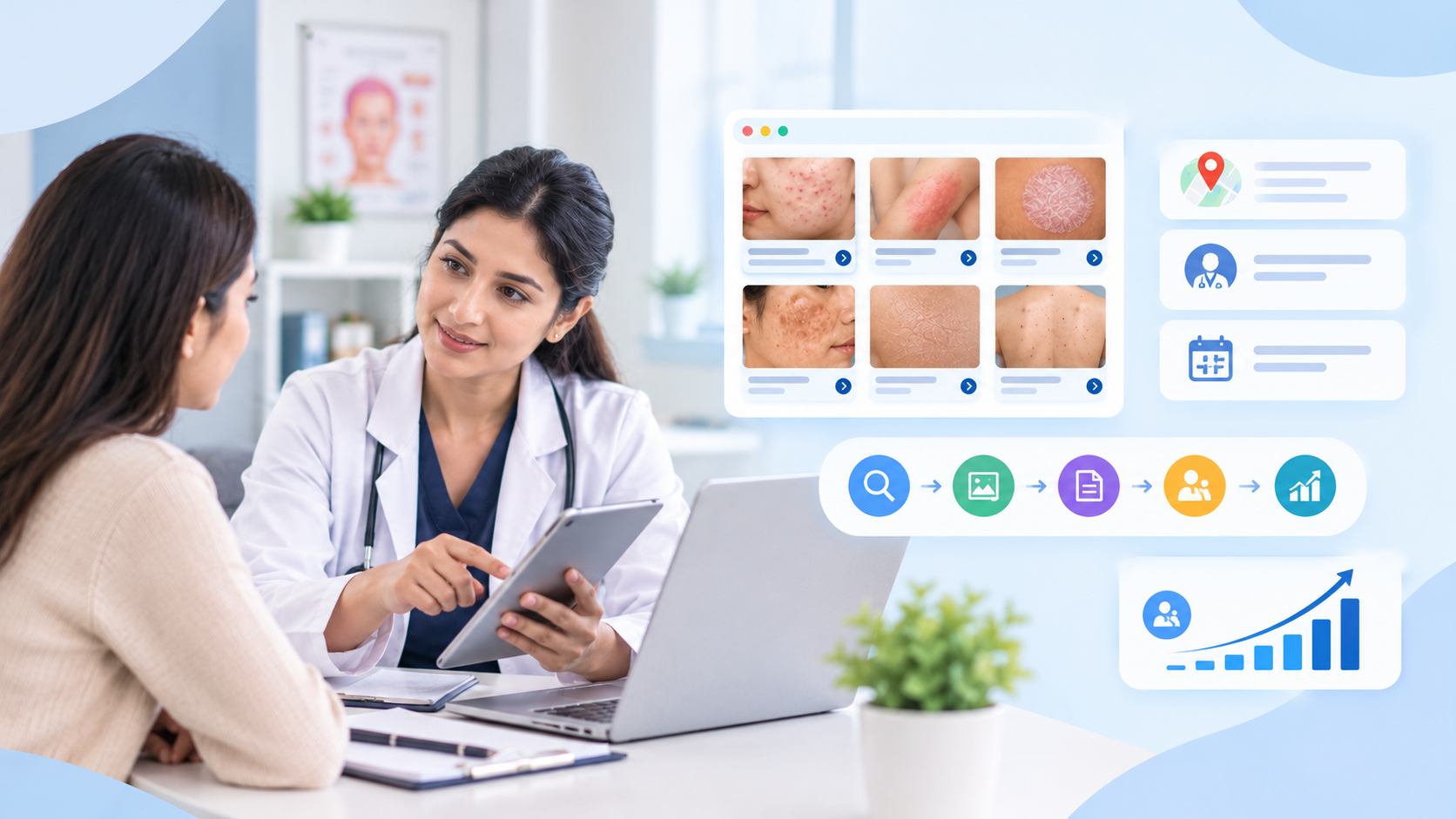
Dermatology practice SEO is the organic work of helping people who search for skin, hair and nail care find your practice, by answering their questions clearly and making the next step easy. In the United States, many people search for a skin concern long before they book: an itchy rash, stubborn acne, a mole that looks different or hair that is thinning. They read a few pages, compare two or three practices and choose the one that explains the problem simply and shows real clinicians. This guide explains, in a question-and-answer format, how a dermatology practice can build organic visibility in five steps, with a sample result and a checklist for advertising and privacy rules. It uses no paid advertising.
Key Findings
- 5 steps build visibility: learning how patients search, a page for each common condition, a strong local profile, easy booking and insurance information, and a monthly review.
- In the illustrative model below, monthly organic consultation requests rise from 15 to 52 when all five steps are in place.
- Dedicated condition pages give the biggest lift in the sample, because people search for their skin problem before they search for a practice.
- 4 numbers are enough to track progress: organic visits to condition pages, calls, consultation requests and visits kept.
- All figures in this article are illustrative examples, not guaranteed results.
What Is Dermatology Practice SEO?
It is SEO that matches the way people describe a skin concern to the page that answers it. Patients search for conditions ("eczema on hands"), treatments ("chemical peel"), situations ("yearly skin check") and places ("dermatologist near me accepting new patients"). Good SEO answers each type with a clear page and a simple next step. It builds on our guides to conditions, treatments and providers and specialty clinic website architecture.
Why Do Many Dermatology Websites Lose Patients?
Most lose patients because the site describes the practice instead of the patient's problem. Common causes include:
- One long "Services" page lists every condition and ranks for almost none.
- Pages use heavy medical language and never say what a first visit includes.
- Clinician pages show names and degrees but not training, focus areas or who they treat.
- Medical and cosmetic services are mixed together, which confuses both patients and search engines.
- Insurance, wait times and booking steps are hard to find on a phone.
How Can Dermatology Practices Build Organic Visibility? 5 Steps
1. Learn How Patients Search
Start with real words. Ask new patients how they searched, list the questions your front desk hears and review your reports in Google Search Console. Group them by medical needs (acne, eczema, psoriasis, skin cancer checks, hair loss) and cosmetic needs, using the method in our guide to healthcare keyword research.
2. Build a Page for Each Common Condition
Give every common concern its own page. Explain the condition in plain words, the treatment options your practice offers, what a visit includes and when to seek care quickly. Add a FAQ section and show a named clinical reviewer, as explained in our guide to healthcare E-E-A-T. Show the clinicians with provider bio pages.
3. Build a Strong Local Profile
Most "near me" decisions happen in the map results. Complete your Google profile with services, photos and accurate hours, as covered in our guide to Google Maps marketing, and keep your details identical across local citations. Write clear title tags and warm meta descriptions for each location.
4. Make Booking and Insurance Easy
Reduce the steps between a search and a booked visit. Offer online booking and a phone number, state which plans you accept using the ideas in insurance accepted pages and design booking pages with healthcare landing page principles. Check accessibility, and add key pages in other languages if your community needs them.
5. Review Results Every Month
A short monthly review shows what to improve next. Check which condition pages bring visits and requests, update hours and wait times, and reply to reviews with care using the principles in healthcare reputation management. Plan seasonal topics such as summer sun safety and winter dry skin with a healthcare content calendar.
| Area | Common weakness | Stronger approach |
|---|---|---|
| Pages | One services page for everything | One page per common condition and treatment |
| Language | Medical jargon | Plain words and a clear first-visit description |
| Clinicians | Names and degrees only | Training, focus areas and who they help |
| Medical vs cosmetic | Mixed together | Separate sections with their own pages |
| Upkeep | Rarely updated | Monthly review and seasonal pages |
How Many Requests Can an Organic Plan Bring? A Sample Graph
In this illustrative example for a three-clinician dermatology practice, monthly organic consultation requests rise from 15 to 52. The bars run from top to bottom in the same order as the table below, and each block (█) equals 3 requests.
| Stage | Organic consultation requests per month | Bar chart |
|---|---|---|
| One services page | 15 | █████ |
| Plus condition pages | 26 | █████████ |
| Plus local profile and clinician pages | 39 | █████████████ |
| Plus easy booking and monthly review | 52 | █████████████████ |
What Should Practices Measure?
Four measures show whether the plan brings patients.
- Organic visits to condition, clinician and location pages.
- Calls, direction requests and online consultation requests.
- Percentage of booked visits that are kept.
- New reviews and the share of new patients from search, tracked with patient retention.
What Advertising and Privacy Rules Apply?
Skin care content needs honest claims and careful images.
- Do not promise cures, guaranteed results or "permanent" outcomes, and say that results vary.
- Use before-and-after photos only with written patient authorization that meets HIPAA, and never retouch them.
- Follow Federal Trade Commission rules on endorsements and reviews, and never post fake or incentivized-without-disclosure reviews.
- Do not diagnose online. Tell readers to have a changing, bleeding or new mole checked by a clinician.
- Describe board certification and training accurately, and follow your state medical board's advertising rules.
Methodology and Limitations
The numbers in this article come from an illustrative model created by Nova Reach Digital to show how each step may affect organic consultation requests. They are not drawn from a published study or a specific practice, and no one can guarantee rankings or appointments. Results depend on location, competition, reviews and site quality. This article is general information and not medical, legal or regulatory advice.
Related Reading
- Local SEO for multi-location providers
- Patient testimonials
- Healthcare video SEO
- Healthcare SEO audit
- Snippet mistakes dental clinics make
Conclusion
Dermatology SEO works when a person with a skin concern lands on a page that explains it kindly, shows real clinicians and makes booking simple. Build condition pages, keep your local profile accurate and review the numbers every month. If you want help with organic growth for a dermatology practice, contact Nova Reach Digital or read more about our healthcare marketing services.
Get Directions
Frequently Asked Questions
Keep reading
What Are the Top Email Marketing Automation Tools for Small Businesses? Reading the Tool Comparison, the Five Steps and the Sample Email Bookings
A question-and-answer guide to choosing among the top email marketing automation tools for small businesses: what they do, why programs underperform, 5 steps, a weak vs stronger table, a sample bookings chart, rules and FAQs.
What Are the Top Social Media Automation Tools for Small Businesses? Reading the Tool Comparison, the Five Steps and the Sample Posting Time
A question-and-answer guide to choosing among the top social media automation tools for small businesses: what to automate, why accounts feel robotic, 5 steps, a weak vs stronger table, a sample time-savings chart, rules and FAQs.
How Do You Choose Among the Top Digital Marketing Agencies in NYC? Reading the Agency Types, the Five Steps and the Sample Cost Per Customer
A question-and-answer guide to choosing among the top digital marketing agencies in NYC: what agencies do, why businesses switch, 5 steps to choose, an agency-types table, a sample cost-per-customer chart, rules and FAQs.
Put These Ideas to Work with NovaReach
Automate your marketing, launch AI voice agents, and keep every lead moving, all from one dashboard.