Hospital SEO Services for Competitive Markets for Medical Practices
How medical practices use hospital SEO services in competitive markets: clear service and provider pages, accurate local listings, reviews, easy booking and privacy-aware reporting.
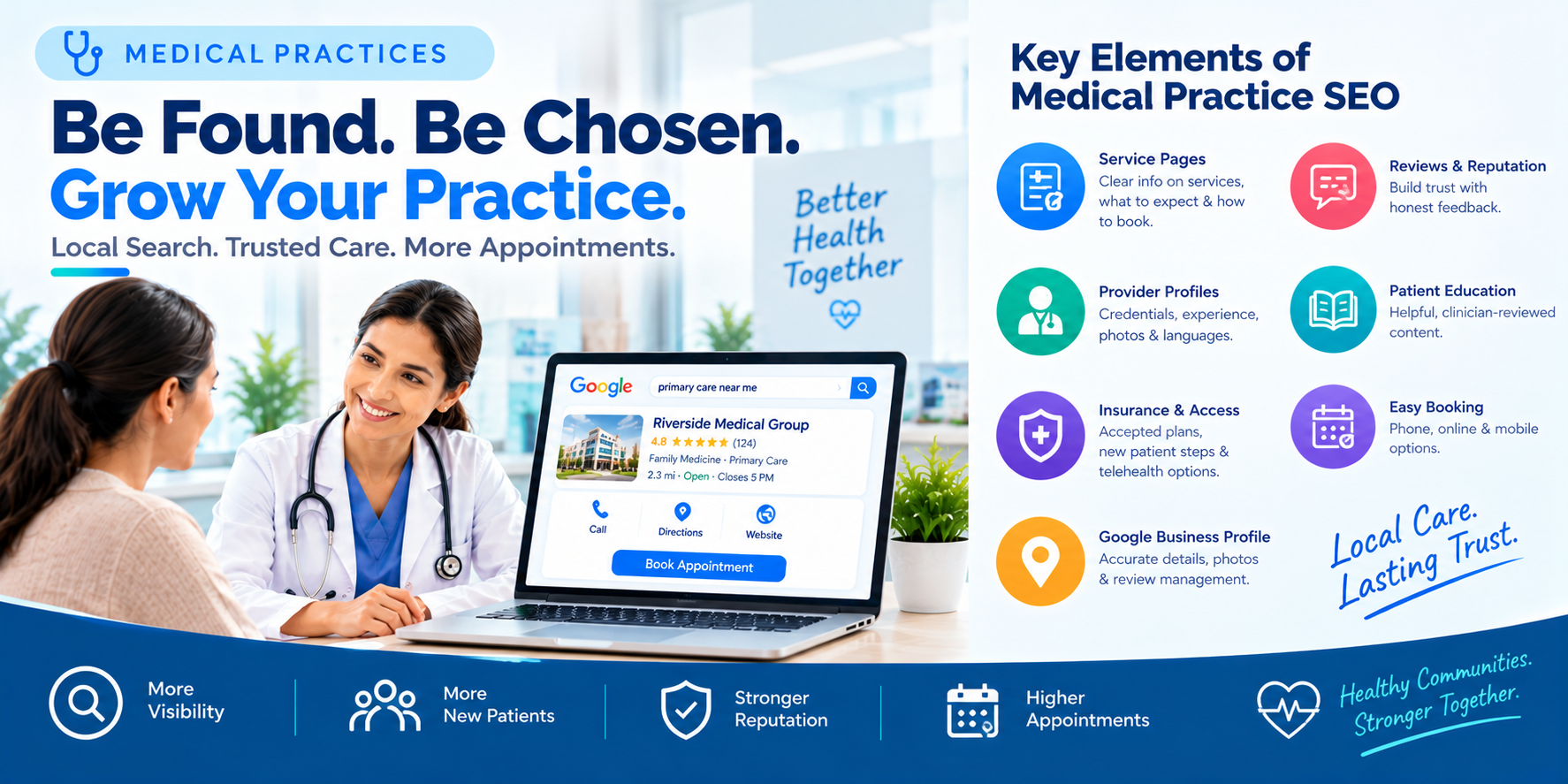
Medical practices live and die by local trust. Whether it is a family medicine group, a pediatric office or a multi-physician practice, most new patients start with a search: a symptom, a service, a doctor or "doctor near me." Hospital SEO services give medical practices a structured way to be found, understood and chosen without relying only on referrals or word of mouth.
This guide explains how medical practices can use hospital SEO services in competitive markets: what to prioritize, how to build credibility, how to make booking easy and how to stay compliant. It is written for medical practices in the USA.
What Are Hospital SEO Services for Medical Practices?
They are search optimization services that help a practice earn visibility for its providers, services and locations. They include technical website work, service and provider pages, local listings, review management, clinician-reviewed content and reporting tied to appointment requests.
What Makes Medical Practice Search Different
- Searches are local: Patients usually want a provider close to home or work.
- Convenience matters: Hours, insurance, languages and online booking influence the choice.
- Provider personality counts: Patients want to know who they will see.
- Reviews carry weight: Ratings and comments are visible in search and maps.
- Lean teams: Many practices have limited time and marketing resources.
Core Elements of Medical Practice SEO
1. Clear Service Pages
Create a page for each major service, such as annual physicals, vaccinations, chronic care visits or well-child checks. Explain who the service is for, what to expect and how to book. Keep medical statements clinician-reviewed.
2. Provider Profiles
Share credentials, focus areas, languages, photos and a short, human introduction. Patients choose people as much as practices.
3. Insurance and Access Information
List accepted insurance, new patient steps, telehealth options and accessibility details. Answering these questions early removes friction.
4. Google Business Profile
Keep name, address, phone number, hours, categories and services accurate. Add real photos and respond to reviews thoughtfully. This is often the most important local asset for a practice.
5. Reviews and Reputation
Ask satisfied patients for feedback through a compliant process. Respond to every review without confirming that the reviewer is a patient or sharing health details.
6. Patient Education Content
Short, plain-language articles on common questions help patients and show expertise. Include review dates and encourage readers to contact the practice for personal advice.
7. Simple Booking Experience
Make phone, form and online scheduling options easy to find on mobile devices. A fast path to booking improves conversion from search.
Where AI Can Help
- Topic research for common patient questions in your community.
- Draft support for educational pages that providers review.
- Review monitoring and reply drafts for staff to edit.
- Listing checks to catch inconsistent practice details.
- Reporting that summarizes calls and appointment requests.
AI should support staff, not replace clinical judgment or personal patient communication.
How to Choose a Hospital SEO Partner
- Look for healthcare experience. They should understand patient privacy and medical content review.
- Ask for a practical plan. It should fit your size, budget and capacity.
- Check local expertise. Maps and reviews are central for practices.
- Review reporting. You should see calls and appointments, not only rankings.
- Understand pricing. Scope and deliverables should be clear.
- Own your accounts. Listings, analytics and content should belong to you.
Roadmap
- Weeks 1 to 4: Audit your website, listings and local competitors.
- Weeks 5 to 12: Fix listings, improve service and provider pages and simplify booking.
- Weeks 13 to 24: Add patient education content and a steady review process.
- Ongoing: Update pages, monitor reviews and report on appointment requests.
Privacy, Compliance and Ethics
- Do not put protected health information in marketing tools without appropriate safeguards.
- Review tracking pixels and forms with your compliance contact.
- Avoid guarantees and claims you cannot support.
- Keep review replies general and respectful.
This is general information, not legal advice.
Metrics to Track
- Appointment requests and calls from organic search.
- Google Business Profile calls, directions and website clicks.
- New patient inquiries by service.
- Review rating and volume.
- Top landing pages and booking completion rate.
Common Mistakes
- Inconsistent listings. Different phone numbers or addresses confuse patients and search engines.
- Thin service pages. One line per service does not answer questions.
- Ignoring reviews. Unanswered feedback hurts trust.
- Hard-to-find booking. Patients leave if scheduling is unclear.
Final Thoughts
Medical practices win in search by being local, clear and easy to book. When providers, services, insurance and reviews are accurate and helpful, patients can choose with confidence. If you would like help planning hospital SEO services for your medical practice, Nova Reach Digital can help you design, launch and optimize them.
Frequently Asked Questions
Keep reading
Hospital SEO Services for Competitive Markets for Local Healthcare Providers
How local healthcare providers use hospital SEO services in competitive markets: accurate listings, Google Business Profile, community service pages, reviews and mobile-first booking.
Hospital SEO Services for Competitive Markets for Hospital Marketing Teams
How hospital marketing teams use hospital SEO services in competitive markets: service line priorities, content standards, clinical review workflows, technical coordination and leadership reporting.
Hospital SEO Services for Competitive Markets for Specialty Clinics
How specialty clinics use hospital SEO services in competitive markets: condition and procedure pages, physician expertise, referral content, local visibility and compliant reputation building.
Put These Ideas to Work with NovaReach
Automate your marketing, launch AI voice agents, and keep every lead moving, all from one dashboard.