AI Marketing Analytics and Campaign Automation: How Small Businesses Turn Data Into Decisions Without a Data Team
Learn how AI marketing analytics and campaign automation help small businesses track the right metrics, test smarter and automate what works, with a simple weekly and monthly optimization loop.
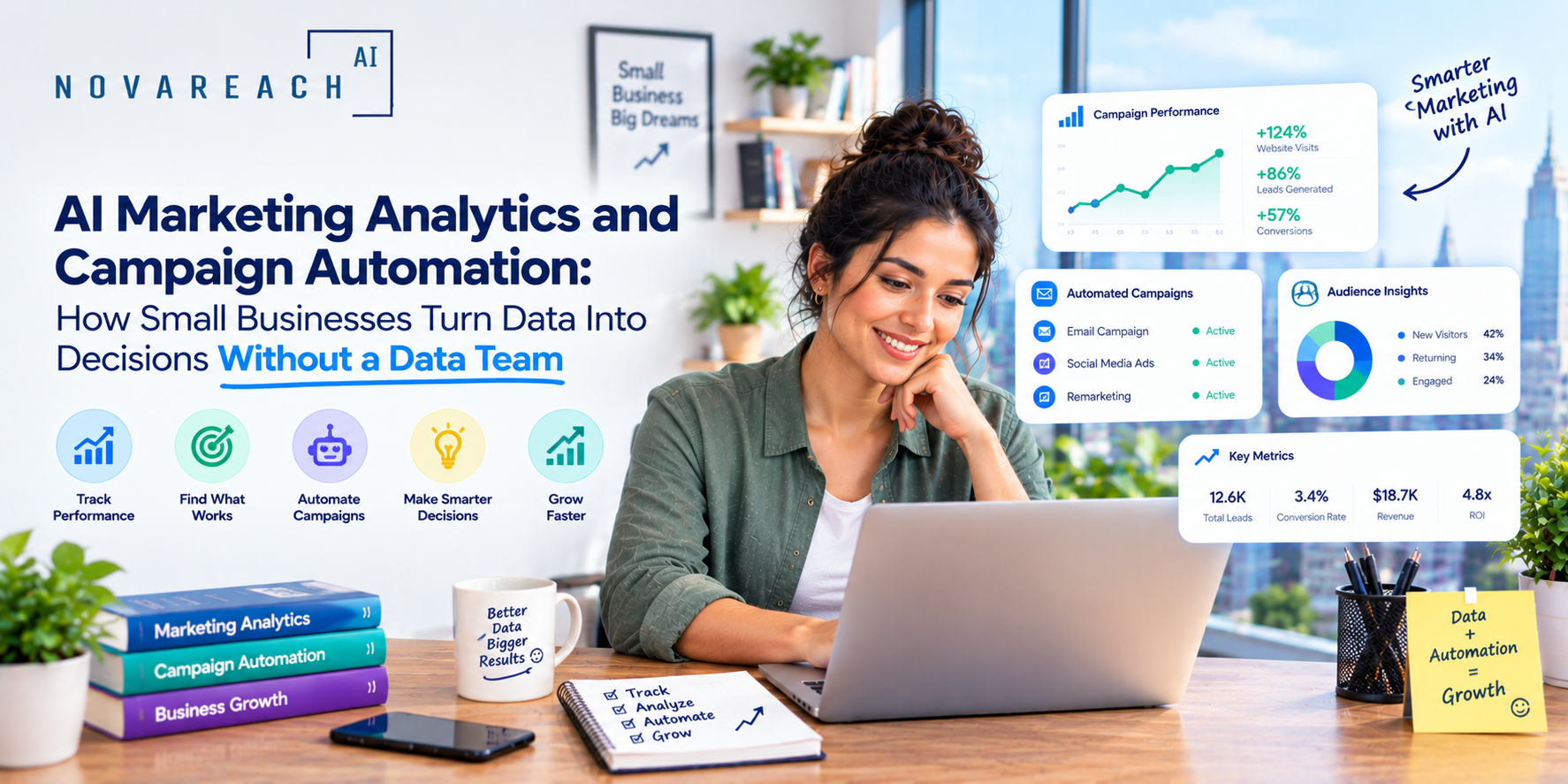
Many small businesses run campaigns the same way: launch something, glance at a few numbers and hope for the best. The problem is not a lack of data. It is the lack of time to turn that data into decisions. AI marketing analytics and AI campaign automation close that gap by collecting results, spotting patterns and triggering the next action automatically.
This guide explains what AI marketing analytics is, how campaign automation works, which metrics deserve your attention, and how a small team can build a simple, reliable reporting and optimization loop.
What Is AI Marketing Analytics?
AI marketing analytics uses machine learning and automation to gather data from your website, ads, email, social channels and CRM, then summarize what is working and what is not. Instead of exporting spreadsheets from five platforms, you get a unified view and plain-language insights such as which campaigns bring the most qualified leads, which pages lose visitors and which segments respond best to your emails.
What Is AI Campaign Automation?
Campaign automation uses rules and AI to run marketing actions without manual effort. Examples include:
- Sending a welcome series when someone joins your list.
- Following up with people who viewed a pricing page but did not inquire.
- Adjusting ad budgets toward better-performing audiences.
- Pausing a campaign when cost per lead rises above a limit.
- Re-engaging customers who have not purchased in a set time.
The strongest setups link analytics and automation. Data reveals an opportunity, and automation acts on it.
The Metrics That Matter
Dashboards often show dozens of numbers. Most small businesses need only a handful:
- Leads: How many inquiries, calls, forms and bookings you receive.
- Cost per lead: What each inquiry costs by channel.
- Lead quality: The share of leads that are a real fit.
- Conversion rate: Leads that become customers.
- Customer acquisition cost: Total spend divided by new customers.
- Revenue by source: Which channels actually make money.
- Response time: How quickly you reply to new leads.
- Retention and repeat rate: How many customers come back.
Vanity metrics such as impressions and followers can be useful context, but they should not drive decisions on their own.
Setting Up Tracking First
AI cannot analyze data you never captured. Before automating anything, make sure the basics are in place:
- Install website analytics and define conversions such as form submissions, calls and bookings.
- Track phone calls from your website and Google Business Profile.
- Use consistent campaign tags on links so you know which email, ad or post drove each visit.
- Connect everything to a CRM so leads can be traced to revenue.
- Respect privacy rules and be transparent about cookies and data use.
Building a Simple Analytics and Optimization Loop
- Weekly snapshot. Review leads, cost per lead and response time. Many tools can send this as an automatic summary.
- Monthly deep dive. Compare channels, audiences and messages. Ask which two actions would improve results most.
- Run small tests. Change one thing at a time, such as a headline, offer or send time, and let it run long enough to be meaningful.
- Automate the winners. Turn successful sequences and audiences into standing campaigns.
- Retire what is not working. Stop spending on channels that do not produce qualified leads.
- Document learnings. Keep a simple log of what you tested and what you found.
How AI Improves Campaign Performance
- Audience segmentation: Grouping customers by behavior, interests or stage so messages feel relevant.
- Send-time optimization: Delivering emails when each person is most likely to open.
- Predictive scoring: Highlighting leads that look most likely to buy.
- Creative testing: Generating and comparing variations of headlines, images and calls to action.
- Anomaly alerts: Warning you when traffic, spend or conversions change suddenly.
- Plain-language reporting: Explaining results so non-analysts can act on them.
Example: A Local Service Business Workflow
Imagine a home-services company running Google Business Profile, a few local ads and an email list. With AI-assisted analytics, the owner sees that calls from Google Maps convert at a much higher rate than form leads from ads, and that leads contacted within ten minutes book far more often. The automation response is simple: boost Google Business Profile activity, add a missed-call text-back, send instant confirmation messages for form leads and shift part of the ad budget to the best-performing service area. Each of those steps is small, but together they improve results without adding workload.
Common Mistakes
- Trusting data without checking tracking. Broken tags and duplicate counts lead to bad decisions.
- Optimizing for clicks instead of customers. Always connect metrics to revenue.
- Changing too many variables. You will not know what caused the change.
- Judging too early. Give tests enough time and volume.
- Over-automating. Review automated campaigns regularly so they do not drift off course.
- Ignoring qualitative feedback. Customer comments and sales calls add context numbers cannot.
Choosing the Right Tools
Look for tools that integrate with what you already use, offer clear dashboards, support automation rules and allow you to export your data. Start with built-in analytics from your website platform, CRM and email service before adding specialized software. The best tool is the one you will actually check every week.
Final Thoughts
AI marketing analytics and campaign automation help small businesses stop guessing. Track the right numbers, review them on a steady schedule, test one change at a time and automate what works. If you want a reporting and automation system built around your goals, Nova Reach Digital can help you set it up and keep it improving.
Frequently Asked Questions
Keep reading
AI Marketing Strategy for Small and Local Businesses: How to Choose AI Marketing Tools and Map the Customer Journey
Learn how to build an AI marketing strategy for your small or local business: set goals, map the customer journey, choose AI marketing tools wisely and follow a practical 90-day roadmap.
AI Marketing Workflow and Business Process Automation: How Small Businesses Save Hours Every Week and Boost Productivity
Learn how AI marketing workflows and business process automation improve marketing efficiency and productivity for small businesses, with a task audit, five workflows to build first and a four-week rollout plan.
Local SEO for Local Businesses: The Complete Guide to Improving Local Search Visibility, Google Maps Rankings and Local Ranking
A practical local SEO guide for US businesses: how local rankings work, the factors that matter most and a 90-day plan to improve local search visibility and Google Maps results.
Put These Ideas to Work with NovaReach
Automate your marketing, launch AI voice agents, and keep every lead moving, all from one dashboard.