What Are the Top AI Answering Services for Doctors and How Do You Choose? Reading the Service Types, the Five Steps and the Sample After-Hours Follow-Up
A question-and-answer guide to the top AI answering services for doctors: what they do, why after-hours calls get lost, 5 steps to choose, a service-types table, a sample follow-up chart, rules and FAQs.
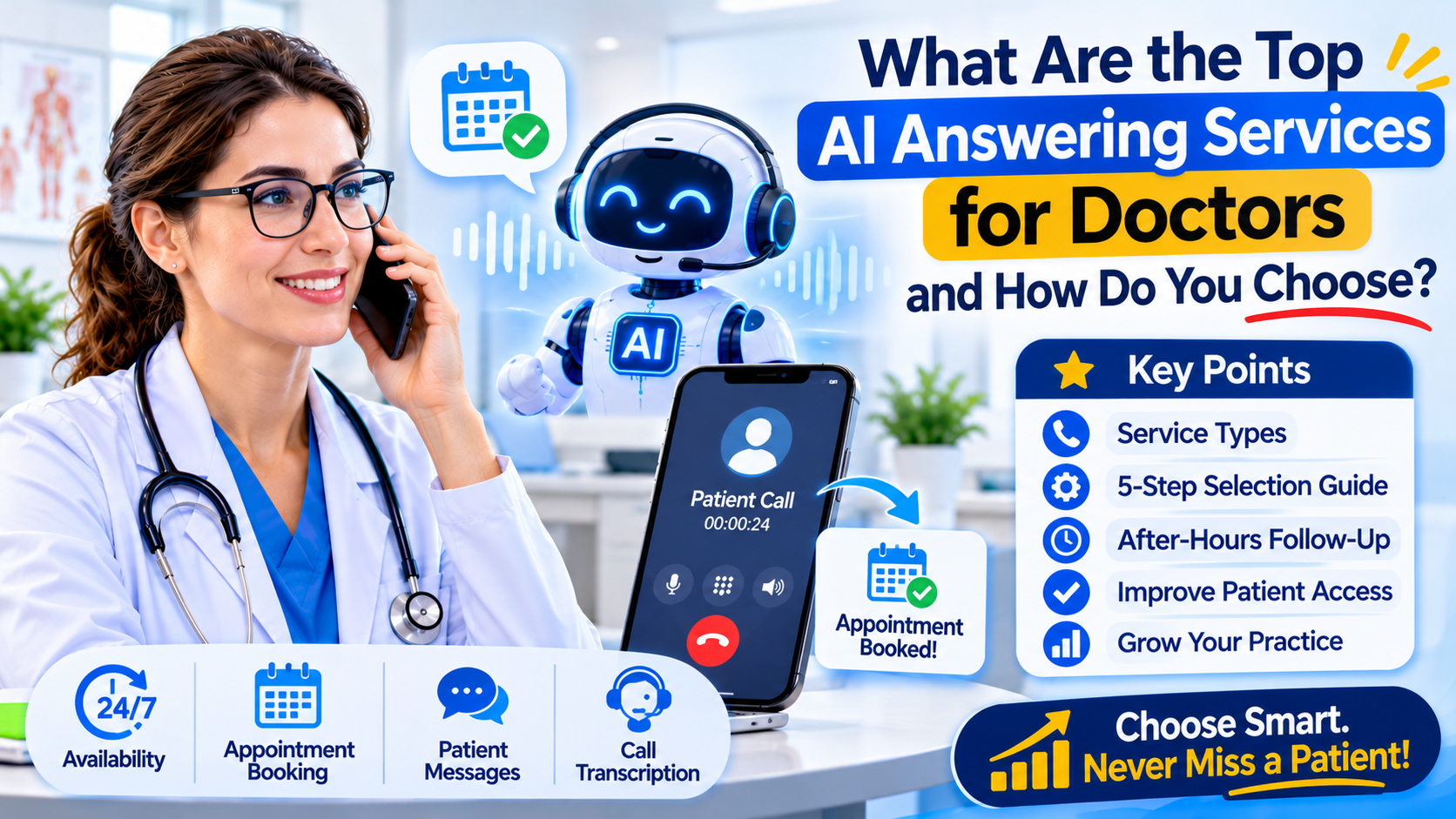
An AI answering service for doctors is a system that picks up calls when the office is closed or busy, takes a structured message, answers simple questions and sends urgent matters to the right person, so that after-hours calls and messages do not sit unanswered until morning. Practices in New York City often receive calls late in the evening, on weekends and during lunch hours, and many patients will not leave a voicemail. This guide explains, in a question-and-answer format, how to compare AI answering services for doctors, what to check, and how to choose in five steps, with a sample after-hours follow-up result and a checklist of rules. It makes no promise of specific results and does not rank any named service.
Key Findings
- 5 steps help you choose well: define your after-hours needs, set urgent-call rules, shortlist services, test with real calls and review messages daily at first.
- In the illustrative model below, the share of after-hours inquiries followed up within an hour of opening rises from 20% to 90% over about three months.
- Urgent-call routing matters most, because clinical emergencies need a human or emergency services, not a script.
- 4 service types exist: traditional human answering, AI answering, hybrid and an on-call physician line.
- All figures in this article are illustrative examples, not guaranteed results.
What Does an AI Answering Service Do for a Practice?
It captures calls you would otherwise miss. It answers with a greeting you approve, asks for the caller's name, number and reason, offers simple information from your approved facts and sends you a summary by text or email. Many patients reach the office from your Google Business Profile, so the same phone number should route to the service after hours. For the daytime side, read our guide to how fast to follow up with a new lead.
Why Do After-Hours Calls Get Lost?
Most are lost because the system only records a message and nobody follows up quickly. Common causes include:
- Patients hang up on voicemail and call another office.
- Messages are checked once a day and callbacks are slow.
- Urgent calls are not separated from routine ones.
- Information in messages is incomplete, so staff call back without context.
- No one reviews missed or abandoned calls.
How Can You Choose a Service? 5 Steps
1. Define Your After-Hours Needs
Know when and why calls come. List your hours, the busiest call times, the kinds of calls you get and who is on call for what.
2. Set Urgent-Call Rules
Decide what counts as urgent. Write clear rules for emergencies, symptoms and medication questions, including when to tell callers to call 911 and when to reach the on-call clinician.
3. Shortlist Services
Compare on the same questions. Ask about language support, handoff, message detail, recordings, pricing and agreements. Our guide to choosing a marketing automation agency you can trust includes a similar vetting approach.
4. Test With Real Calls
Call it yourself. Try routine and urgent scenarios, other languages and unclear speech, then fix the script. A marketing automation service can connect the call summaries to text follow-up and booking.
5. Review Messages Daily at First
Learn from the first weeks. Read messages each morning for the first month, then weekly, and update answers and routing.
| Service type | Strength | Trade-off |
|---|---|---|
| Traditional human answering | Warm, flexible handling | Per-minute cost, variable quality |
| AI answering | Always available, consistent | Needs good scripts and handoffs |
| Hybrid | AI for routine, humans for sensitive calls | More setup and rules |
| On-call physician line | Clinical judgment for urgent matters | Depends on your on-call coverage |
How Many More After-Hours Calls Get Followed Up? A Sample Graph
In this illustrative example for an NYC practice, the share of after-hours inquiries followed up within an hour of opening rises from 20% to 90% over about three months. The bars run from top to bottom in the same order as the table below, and each block (█) equals 5 percentage points.
| Stage | After-hours inquiries followed up within an hour | Bar chart |
|---|---|---|
| Voicemail only | 20% | ████ |
| Month 1: structured messages sent to staff | 50% | ██████████ |
| Month 2: routing and text follow-up | 75% | ███████████████ |
| Month 3: tuned scripts and daily review | 90% | ██████████████████ |
What Should You Measure?
Four measures show whether the service works.
- Share of after-hours inquiries followed up within an hour of opening.
- Appointments booked from after-hours calls.
- Urgent calls routed correctly and how fast.
- Complaints about the service.
What Rules Should You Follow?
Your practice is responsible for the calls it routes.
- Do not use an automated service for emergencies or medical advice, and tell callers to call 911 in an emergency.
- Tell callers when a call is recorded or automated, following the recording rules of the states you serve.
- Messages and recordings may contain patient information. Ask a qualified attorney or compliance adviser how HIPAA applies, and use business associate agreements where a vendor handles them.
- Get consent before marketing texts and honor every opt-out.
- Give callers a clear way to reach a person or the on-call clinician.
Methodology and Limitations
The numbers in this article come from an illustrative model created by Nova Reach Digital to show how each step may affect after-hours follow-up. They are not drawn from a published study or a specific client, and no one can guarantee results. Outcomes depend on your hours, specialty, call volume and routing rules. This article does not rank or endorse any named company. It is general information and not legal, medical, financial or compliance advice.
Related Reading
- AI receptionist for New York small businesses
- What to expect from AI lead generation services
- AI marketing analytics and campaign automation
Conclusion
The right AI answering service for a doctor's office captures after-hours calls, routes urgent matters correctly and makes follow-up easy for staff. Define your needs, set urgent-call rules, shortlist services, test with real calls and review messages daily at first. Make sure the number on your Google Business Profile reaches the service after hours. If you want help setting this up, contact Nova Reach Digital or read more about our marketing services.
Get Directions
Frequently Asked Questions
Keep reading
What Are the Top Missed-Call Text Back Setups for Clinics? Reading the Setup Table, the Five Steps and the Sample Missed-Call Follow-Up
A question-and-answer guide to the top missed-call text back setups for clinics: what it is, why missed calls cost patients, 5 setup steps, a setups table, a sample follow-up chart, texting and privacy rules and FAQs.
What Are the Top AI Chatbots for Healthcare Practices and How Do You Choose? Reading the Build Options, the Five Steps and the Sample Patient Inquiries
A question-and-answer guide to the top AI chatbots for healthcare practices: what they do, why they disappoint, 5 launch steps, a build-options table, a sample patient-inquiry chart, HIPAA and safety rules and FAQs.
Is an AI Receptionist or a Human Answering Service Better for a Medical Office? Reading the Comparison Table, the Five Steps and the Sample Call Mix
A question-and-answer guide comparing an AI receptionist with a human answering service for medical offices: how they differ, why practices choose wrong, 5 decision steps, a comparison table, a sample call-mix chart, rules and FAQs.
Put These Ideas to Work with NovaReach
Automate your marketing, launch AI voice agents, and keep every lead moving, all from one dashboard.