AI Marketing for Hospitals: How Healthcare Organizations Improve Patient Access and Visibility Without Compromising Privacy
A practical guide to AI marketing for hospitals and healthcare organizations: how to improve patient access, search visibility and communication while protecting privacy and following compliance rules.
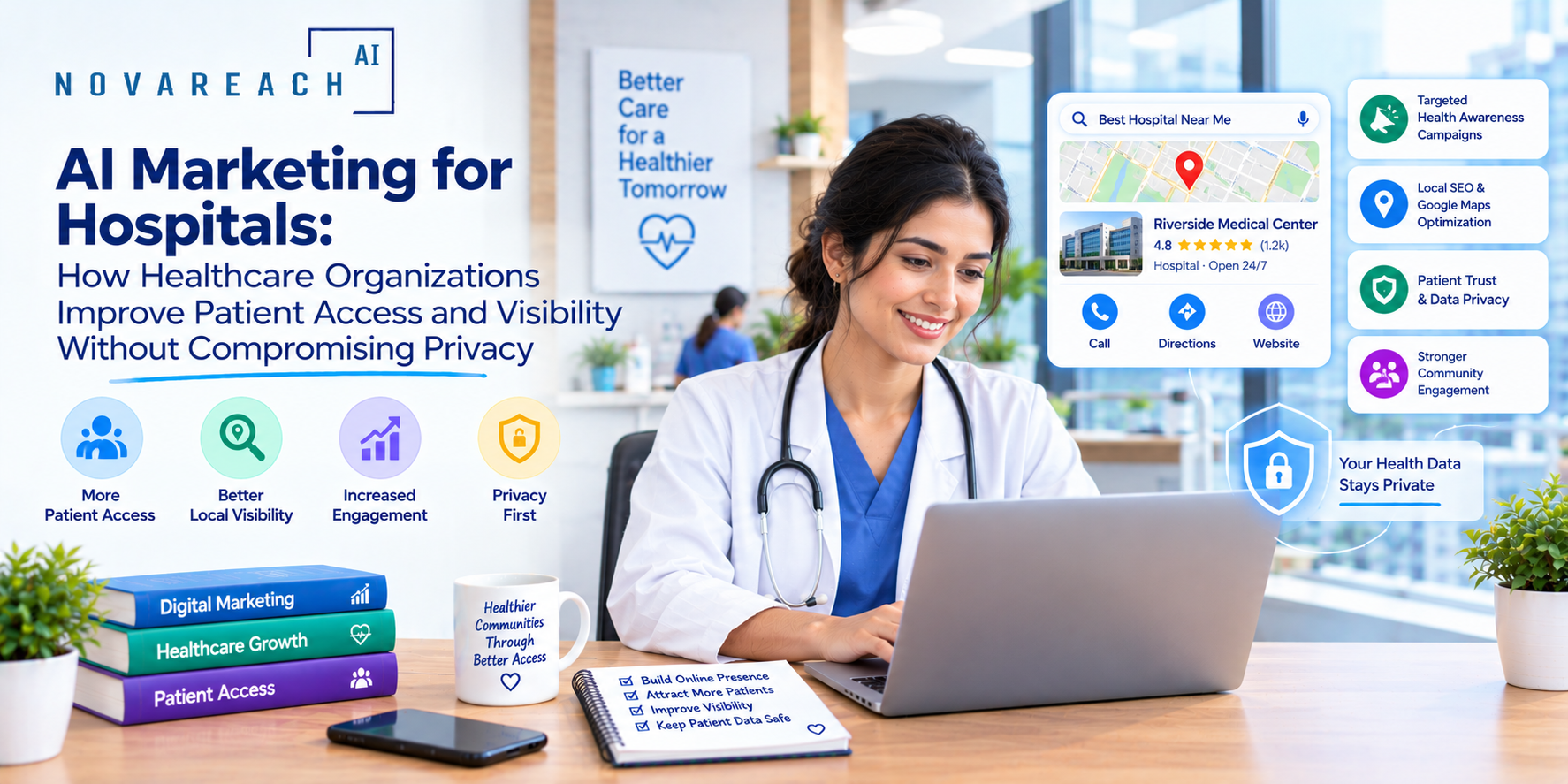
Patients today behave like consumers in every other industry. They search online, compare providers, read reviews, check how quickly someone answers the phone and expect to book without friction. For hospitals and health systems, this means marketing is no longer just brand advertising. It is a core part of how patients find care. AI marketing for hospitals helps healthcare organizations reach the right patients, respond faster and use limited marketing resources more effectively, while keeping patient privacy and trust at the center.
This guide explains how hospitals and healthcare organizations in the USA can use AI-powered marketing responsibly, where it delivers the most value and how to build a plan that fits regulatory realities.
Why Hospitals Need a Modern Marketing Approach
Hospital marketing teams are often small relative to the size of the organization. They support many service lines, locations and physicians at once, and they must balance community outreach, physician referrals, patient experience and recruitment. Meanwhile, patients increasingly begin their journey with a search engine, a map listing or a conversation with an AI assistant. A hospital that is hard to find, slow to respond or unclear about services loses patients to competitors, urgent care centers and telehealth options.
What AI Marketing Means in a Healthcare Setting
AI marketing for hospitals means using artificial intelligence and automation to support the work of marketing and patient access teams. It does not mean replacing clinicians or giving medical advice. Practical uses include:
- Search and content: Researching what patients ask, drafting educational content for clinical review and keeping service pages current.
- Patient access: AI-assisted call answering, appointment scheduling and routing of inquiries to the right department.
- Communication: Automated reminders, follow-ups and educational messages that patients have agreed to receive.
- Reputation: Monitoring reviews and drafting responses for staff to approve.
- Analytics: Connecting marketing activity to inquiries and appointments by service line.
Start With Service Line Priorities
A hospital cannot market everything at once. Begin by choosing the service lines where marketing can make the biggest difference, such as orthopedics, cardiology, women's health, oncology, imaging or primary care. Consider capacity, margin, community need and strategic goals. For each priority service line, define the target patient, the main questions they ask, the referral sources involved and the action you want them to take, such as booking a consultation or a screening.
Six High-Value AI Marketing Applications for Hospitals
1. Search Visibility for Services and Physicians
Patients search for conditions, treatments, symptoms and providers. Strong service line pages, physician profiles, location pages and a well-maintained Google Business Profile for each facility help patients find you. AI can help identify search topics and draft outlines, but every clinical statement must be reviewed by qualified staff.
2. Patient Access and Call Handling
Long hold times and missed calls frustrate patients and push them elsewhere. AI voice and chat assistants can answer routine questions about hours, directions, parking and visitor policies, and help schedule appointments for appropriate services. Urgent or clinical matters should be routed immediately to trained staff or emergency instructions.
3. Appointment Reminders and Follow-Up
Automated reminders reduce no-shows and free staff from repetitive calls. Pre-visit instructions and post-visit check-ins improve the patient experience when they are clear and consented to.
4. Educational Content and Community Outreach
Health education builds trust. AI can help produce first drafts of articles, FAQs and newsletters, but content should always be reviewed by clinicians for accuracy and written in plain language.
5. Reputation Management
Online reviews strongly influence patient choice. Automation can alert the team to new reviews and suggest responses, while staff ensure that replies never reveal protected health information.
6. Marketing Analytics
Dashboards that connect website visits, calls and form submissions to scheduled appointments show which campaigns actually bring patients. This supports smarter budgeting across service lines and locations.
Compliance and Ethics Come First
Healthcare marketing operates under stricter rules than most industries. Keep these principles in mind:
- Protect patient information. Do not enter protected health information into tools that are not approved and covered by the appropriate agreements. Work with your compliance and legal teams before using any new platform.
- Review all medical content. Clinicians should verify accuracy. Avoid guarantees, exaggerated outcomes or misleading claims.
- Respect consent. Follow rules for email, text and phone outreach and make opting out easy.
- Be transparent about AI. Let patients know when they are interacting with an automated assistant and make it easy to reach a person.
- Prioritize accessibility. Websites and materials should be usable by people with disabilities and available in the languages your community needs.
- Avoid sensitive targeting. Be cautious with advertising that could expose or imply health conditions.
This article is general information, not legal advice. Consult qualified legal and compliance professionals for your organization.
A Practical Roadmap
- Audit your presence. Review your website, location listings, reviews and call handling from a patient's perspective.
- Choose priority service lines and define goals for each.
- Fix the basics. Update Google Business Profiles, service pages and contact information, and make sure scheduling is easy on mobile.
- Set up compliant automation. Start with appointment reminders and routine call handling approved by your compliance team.
- Build a content calendar with clinician review built into every step.
- Measure results by service line: calls, appointments, new patients and patient satisfaction.
- Review and refine quarterly.
Metrics That Matter
- New patient appointments by service line.
- Call answer rate and average wait time.
- No-show and cancellation rates.
- Online reviews: rating, volume and response time.
- Website traffic to key service pages and conversion to scheduling.
- Patient satisfaction and referral trends.
Mistakes to Avoid
- Treating AI as a medical advisor. Marketing tools should support access and education, not diagnose or treat.
- Skipping compliance review. One mistake can damage trust and create legal risk.
- Ignoring the patient experience. Marketing promises must match what patients encounter.
- Automating without escalation paths. Patients with urgent needs must reach a human quickly.
- Measuring only clicks. Tie results to appointments and patient outcomes that matter to the organization.
Final Thoughts
AI marketing for hospitals works best when it makes care easier to find and easier to access, supported by accurate information and strong privacy practices. Start with the patient journey, choose a few high-impact service lines and build carefully with compliance at the table. If you would like help designing an AI-powered marketing and patient access strategy for your hospital or healthcare organization, Nova Reach Digital can help you plan and implement it.
Frequently Asked Questions
Keep reading
What Are the Top Missed-Call Text Back Setups for Clinics? Reading the Setup Table, the Five Steps and the Sample Missed-Call Follow-Up
A question-and-answer guide to the top missed-call text back setups for clinics: what it is, why missed calls cost patients, 5 setup steps, a setups table, a sample follow-up chart, texting and privacy rules and FAQs.
What Are the Top AI Chatbots for Healthcare Practices and How Do You Choose? Reading the Build Options, the Five Steps and the Sample Patient Inquiries
A question-and-answer guide to the top AI chatbots for healthcare practices: what they do, why they disappoint, 5 launch steps, a build-options table, a sample patient-inquiry chart, HIPAA and safety rules and FAQs.
What Are the Top AI Answering Services for Doctors and How Do You Choose? Reading the Service Types, the Five Steps and the Sample After-Hours Follow-Up
A question-and-answer guide to the top AI answering services for doctors: what they do, why after-hours calls get lost, 5 steps to choose, a service-types table, a sample follow-up chart, rules and FAQs.
Put These Ideas to Work with NovaReach
Automate your marketing, launch AI voice agents, and keep every lead moving, all from one dashboard.