AI Marketing for Startups: How Founders Use AI for Customer Acquisition and Business Growth on a Lean Budget
A practical guide to AI marketing for startups: how founders can use AI for customer acquisition and business growth with a lean stack, a 30-day plan and the right metrics.
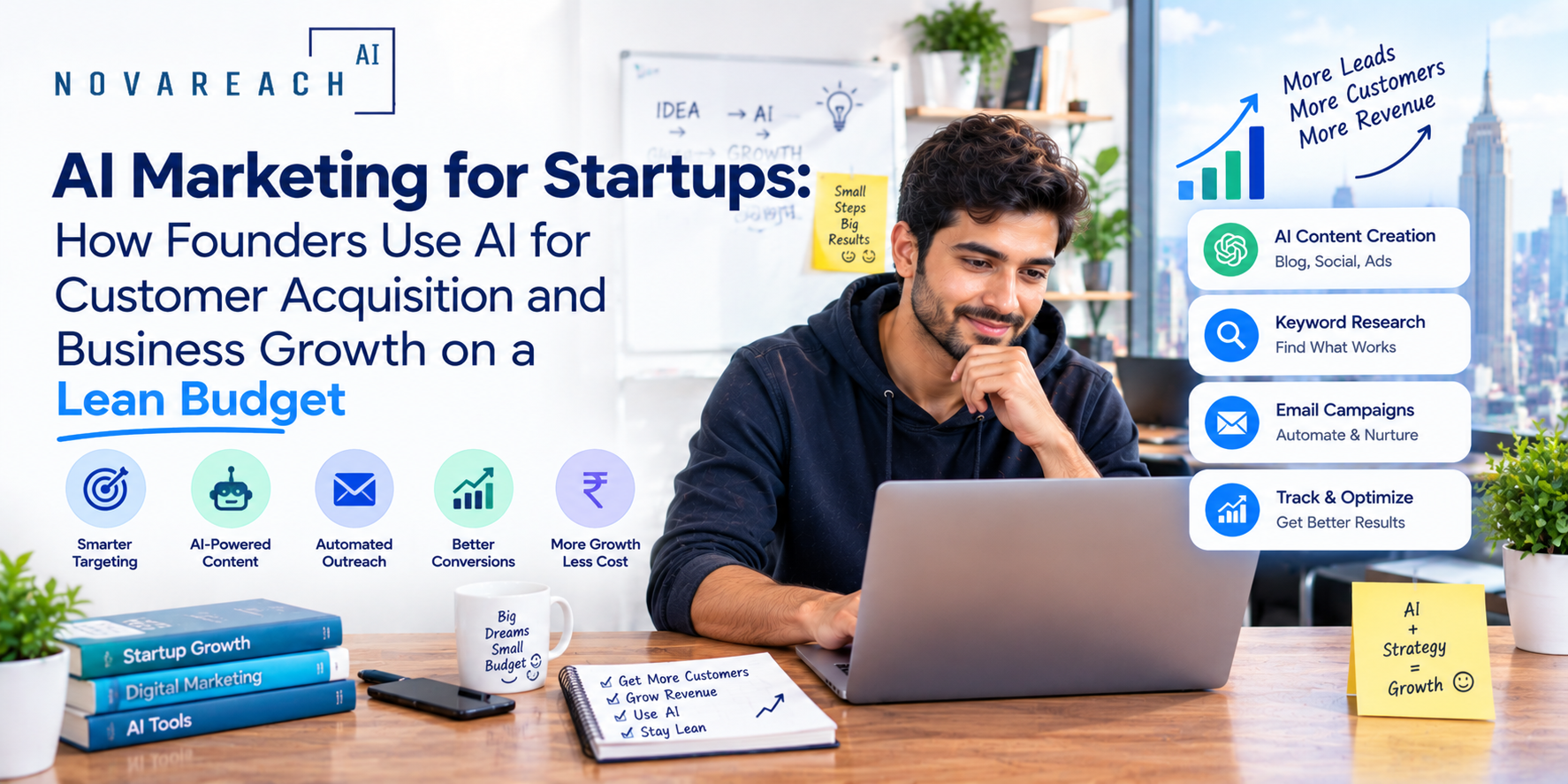
Startups rarely fail because the idea was bad. Many fail because they could not get in front of enough of the right customers before the money ran out. Traditional marketing demands budget, headcount and time, three things an early-stage team does not have. AI marketing for startups changes that equation by letting a very small team run campaigns, create content and follow up with leads at a pace that once required an entire department.
This guide explains how startups can use AI for customer acquisition and business growth, which tasks to automate first, how to build a lean marketing system, and what mistakes to avoid. It is written for founders in the USA who want practical steps rather than hype.
Why AI Marketing Fits the Startup Stage
Startups share a common set of marketing constraints: limited cash, a small team, unproven messaging and pressure to show traction quickly. AI-powered marketing addresses each of these.
- Limited budget: AI tools can draft content, segment audiences and summarize performance for a fraction of the cost of agencies or full-time hires.
- Small team: Automation handles repetitive work such as scheduling, follow-up and reporting, so founders can focus on product and sales conversations.
- Unproven messaging: AI makes it cheap to test multiple headlines, offers and audiences, so you learn what resonates faster.
- Need for speed: Campaigns that once took weeks to plan can be drafted, launched and measured in days.
Start With Customer Clarity, Not Tools
The most common startup mistake is buying software before defining who the product is for. AI can only amplify your strategy, so spend time on the basics first.
- Define your ideal customer. Write down their industry, size, problem, budget and where they look for solutions.
- State the problem in their words. Use real phrases from customer calls, emails and reviews rather than internal jargon.
- Pick one primary channel. Trying five channels at once spreads a small team thin. Start with the one where your customers already spend time.
- Set a single acquisition goal. For example: ten booked demos per month or fifty qualified leads per month.
AI can help with each step. Feed it anonymized customer feedback and ask it to summarize recurring pain points, then use those insights to sharpen your messaging.
A Lean AI Marketing Stack for Startups
You do not need a dozen tools. A practical early-stage stack usually covers five functions:
- Website and landing pages: A clear page with one call to action per audience.
- CRM: One place where every lead and conversation is stored.
- Email and messaging automation: Welcome sequences, nurture messages and reminders.
- Content and SEO support: AI-assisted research, outlines and drafts that you edit.
- Analytics: A simple dashboard showing traffic sources, leads and conversions.
Keep the stack small until each piece is working. Complexity is a hidden cost for small teams.
Five High-Impact Ways Startups Use AI for Customer Acquisition
1. Content That Attracts Search Traffic
Educational content that answers the questions your customers ask can bring in steady organic traffic over time. Use AI to research topics, group keywords and draft outlines, then add your founder expertise, examples and data. Publishing consistently, even one or two quality articles a week, compounds over months.
2. Faster, Smarter Lead Follow-Up
Early-stage deals are often lost to slow response. Set up automatic replies for new inquiries, then a short follow-up sequence that continues until the lead books a call, declines or goes quiet. AI can personalize each message based on the form fields or the page the lead visited.
3. Lead Qualification
Founders waste hours on calls with people who are not a fit. AI chat or voice assistants can ask a few simple questions about budget, timeline and needs, then route serious prospects to your calendar and send others to helpful resources.
4. Rapid Campaign Testing
Use AI to produce several versions of an ad headline, email subject line or landing page section. Test them on small budgets, keep the winners and retire the losers. Over time you build a library of proven messages.
5. Social Proof and Outreach
AI can help you turn customer wins into short case studies, draft outreach messages that reference a prospect's situation and schedule social posts that keep your brand visible while you focus on building.
A 30-Day Startup AI Marketing Plan
- Week 1: Foundation. Define your ideal customer, clean up your website messaging and connect your lead sources to a CRM.
- Week 2: Automation. Build an instant auto-reply, a five-message nurture sequence and a booking link.
- Week 3: Content. Publish two helpful articles targeting the questions your best customers ask, and share them on your primary channel.
- Week 4: Measure and improve. Review leads, response times and conversion rates. Double down on what worked and fix what did not.
Metrics Startups Should Track
- Cost per lead: What you spend to get one inquiry.
- Lead-to-customer rate: The share of leads that become paying customers.
- Customer acquisition cost: Total marketing and sales spend divided by new customers.
- Response time: How long it takes to reply to a new lead.
- Source quality: Which channels bring customers who stay, not just click.
Review these monthly. Numbers matter more than opinions, especially when you are deciding where to spend limited time and money.
Common Mistakes to Avoid
- Automating a broken message. If your offer is unclear, automation will only spread the confusion faster.
- Publishing unedited AI content. Readers and search engines both reward original insight and accuracy.
- Chasing every channel. Depth in one channel beats shallow effort across many.
- Ignoring compliance. Follow email, text and privacy rules, and always include opt-outs.
- Removing the human touch. Early customers want to feel heard. Use automation to create time for real conversations.
When to Bring in Help
Founders can handle the first stage themselves, but there is a point where specialist help pays off: when leads are coming in faster than you can follow up, when your content calendar keeps slipping, or when you are unsure which channel is actually working. A partner who understands both AI automation and small business marketing can set up the system once and keep it running.
Final Thoughts
AI marketing for startups is not about replacing creativity or founder insight. It is about removing the repetitive work that keeps a small team from growing. Start with a clear customer, a lean stack and one channel. Automate follow-up, publish helpful content consistently and measure everything. If you want help building an AI-powered customer acquisition system that fits your stage and budget, the team at Nova Reach Digital is ready to help.
Frequently Asked Questions
Keep reading
AI Marketing Strategy for Small and Local Businesses: How to Choose AI Marketing Tools and Map the Customer Journey
Learn how to build an AI marketing strategy for your small or local business: set goals, map the customer journey, choose AI marketing tools wisely and follow a practical 90-day roadmap.
AI Marketing Workflow and Business Process Automation: How Small Businesses Save Hours Every Week and Boost Productivity
Learn how AI marketing workflows and business process automation improve marketing efficiency and productivity for small businesses, with a task audit, five workflows to build first and a four-week rollout plan.
Local SEO for Local Businesses: The Complete Guide to Improving Local Search Visibility, Google Maps Rankings and Local Ranking
A practical local SEO guide for US businesses: how local rankings work, the factors that matter most and a 90-day plan to improve local search visibility and Google Maps results.
Put These Ideas to Work with NovaReach
Automate your marketing, launch AI voice agents, and keep every lead moving, all from one dashboard.