AI Patient Engagement: How Hospitals and Clinics Use AI Customer Engagement to Stay Connected With Patients Between Visits
Learn how AI-powered patient engagement helps hospitals and clinics communicate better across the patient journey, with consent-based messaging, personalization, human hand-offs and compliance guidance.
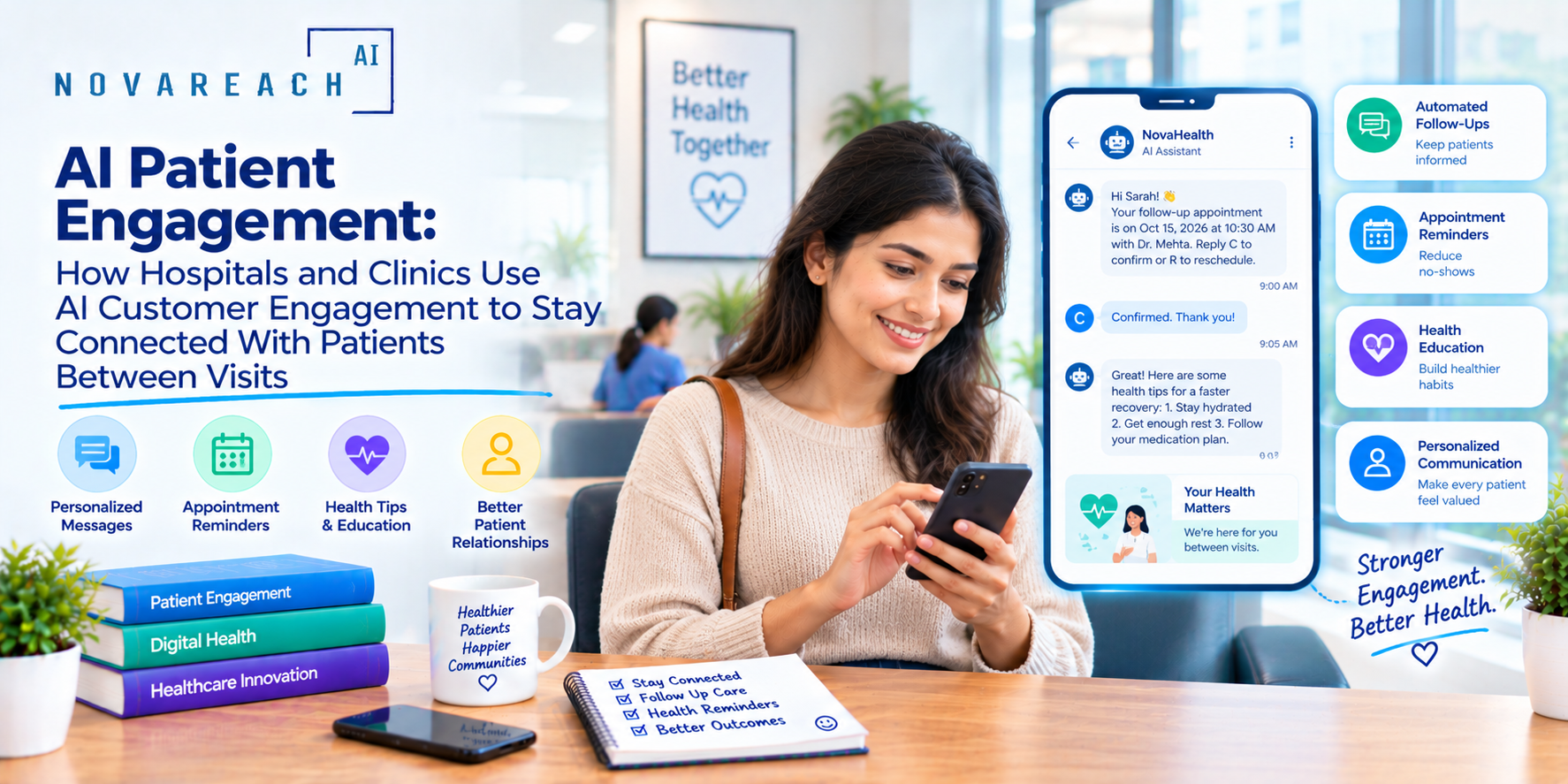
Patient engagement is about more than reminders and newsletters. It is the ongoing relationship between a healthcare organization and the people it serves: how easy it is to reach you, how clearly you communicate, how well you follow up and how supported patients feel between visits. When engagement is strong, patients are more likely to attend appointments, follow care plans, return for follow-up and recommend your organization to others. AI customer engagement tools can help hospitals and clinics deliver timely, personalized communication at scale, as long as they are used with care, consent and human oversight.
This guide explains how AI-driven patient engagement works, where it adds value across the patient journey and how to build a respectful, compliant strategy.
What Is Patient Engagement?
Patient engagement covers every interaction that helps patients take an active role in their health: finding a provider, scheduling, preparing for visits, understanding instructions, receiving follow-up and accessing support. Digital tools such as text messaging, email, patient portals, chat assistants and voice agents extend this engagement beyond the clinic walls. AI can personalize and automate parts of that communication so staff can focus on human conversations that matter most.
Mapping the Patient Journey
A useful way to plan engagement is to map the journey and identify where communication can help:
- Discovery: Patients search for providers and services. Clear website content, accurate listings and fast answers matter.
- Scheduling: Easy online, phone and text booking reduces friction.
- Pre-visit: Reminders, directions, forms and preparation instructions reduce confusion and delays.
- Visit: Smooth check-in and clear communication improve experience.
- Post-visit: Follow-up messages, instructions, surveys and next-step scheduling support continuity of care.
- Ongoing care: Preventive reminders, screening outreach, chronic care check-ins and educational content keep patients connected.
Where AI Adds Value in Patient Engagement
Timely, Relevant Messaging
AI can help determine which messages to send, to whom and when, based on rules your clinical and compliance teams approve. For example, a reminder for an annual wellness visit, a prompt to schedule a recommended screening or a follow-up after discharge instructions. Messages should be relevant, consented and easy to act on.
Two-Way Conversations
Instead of one-way broadcasts, AI chat and text assistants can answer common questions, help patients reschedule and direct them to the right resource. When a question requires clinical judgment, the conversation should be handed off to a qualified staff member quickly.
Personalization
Patients prefer messages that reflect their situation, language and communication preferences. AI can help tailor timing, channel and content, within limits that protect privacy and avoid making sensitive assumptions.
Education and Support Content
Plain-language educational materials help patients understand conditions, procedures and instructions. AI can help draft and adapt content to different reading levels and languages, but clinicians must review it for accuracy before it reaches patients.
Feedback and Experience Surveys
Short post-visit surveys help you learn what is working. AI can summarize themes in comments and flag urgent concerns for follow-up, which supports service recovery and quality improvement.
Reactivation of Patients Overdue for Care
Many patients fall behind on preventive visits and screenings. Automated outreach, followed by personal calls for higher-priority cases, can help bring patients back to care.
Principles for Respectful Engagement
- Consent first. Contact patients through the channels they have agreed to, and make opting out simple.
- Be transparent. When patients interact with an automated assistant, tell them clearly and offer a path to a person.
- Keep it relevant. Send fewer, better messages instead of overwhelming patients.
- Protect sensitive information. Avoid including diagnoses or detailed health information in insecure channels.
- Use plain language. Aim for clear, friendly communication at an accessible reading level.
- Offer multiple channels. Not every patient uses text or email. Provide phone and mail options.
- Support accessibility and language needs. Make messages usable for people with disabilities and available in common community languages.
Compliance Considerations
Healthcare communication is regulated. Work with legal and compliance professionals to address:
- HIPAA requirements for handling protected health information and agreements with vendors.
- Consent and opt-out rules for texts, calls and emails.
- Rules about marketing versus treatment-related communications.
- Record retention and security for message logs and recordings.
This is general information and not legal advice.
Building Your Patient Engagement Plan
- Define goals. Examples include reducing no-shows, increasing screening completion, improving satisfaction scores or reducing call volume for routine questions.
- Segment patients thoughtfully. Group by needs and preferences, such as preventive care due, post-procedure follow-up or new patients, while respecting privacy.
- Choose channels. Match channels to patient preferences and message sensitivity.
- Draft approved message libraries. Create templates reviewed by clinical, marketing and compliance teams.
- Automate carefully. Start with low-risk, high-value messages like reminders and confirmations.
- Build human hand-offs. Define when and how automated conversations transfer to staff.
- Monitor and improve. Review results, patient feedback and opt-out rates regularly.
Metrics to Watch
- Appointment attendance and no-show rates.
- Message delivery, response and opt-out rates.
- Screening and preventive visit completion.
- Patient satisfaction and Net Promoter-style scores.
- Portal activation and use.
- Call volume for routine questions.
- Time to response for patient messages.
Mistakes to Avoid
- Treating patients like leads. Healthcare engagement should feel supportive, not salesy.
- Over-messaging. Too many messages reduce trust and increase opt-outs.
- Making clinical decisions with automation. Clinical judgment should remain with qualified professionals.
- Ignoring digital divides. Provide alternatives for patients without reliable internet or devices.
- No follow-through. If patients respond to a message, a human or system must act on it promptly.
Final Thoughts
AI customer engagement can help healthcare organizations stay connected with patients between visits, reduce friction and support better experiences. The key is to keep patients at the center: obtain consent, protect privacy, communicate clearly and keep qualified people involved. If you would like help designing a patient engagement and communication strategy for your hospital or clinic, Nova Reach Digital can help you plan and implement it.
Frequently Asked Questions
Keep reading
What Are the Top Missed-Call Text Back Setups for Clinics? Reading the Setup Table, the Five Steps and the Sample Missed-Call Follow-Up
A question-and-answer guide to the top missed-call text back setups for clinics: what it is, why missed calls cost patients, 5 setup steps, a setups table, a sample follow-up chart, texting and privacy rules and FAQs.
What Are the Top AI Chatbots for Healthcare Practices and How Do You Choose? Reading the Build Options, the Five Steps and the Sample Patient Inquiries
A question-and-answer guide to the top AI chatbots for healthcare practices: what they do, why they disappoint, 5 launch steps, a build-options table, a sample patient-inquiry chart, HIPAA and safety rules and FAQs.
What Are the Top AI Answering Services for Doctors and How Do You Choose? Reading the Service Types, the Five Steps and the Sample After-Hours Follow-Up
A question-and-answer guide to the top AI answering services for doctors: what they do, why after-hours calls get lost, 5 steps to choose, a service-types table, a sample follow-up chart, rules and FAQs.
Put These Ideas to Work with NovaReach
Automate your marketing, launch AI voice agents, and keep every lead moving, all from one dashboard.