AI Sales Automation and Lead Generation Automation: How Small Businesses Build a Pipeline That Never Drops a Lead
Learn how AI sales automation and lead generation automation help small businesses capture, qualify and follow up with every lead, with a practical pipeline setup, lead scoring tips and key metrics.
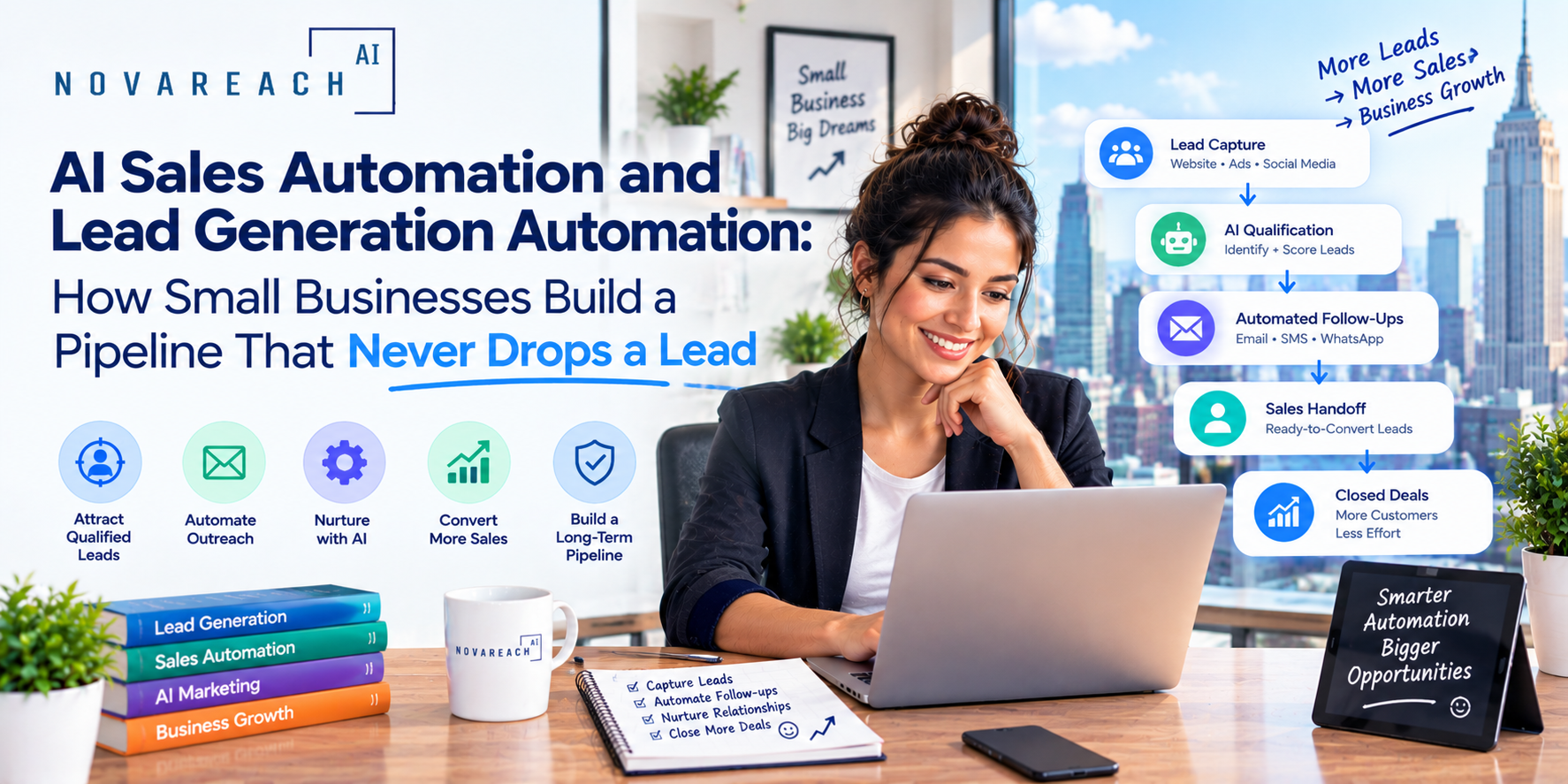
For most small businesses, sales is not limited by demand. It is limited by time. Leads arrive at inconvenient moments, follow-ups slip through the cracks and prospecting gets pushed aside by day-to-day work. AI sales automation and lead generation automation take over the repetitive parts of the process so your team can spend its energy on real conversations and closing deals.
This guide explains how AI sales automation works, how to automate lead generation without hurting your reputation, and how to build a pipeline that moves leads forward consistently.
What Is AI Sales Automation?
AI sales automation uses software and artificial intelligence to handle routine sales tasks: capturing leads, updating records, sending follow-ups, scheduling meetings, scoring prospects and reminding your team about next steps. The goal is not to remove salespeople but to make sure no opportunity is forgotten and every lead gets a timely, relevant response.
What Is Lead Generation Automation?
Lead generation automation focuses on the front of the funnel. It uses tools and workflows to attract, capture and organize potential customers. That can include landing pages with automatic form routing, chat assistants that collect contact details, ad campaigns that feed leads directly into your CRM and email sequences that turn visitors into inquiries.
The Sales Pipeline, Step by Step
Before automating, map your pipeline. A typical small business pipeline looks like this:
- Lead captured: A form, call, text, chat or social message comes in.
- Lead qualified: You confirm that the person fits your service, budget and timeline.
- Meeting or quote scheduled: A call, consultation or estimate is booked.
- Proposal sent: The prospect receives pricing and next steps.
- Follow-up: You check in until they decide.
- Won or lost: The deal closes, or it moves to a long-term nurture list.
Each stage is an opportunity for automation to save time or prevent a lead from going cold.
Where to Automate in the Sales Process
Lead Capture and Routing
Connect your website forms, phone system, chat and social inboxes to one CRM. Automatically tag each lead with its source and assign it to the right person. This alone removes a lot of manual copying and missed inquiries.
Instant Response
Speed is one of the most controllable parts of sales. Set up an automatic text or email confirmation that goes out in seconds, with a booking link and clear next steps. For missed calls, an automatic text-back can keep the conversation alive until someone can call back.
Lead Qualification
AI assistants can ask a few screening questions about the need, location, budget range and timeline. Qualified leads get a calendar link or a call from your team. Others receive helpful resources or are placed in a longer nurture sequence.
Appointment Scheduling
Let prospects book directly into your calendar. Automatic confirmations and reminders reduce no-shows and cut the back-and-forth that slows deals down.
Follow-Up Sequences
Most deals need several touches. Build sequences for new leads, post-meeting follow-up, unanswered proposals and old leads who went quiet. Pause the sequence automatically when the prospect replies.
CRM Hygiene
AI can log calls, summarize conversations, update deal stages and remind reps about stalled opportunities, so your data stays accurate without manual entry.
Automating Lead Generation Responsibly
There is a right way and a wrong way to automate prospecting. The right way builds trust:
- Attract people who asked for help. Content, search visibility, referrals and ads that people opt into tend to produce better leads than mass cold outreach.
- Personalize outreach. Reference the prospect's industry, location or situation rather than sending identical messages.
- Follow the rules. Comply with email, text and call regulations, honor opt-outs and keep proper consent records.
- Avoid spammy volume. Sending thousands of generic messages damages your sender reputation and brand.
- Keep lists clean. Remove bounced and unsubscribed contacts promptly.
Lead Scoring: Focus on the Right Prospects
Lead scoring ranks prospects by how likely they are to buy. AI can combine signals such as pages visited, emails opened, questions asked, company size and past behavior. High-scoring leads trigger an alert for immediate personal follow-up, while lower scores continue through nurture sequences. Review your scoring rules every few months against actual closed deals and adjust as needed.
A Practical Setup for a Small Team
- Choose one CRM and connect every lead source to it.
- Define stages that match how your business really sells.
- Create an instant auto-reply and a missed-call text-back.
- Add a qualification step with three to five simple questions.
- Enable online booking with reminders.
- Build four follow-up sequences: new lead, post-meeting, proposal sent and long-term nurture.
- Set daily task alerts for hot leads and stalled deals.
- Review a weekly pipeline report showing new leads, meetings booked, proposals sent and deals won.
Metrics to Watch
- Speed to lead: Time from inquiry to first response.
- Lead-to-meeting rate: The share of leads who book a call or quote.
- Meeting-to-close rate: How many meetings become customers.
- Sales cycle length: Days from first contact to closed deal.
- Pipeline value: Total potential revenue currently in progress.
- Follow-up completion: Whether every lead received each planned touch.
Mistakes That Cost Deals
- Over-automating the conversation. Once a prospect engages, a human should take over quickly.
- Using generic messages. People notice when emails ignore what they asked about.
- Letting leads sit unassigned. Every lead needs an owner.
- Skipping compliance. Consent and opt-out rules protect both customers and your business.
- Never auditing automations. Check sequences regularly for outdated offers or broken links.
Final Thoughts
AI sales automation and lead generation automation give small businesses a dependable way to capture, qualify and follow up with every opportunity. Automate the repetitive steps, keep people in charge of relationships and measure the pipeline weekly. If you would like a sales automation system built around how your team actually sells, Nova Reach Digital can help design and launch it.
Frequently Asked Questions
Keep reading
AI Marketing Strategy for Small and Local Businesses: How to Choose AI Marketing Tools and Map the Customer Journey
Learn how to build an AI marketing strategy for your small or local business: set goals, map the customer journey, choose AI marketing tools wisely and follow a practical 90-day roadmap.
AI Marketing Workflow and Business Process Automation: How Small Businesses Save Hours Every Week and Boost Productivity
Learn how AI marketing workflows and business process automation improve marketing efficiency and productivity for small businesses, with a task audit, five workflows to build first and a four-week rollout plan.
Local SEO for Local Businesses: The Complete Guide to Improving Local Search Visibility, Google Maps Rankings and Local Ranking
A practical local SEO guide for US businesses: how local rankings work, the factors that matter most and a 90-day plan to improve local search visibility and Google Maps results.
Put These Ideas to Work with NovaReach
Automate your marketing, launch AI voice agents, and keep every lead moving, all from one dashboard.