AI SEO for Small Businesses and Startups: How to Build an SEO Content Strategy That Actually Ranks
A practical guide to AI SEO for small businesses and startups: how to use AI-powered SEO for research, content and local visibility while keeping quality high and results measurable.
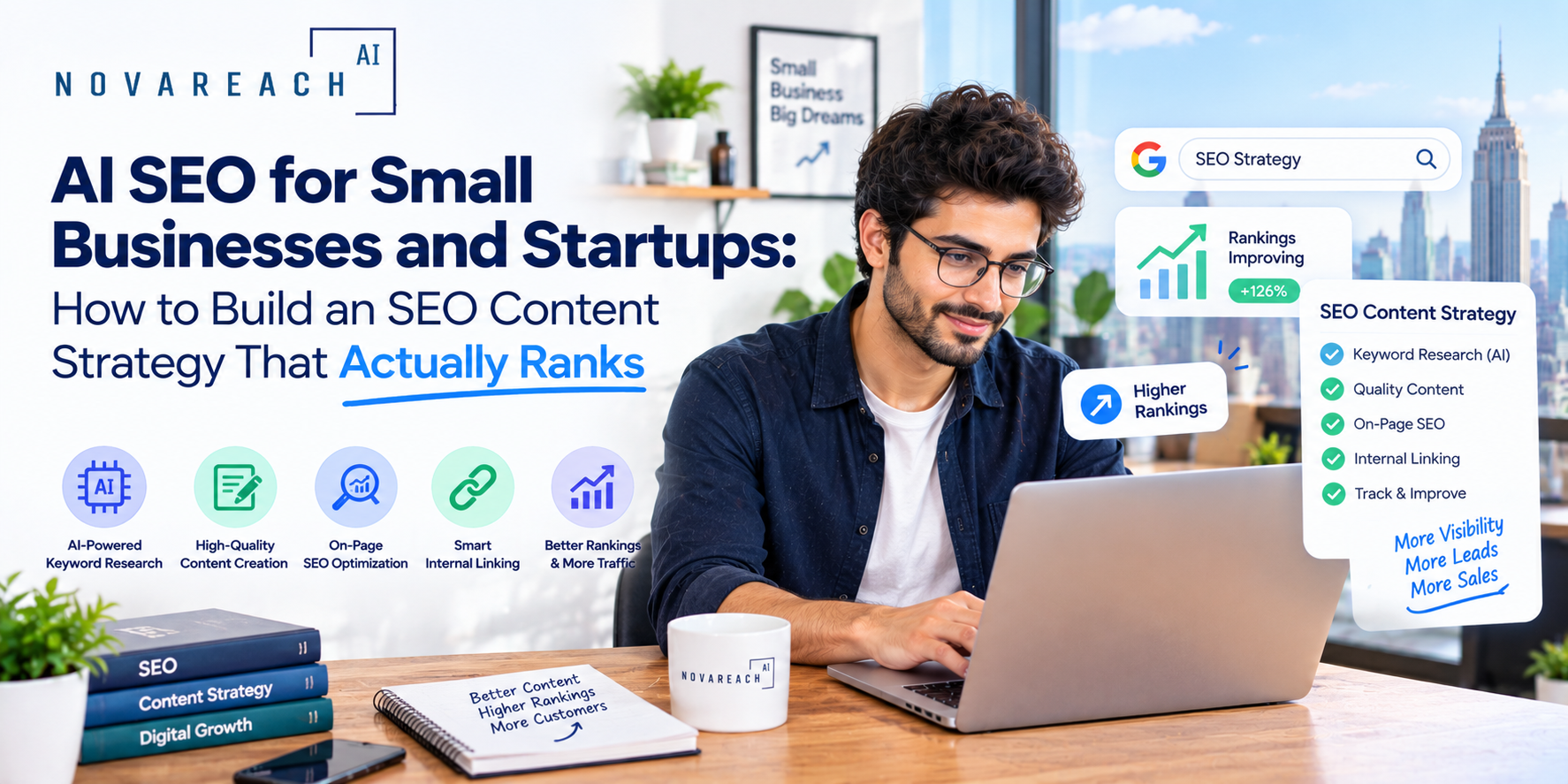
Most small business owners know they should be doing SEO, but few have the hours to research keywords, write consistently and track results. This is where AI SEO helps. Used well, AI-powered SEO shortens the slow parts of the work so a small team can publish better content more often, without giving up quality or accuracy.
What AI SEO Actually Means
AI SEO is not a button that ranks your website. It is a set of ways to use AI tools inside a normal SEO process: finding topics, outlining and drafting content, improving existing pages, and monitoring performance. Search engines reward content that is genuinely useful, accurate and written for people, so AI should speed up your workflow, not replace your judgment.
Where AI Helps Most
- Keyword and topic research: Group related search terms, spot questions customers ask and find gaps competitors have not covered.
- Content outlines: Turn a target keyword into a clear structure with headings that answer real questions.
- First drafts: Produce a starting draft that you then edit with your own experience, examples and local detail.
- On-page optimization: Suggest title tags, meta descriptions, internal links and FAQ sections.
- Content refreshes: Flag older pages that need updated facts or clearer answers.
- Reporting: Summarize which pages are gaining impressions and clicks.
Building an SEO Content Strategy That Works
A strong SEO content strategy for small businesses and startups usually follows a simple hub-and-spoke model. Pick a few core topics that match what you sell, then build supporting articles around them.
- Choose three to five core topics. For example, a local service business might pick its main service, its service area and its most common customer problems.
- Map keywords to intent. Some searches want a quick answer, some want a comparison, and some are ready to buy. Match each page to one intent.
- Create a pillar page for each topic. A thorough guide that supporting posts link back to.
- Publish supporting posts on a schedule. Consistency matters more than bursts of activity.
- Link everything together. Internal links help visitors and search engines understand how your content connects.
- Review and refresh quarterly. Update statistics, fix outdated advice and improve pages that are close to ranking.
Local SEO Still Comes First for Many Businesses
If you serve customers in a specific city or region, local SEO should be part of your plan from day one. Keep your Google Business Profile complete and accurate, make sure your name, address and phone number match across the web, collect genuine reviews and create pages for each location or service area you cover. Local content that mentions real neighborhoods, landmarks and customer situations tends to be more useful than generic text.
Keep a Human in the Loop
AI can produce confident-sounding mistakes, so every piece of content needs a human check. Verify facts, add first-hand experience, remove generic filler and make sure the page answers the question better than what already ranks. Content that adds nothing new is unlikely to stand out, no matter how it was written.
Common Mistakes to Avoid
- Publishing unedited AI text. It often reads as generic and may contain errors.
- Targeting too many keywords on one page. Focus each page on one main topic.
- Ignoring technical basics. Fast loading, mobile-friendly pages and clean site structure still matter.
- Expecting instant results. SEO usually takes months of steady work to show clear gains.
- Skipping measurement. Track rankings, clicks and leads so you know what is working.
A Simple Weekly Routine
You do not need a large team to make progress. A realistic routine looks like this: spend an hour reviewing search performance, use AI to outline and draft two pieces of content, edit them with your own expertise, add internal links and publish. Repeat consistently and the results build over time.
Final Thoughts
AI-powered SEO gives small businesses and startups a way to compete without a big content team. The winning formula is simple: use AI for speed, use people for accuracy and insight, and stay consistent. If you would like help building an SEO and content system that fits your business, the team at Nova Reach Digital can support you.
Frequently Asked Questions
Keep reading
AI Marketing Strategy for Small and Local Businesses: How to Choose AI Marketing Tools and Map the Customer Journey
Learn how to build an AI marketing strategy for your small or local business: set goals, map the customer journey, choose AI marketing tools wisely and follow a practical 90-day roadmap.
AI Marketing Workflow and Business Process Automation: How Small Businesses Save Hours Every Week and Boost Productivity
Learn how AI marketing workflows and business process automation improve marketing efficiency and productivity for small businesses, with a task audit, five workflows to build first and a four-week rollout plan.
Local SEO for Local Businesses: The Complete Guide to Improving Local Search Visibility, Google Maps Rankings and Local Ranking
A practical local SEO guide for US businesses: how local rankings work, the factors that matter most and a 90-day plan to improve local search visibility and Google Maps results.
Put These Ideas to Work with NovaReach
Automate your marketing, launch AI voice agents, and keep every lead moving, all from one dashboard.