AI Voice Agent for Small Businesses: The Complete Guide to Automated Phone Answering, Appointment Booking and Missed-Call Recovery
Learn how an AI voice agent handles automated phone answering, books appointments and qualifies leads for small businesses, plus setup steps, legal considerations and mistakes to avoid.
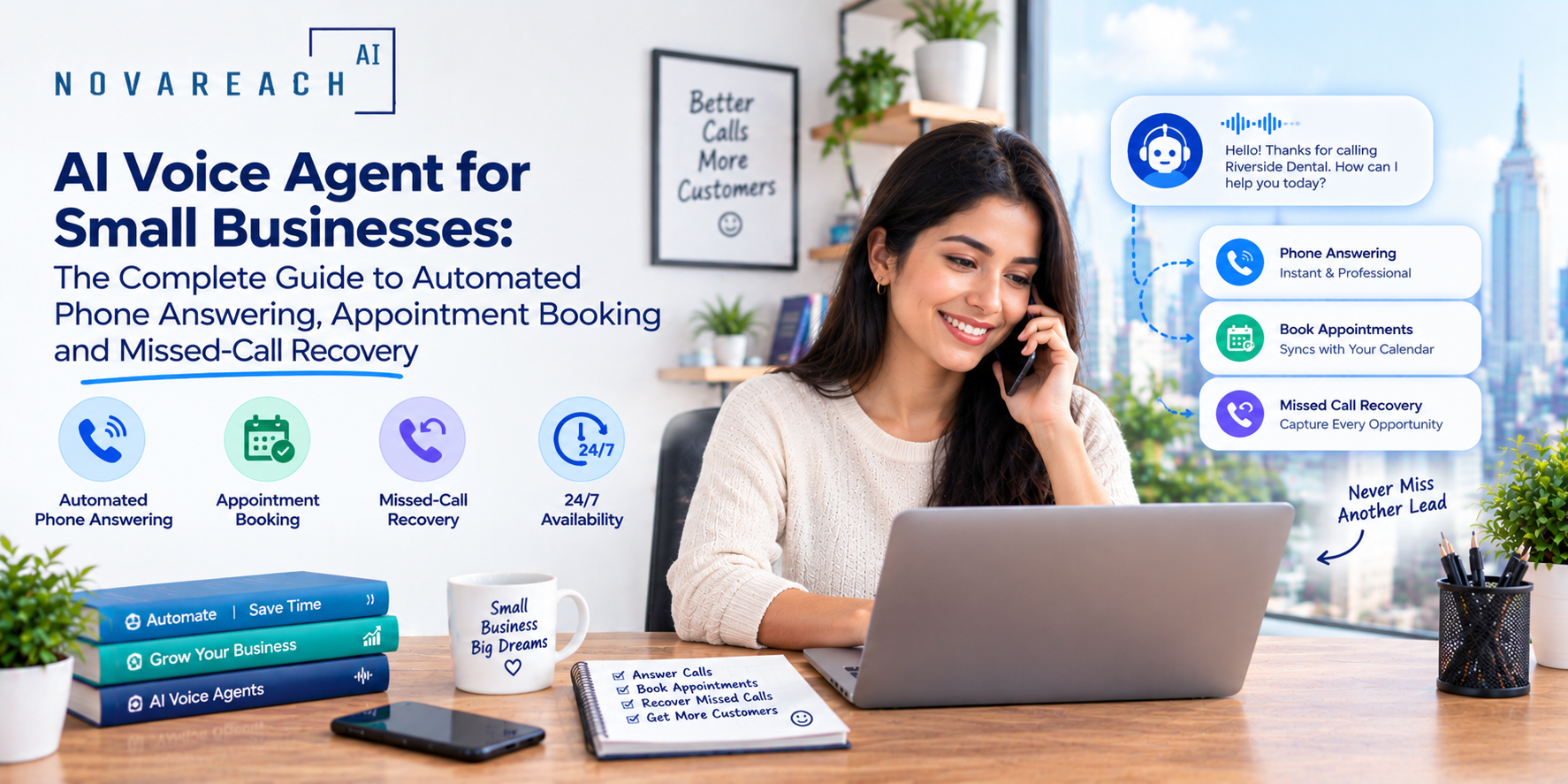
Every unanswered call is a potential customer who may never call back. For small businesses, the phone still drives bookings, quotes and emergency work, yet owners and staff cannot answer every ring. They are with customers, on job sites, in meetings or simply off the clock. An AI voice agent solves this by answering calls instantly, any time of day, and handling routine conversations in a natural voice.
This guide explains how AI voice agents and automated phone answering work, what they can and cannot do, how they differ from voicemail and traditional answering services, and how to set one up so it helps rather than frustrates callers.
What Is an AI Voice Agent?
An AI voice agent is software that can hold a spoken conversation with a caller. It listens, understands what the person wants, responds in natural-sounding speech and takes action, such as booking an appointment, answering a question or passing the call to a human. It works as an AI receptionist: always available, consistent and able to handle many calls at once.
Why Missed Calls Cost So Much
When someone calls a local business, they usually need something now. If no one answers, many will simply try the next company on the list. Missed calls tend to cluster at the worst times: lunch hours, evenings, weekends and busy days. Voicemail helps a little, but many callers will not leave a message, and those who do may be contacted hours later after the moment has passed.
What AI Call Answering Can Do
- Answer every call immediately, including after hours and during peak times.
- Greet callers by your business name and ask how it can help.
- Answer common questions about hours, services, pricing ranges, location and policies.
- Book, reschedule or cancel appointments using your calendar.
- Qualify leads by asking about the need, location and timeline.
- Capture contact details and create a record in your CRM.
- Send text confirmations and follow-ups after the call.
- Transfer urgent or complex calls to a real person.
- Summarize each call and send you the key details.
Missed-Call Automation: A Useful Companion
Even with an AI voice agent, it helps to add missed-call automation. If a call drops or a caller hangs up, an automatic text such as a short apology and a booking link keeps the conversation going. This simple step recovers leads that would otherwise vanish.
AI Voice Agent vs Voicemail vs Answering Service
- Voicemail: Free and simple, but passive. Many callers hang up and callbacks are delayed.
- Live answering service: Human operators can handle nuance, but costs often scale with call volume and scripts can be limited.
- AI voice agent: Available around the clock, handles multiple calls simultaneously, integrates with calendars and CRMs and typically costs less per call, though it needs careful setup and monitoring.
Some businesses combine them: the AI handles routine calls and routes anything sensitive to a person.
Which Businesses Benefit Most?
- Home services: Plumbers, electricians, HVAC and cleaning companies who are on job sites during the day.
- Health and wellness practices: Dental, chiropractic and therapy offices with heavy scheduling needs.
- Professional services: Law, accounting and consulting firms that need intake before consultations.
- Salons, spas and fitness studios: High booking volume and frequent reschedules.
- Restaurants and retail: Questions about hours, reservations and availability.
How to Set Up an AI Voice Agent Step by Step
- List why people call. Review recent calls and group them: booking, pricing questions, directions, urgent issues, existing customers and so on.
- Write clear answers. Prepare accurate information about services, hours, service areas, pricing guidance and policies.
- Define what the AI can do. Decide which tasks it can complete itself and which must go to a human.
- Connect your calendar and CRM. This allows real bookings and clean records instead of messages that need re-entry.
- Set escalation rules. Emergencies, upset customers, legal or medical questions and high-value leads should reach a person quickly.
- Choose a voice and tone. Match your brand: warm and relaxed, or polished and formal.
- Test thoroughly. Call it yourself with different scenarios, accents, background noise and unexpected questions.
- Launch gradually. Start with after-hours calls, then expand to overflow during busy periods and eventually primary answering if results are good.
- Review calls weekly. Listen to recordings or read transcripts, fix gaps and update information as your business changes.
Legal and Trust Considerations
- Call recording laws: Some states require consent from all parties. Include a clear disclosure at the start of calls where needed.
- Transparency: Many businesses choose to tell callers they are speaking with an AI assistant. It builds trust and avoids confusion.
- Privacy and sensitive data: Avoid collecting payment or health details unless your system is built to handle them securely and in compliance with relevant rules.
- Texting rules: Follow consent and opt-out requirements when sending follow-up messages.
Rules vary by state and industry, so confirm requirements with a qualified professional.
Measuring Success
- Answer rate: The percentage of calls answered live.
- Bookings from calls: Appointments created by the AI agent.
- Lead capture rate: Callers whose details were collected.
- Escalation rate: How often calls needed a human.
- Caller satisfaction: Feedback, complaints and repeat calls about the same issue.
- Revenue recovered: Estimated value of jobs booked that would otherwise have been missed.
Common Mistakes to Avoid
- Vague instructions. If the AI does not know your policies, it may guess. Provide clear, accurate information.
- No human fallback. Callers should always be able to reach a person for urgent needs.
- Skipping testing. Real callers behave differently than scripts predict.
- Never reviewing calls. Weekly reviews catch problems early.
- Overpromising. Do not let the AI quote exact prices or make commitments you cannot keep unless it is configured accurately for that.
Final Thoughts
An AI voice agent is one of the most practical forms of automation for small businesses because it protects revenue at the moment a customer reaches out. Start small, keep humans in the loop, review performance regularly and add missed-call text-back for extra coverage. If you want help setting up automated phone answering, AI appointment booking and lead qualification, Nova Reach Digital can design and launch it with you.
Frequently Asked Questions
Keep reading
AI Marketing Strategy for Small and Local Businesses: How to Choose AI Marketing Tools and Map the Customer Journey
Learn how to build an AI marketing strategy for your small or local business: set goals, map the customer journey, choose AI marketing tools wisely and follow a practical 90-day roadmap.
AI Marketing Workflow and Business Process Automation: How Small Businesses Save Hours Every Week and Boost Productivity
Learn how AI marketing workflows and business process automation improve marketing efficiency and productivity for small businesses, with a task audit, five workflows to build first and a four-week rollout plan.
Local SEO for Local Businesses: The Complete Guide to Improving Local Search Visibility, Google Maps Rankings and Local Ranking
A practical local SEO guide for US businesses: how local rankings work, the factors that matter most and a 90-day plan to improve local search visibility and Google Maps results.
Put These Ideas to Work with NovaReach
Automate your marketing, launch AI voice agents, and keep every lead moving, all from one dashboard.