Healthcare Brand Awareness: A Complete Guide for Hospitals and Healthcare Brands
A complete guide to healthcare brand awareness and hospital branding: how to build trust, positioning and visibility across search, content, community and social channels while staying ethical and compliant.
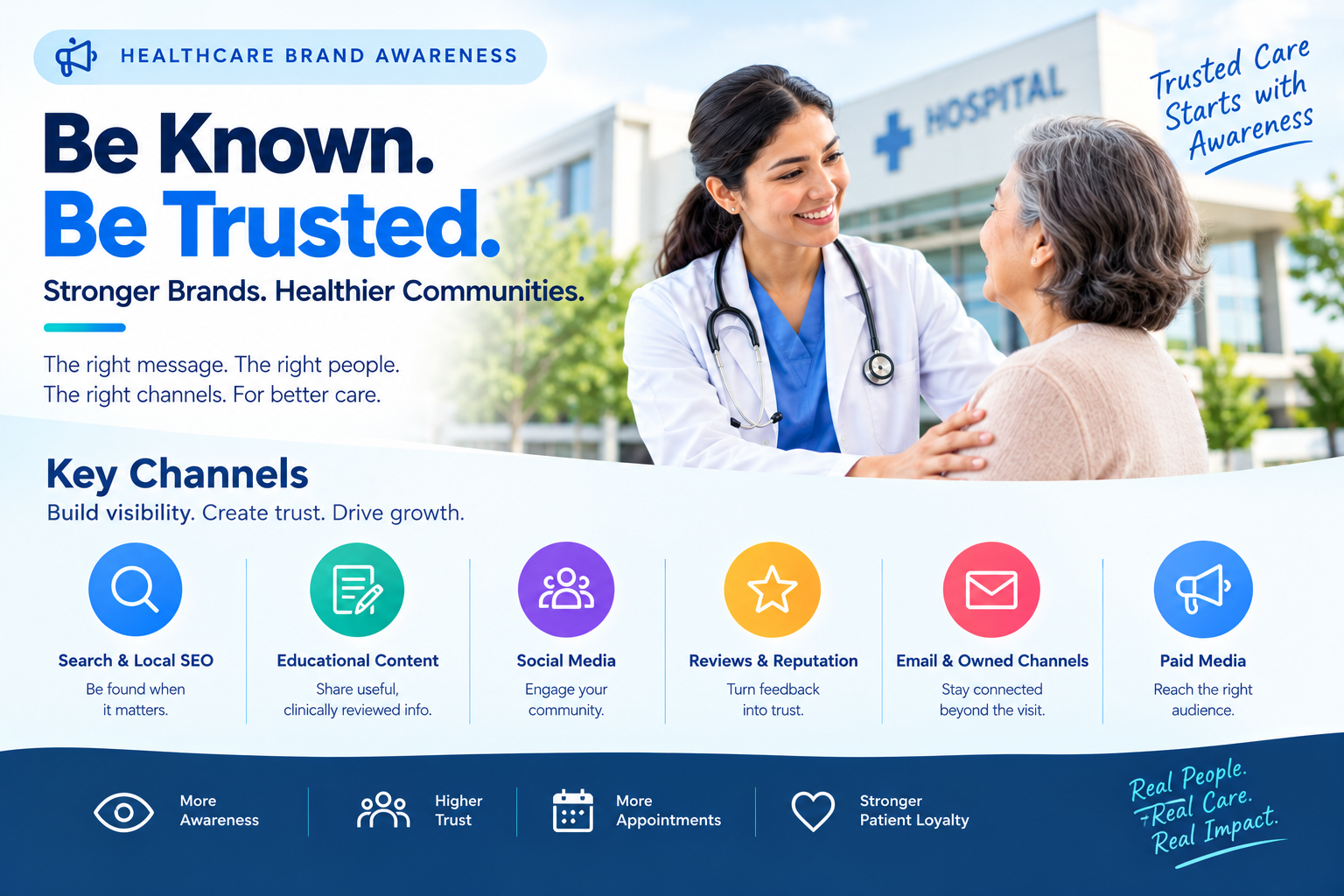
When someone needs care, they usually go to a name they already know and trust. Brand awareness in healthcare is not about flashy slogans. It is about being known, being trusted and being the first place people think of when a health need arises. For hospitals and healthcare brands, awareness shapes which emergency department people head to, which clinic they search for first and which system they recommend to family and friends.
This guide explains what healthcare brand awareness means, how hospital branding works, which channels build trust ethically and how to measure whether your brand is becoming better known and better trusted. It is written for hospitals and healthcare organizations in the USA.
What Is Healthcare Brand Awareness?
Brand awareness is the degree to which people recognize your organization and associate it with certain qualities and services. In healthcare, awareness works alongside reputation. A well-known hospital with a poor reputation will not benefit much. The goal is to be recognized for the right reasons: quality, compassion, access and community commitment.
Why Brand Awareness Matters in Healthcare
- Emergency and urgent decisions: People often choose quickly, and familiarity guides choices.
- Trust in sensitive moments: Patients entrust providers with personal and often frightening situations.
- Referral influence: Primary care providers and community members recommend organizations they know.
- Recruitment: A respected brand helps attract nurses, physicians and staff.
- Community standing: A visible, trusted presence supports partnerships and philanthropy.
- Competitive differentiation: Many providers offer similar services, and brand helps people understand what makes you different.
Hospital Branding: The Foundation
Branding is the sum of what an organization stands for, how it looks and sounds and how it makes people feel. Before spending on awareness campaigns, get the foundation right.
Clarify Your Purpose and Positioning
What do you do best? Who do you serve? What do patients and communities need that you are positioned to provide? Strong positioning is specific and honest. It should be grounded in real strengths, such as a specialty program, a commitment to underserved communities or exceptional access, rather than generic claims about being the best.
Define Your Brand Voice
Healthcare communication should be warm, clear and respectful. Decide on a consistent voice: reassuring but not condescending, professional but human, plain-language rather than jargon-heavy. Document guidelines so every department, location and agency partner speaks consistently.
Build a Consistent Visual Identity
Logos, colors, typography and imagery should be consistent across your website, signage, social media and printed materials. Consistency builds recognition. Make sure designs are accessible, with strong contrast, readable fonts and alternative text for images.
Align the Experience With the Promise
The strongest healthcare brands deliver on what they say. If marketing promises compassion and convenience, scheduling, billing and bedside experience must reflect that. Share patient experience feedback with marketing so messages stay honest.
Channels That Build Healthcare Brand Awareness
Search and Local Visibility
Being found when people search is a form of awareness. Maintain accurate Google Business Profiles for every location, clear service pages and consistent listings. Strong local presence reinforces that your organization is real, nearby and available.
Educational Content
Helpful, clinician-reviewed content builds familiarity and trust over time. Articles, videos, FAQs and community health guides show expertise and care, and they can reach people before they need an appointment.
Social Media
Share health education, introduce care teams, celebrate community events and highlight staff, with proper consent and privacy safeguards. Social media humanizes your brand and extends your reach beyond search.
Community Engagement
Screenings, health fairs, school partnerships, employer wellness programs and local sponsorships build recognition through real contribution. Community presence is one of the most credible forms of healthcare brand building.
Physician and Provider Visibility
People trust people. Strong physician profiles, thought leadership, speaking engagements and media contributions help the brand feel personal and expert.
Public Relations and Media
Local news coverage, expert commentary and positive stories can build credibility. Be careful with privacy, avoid sensationalism and coordinate with compliance and leadership on sensitive topics.
Paid Media
Targeted digital ads, video, out-of-home and local broadcast can increase reach for new services or in new areas. Healthcare advertising comes with legal, platform and ethical considerations, especially regarding sensitive conditions and claims. Review policies and consult compliance before launching campaigns.
Reviews and Reputation
What patients say online shapes awareness and trust. Encourage feedback ethically, respond professionally without disclosing patient information and use reviews to improve operations.
Email and Owned Channels
Newsletters, patient portals and website content keep your brand present with people who have already engaged with you.
Where AI and Automation Help
- Content planning and drafting that clinicians and editors review.
- Social scheduling and monitoring to maintain consistency and flag comments needing attention.
- Review monitoring and reply drafting for compliance-approved edits.
- Audience research to understand what communities ask and need.
- Reporting dashboards that bring together brand metrics across channels.
Keep people responsible for tone, sensitive topics and anything involving patient stories or health claims.
Ethics and Compliance in Healthcare Branding
- Avoid exaggerated or unverifiable claims. Superlatives like "best" or guaranteed outcomes can mislead and may violate advertising rules.
- Protect patient privacy. Obtain proper written authorization before sharing patient stories, photos or testimonials.
- Be truthful and transparent. Accurately represent services, credentials and outcomes.
- Respect communities. Use inclusive language and imagery that reflect the people you serve.
- Review website tracking and advertising practices with compliance teams.
This is general information, not legal advice.
A Step-by-Step Brand Awareness Plan
- Assess your current awareness and reputation. Use patient surveys, community feedback, reviews and search data.
- Define your positioning and messages. Choose two or three themes grounded in real strengths.
- Audit consistency. Review your website, signage, social profiles and listings for consistent branding and accurate information.
- Prioritize channels. Combine local search, content, community engagement and one or two paid or social channels.
- Create a content and community calendar with clinical and compliance review built in.
- Launch and monitor. Track results and adapt.
- Reassess quarterly. Brand building takes time, so measure progress over months rather than weeks.
How to Measure Awareness
- Branded search volume: How often people search for your name.
- Direct and organic traffic to your website.
- Social reach, engagement and follower growth within your service area.
- Surveys: Aided and unaided awareness among community members, and what they associate with your brand.
- Review volume and sentiment.
- Media mentions and community event participation.
- Downstream results: Calls, appointment requests and new patient growth, understanding that awareness effects are often indirect.
Common Mistakes
- Focusing on logos instead of experience. Brand is what patients feel, not only what they see.
- Inconsistent messaging across locations.
- Chasing impressions without trust. Visibility alone does not build confidence.
- Overpromising. Claims that outpace reality damage trust.
- Ignoring internal audiences. Staff are brand ambassadors.
- Expecting instant results. Awareness grows through steady, consistent effort.
Final Thoughts
Healthcare brand awareness is built on trust: clear positioning, consistent communication, community presence and an experience that matches the promise. Focus on being helpful and honest, and let visibility grow from that foundation. If you would like help developing a hospital branding and awareness strategy, Nova Reach Digital can help you plan and execute it with care.
Frequently Asked Questions
Keep reading
What Are the Top Missed-Call Text Back Setups for Clinics? Reading the Setup Table, the Five Steps and the Sample Missed-Call Follow-Up
A question-and-answer guide to the top missed-call text back setups for clinics: what it is, why missed calls cost patients, 5 setup steps, a setups table, a sample follow-up chart, texting and privacy rules and FAQs.
What Are the Top AI Chatbots for Healthcare Practices and How Do You Choose? Reading the Build Options, the Five Steps and the Sample Patient Inquiries
A question-and-answer guide to the top AI chatbots for healthcare practices: what they do, why they disappoint, 5 launch steps, a build-options table, a sample patient-inquiry chart, HIPAA and safety rules and FAQs.
What Are the Top AI Answering Services for Doctors and How Do You Choose? Reading the Service Types, the Five Steps and the Sample After-Hours Follow-Up
A question-and-answer guide to the top AI answering services for doctors: what they do, why after-hours calls get lost, 5 steps to choose, a service-types table, a sample follow-up chart, rules and FAQs.
Put These Ideas to Work with NovaReach
Automate your marketing, launch AI voice agents, and keep every lead moving, all from one dashboard.