Healthcare Content Marketing With AI: How Hospitals and Clinics Create Accurate, Patient-Friendly Content That Ranks
Learn how hospitals and clinics can use AI for healthcare content marketing safely, with clinical review workflows, plain-language writing, SEO best practices and compliance guidance.
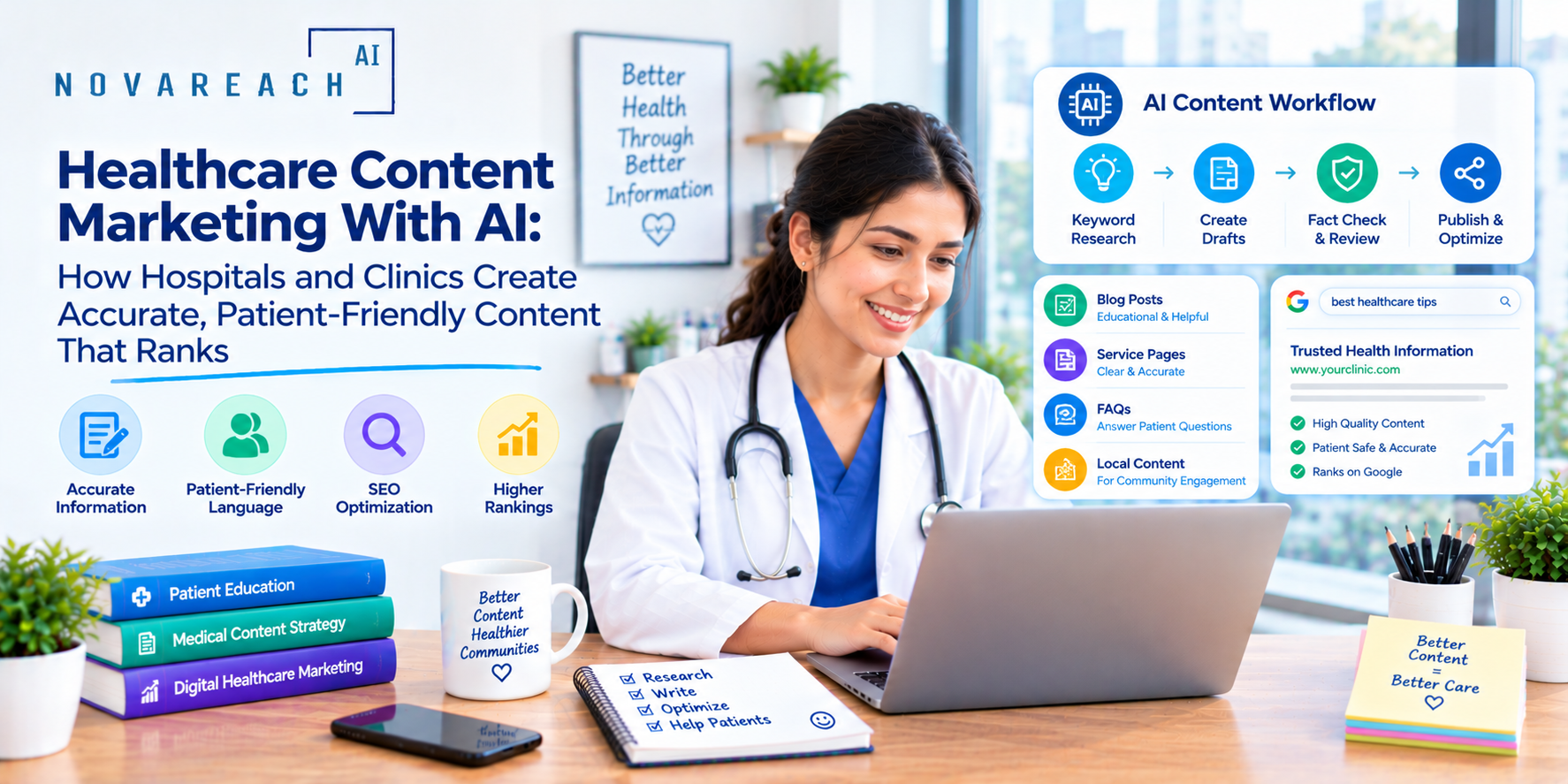
Few topics matter more to people than their health, and few topics are held to a higher standard online. When a patient searches for symptoms, treatments or providers, they are making decisions that affect their wellbeing. Search engines know this, which is why health content is evaluated with extra scrutiny for accuracy, expertise and trustworthiness. For hospitals and clinics, a strong healthcare content marketing strategy builds patient trust, supports search visibility and reduces the burden on staff who answer the same questions repeatedly. AI can speed up the process, but only when it is paired with clinical expertise and careful review.
This guide explains how to build an AI-assisted healthcare content marketing workflow that is accurate, patient-friendly and optimized for search in the USA.
Why Healthcare Content Is Different
Health information can influence real decisions about care, so errors carry real consequences. Search engines apply higher quality standards to health topics and look for signals such as clear authorship, medical review, reputable sources, up-to-date information and a trustworthy website. A hospital blog that publishes unreviewed, generic or outdated content risks both patient harm and poor search performance.
What Patients Want From Healthcare Content
- Clarity: Plain language that explains conditions, procedures and next steps without confusing jargon.
- Practical guidance: What to expect, how to prepare, when to seek care and how to find the right provider.
- Trust: Clear signs that real clinicians wrote or reviewed the content.
- Accessibility: Readable on a phone, usable with assistive technology and available in the languages the community speaks.
- Easy next steps: A clear path to call, book an appointment or find a location.
Where AI Helps in Healthcare Content
AI can support the content process in ways that save time without replacing expertise:
- Topic research: Identify questions patients search for around a service line.
- Outlining: Create logical structures with headings that mirror patient questions.
- First drafts: Generate a starting point for clinicians and editors to refine.
- Plain-language editing: Simplify complex wording to a more accessible reading level.
- Translation support: Produce draft translations that qualified bilingual reviewers verify.
- Repurposing: Turn an approved article into FAQs, email content and social posts.
- Content audits: Flag outdated pages and gaps in coverage.
Where AI Must Not Be Trusted Alone
- Medical accuracy. AI can produce confident but incorrect statements. Every clinical claim must be verified by a qualified professional.
- Treatment recommendations. Content should educate, not diagnose or prescribe, and should direct patients to consult their clinicians.
- Statistics and sources. Verify numbers against reputable primary sources before publishing.
- Sensitive topics. Mental health, pediatric care, cancer and end-of-life topics require extra care in tone and accuracy.
A Safe AI-Assisted Content Workflow
- Plan by service line. Choose priority areas and list the questions patients ask most often, using call logs, front desk feedback and search data.
- Assign a clinical reviewer for every piece before it is drafted.
- Create a detailed brief. Include the audience, reading level, key points, required disclaimers and approved sources.
- Generate an outline and draft. Use AI to produce a first version that follows your brief.
- Clinical review. A physician, nurse or other qualified expert checks accuracy, edits unsafe or unclear statements and approves the content.
- Editorial review. An editor ensures plain language, consistent voice, accessibility and correct formatting.
- Compliance review. Check for privacy issues, unsupported claims and advertising rules.
- Publish with credibility signals. Add author and reviewer names, credentials, review dates and sources.
- Update on a schedule. Review key pages at least annually or when guidelines change.
Content Types That Work for Hospitals and Clinics
- Service line pages: Explain what you treat, how care works and how to get started.
- Condition and procedure guides: Educational, patient-friendly overviews reviewed by clinicians.
- Preparing for your visit: Checklists, directions, parking and what to bring.
- FAQs: Short, direct answers about insurance, scheduling, billing and policies.
- Physician profiles and Q&A: Human, credible content that helps patients choose providers.
- Community health content: Seasonal topics, screening reminders and local events.
- Patient stories: Only with proper written authorization and compliance review.
SEO Considerations for Health Content
- Match search intent. Some patients want to understand a condition, others want to find a provider. Create the right page for each need.
- Show expertise and trust. Clear authorship, credentials and medical review dates support credibility.
- Use clear structure. Descriptive headings and short paragraphs help both readers and search engines.
- Link internally. Connect educational content to service pages and physician profiles.
- Cite reputable sources. Link to authoritative medical organizations and public health sources where helpful.
- Optimize technical basics. Fast loading, mobile-friendly design and accessible markup improve user experience.
Compliance and Ethics
- Protect patient privacy. Never publish identifiable patient information, photos or stories without proper authorization.
- Avoid misleading claims. Do not promise outcomes or use superlatives that cannot be supported.
- Include appropriate disclaimers. Make clear that content is educational and not a substitute for professional medical advice.
- Disclose AI use appropriately according to your organization's policies and applicable rules.
- Follow advertising and testimonial rules that apply to healthcare.
This is general information, not legal or medical advice. Consult qualified professionals.
Measuring Content Performance
- Organic traffic to service line and educational pages.
- Appointment requests and calls from content pages.
- Engagement metrics such as time on page and scroll depth.
- Search rankings for priority topics and local terms.
- Reduction in repetitive patient questions to staff.
- Feedback from clinicians and patients.
Common Mistakes
- Publishing unreviewed AI drafts. This is the biggest risk in healthcare content.
- Writing at a college reading level. Aim for plain language that most adults can understand.
- Neglecting updates. Outdated medical information can mislead patients.
- Hiding authorship. Unnamed content weakens trust.
- No clear call to action. Patients who read your content should know how to take the next step.
Final Thoughts
AI can help healthcare organizations produce more helpful content more efficiently, but trust is built by clinical expertise, careful review and clear communication. Combine AI-assisted drafting with a disciplined review process, and your content can support patients, strengthen search visibility and reflect the quality of your care. If you would like help building a healthcare content marketing program for your hospital or clinic, Nova Reach Digital can help you plan, produce and publish it responsibly.
Frequently Asked Questions
Keep reading
What Are the Top Missed-Call Text Back Setups for Clinics? Reading the Setup Table, the Five Steps and the Sample Missed-Call Follow-Up
A question-and-answer guide to the top missed-call text back setups for clinics: what it is, why missed calls cost patients, 5 setup steps, a setups table, a sample follow-up chart, texting and privacy rules and FAQs.
What Are the Top AI Chatbots for Healthcare Practices and How Do You Choose? Reading the Build Options, the Five Steps and the Sample Patient Inquiries
A question-and-answer guide to the top AI chatbots for healthcare practices: what they do, why they disappoint, 5 launch steps, a build-options table, a sample patient-inquiry chart, HIPAA and safety rules and FAQs.
What Are the Top AI Answering Services for Doctors and How Do You Choose? Reading the Service Types, the Five Steps and the Sample After-Hours Follow-Up
A question-and-answer guide to the top AI answering services for doctors: what they do, why after-hours calls get lost, 5 steps to choose, a service-types table, a sample follow-up chart, rules and FAQs.
Put These Ideas to Work with NovaReach
Automate your marketing, launch AI voice agents, and keep every lead moving, all from one dashboard.