Healthcare Internal Linking Strategy for Healthcare Startups
A practical internal linking guide for healthcare startups: define core pages, build a hub-and-spoke content system, connect content to conversion paths, show credibility and plan for change while supporting healthcare website SEO.
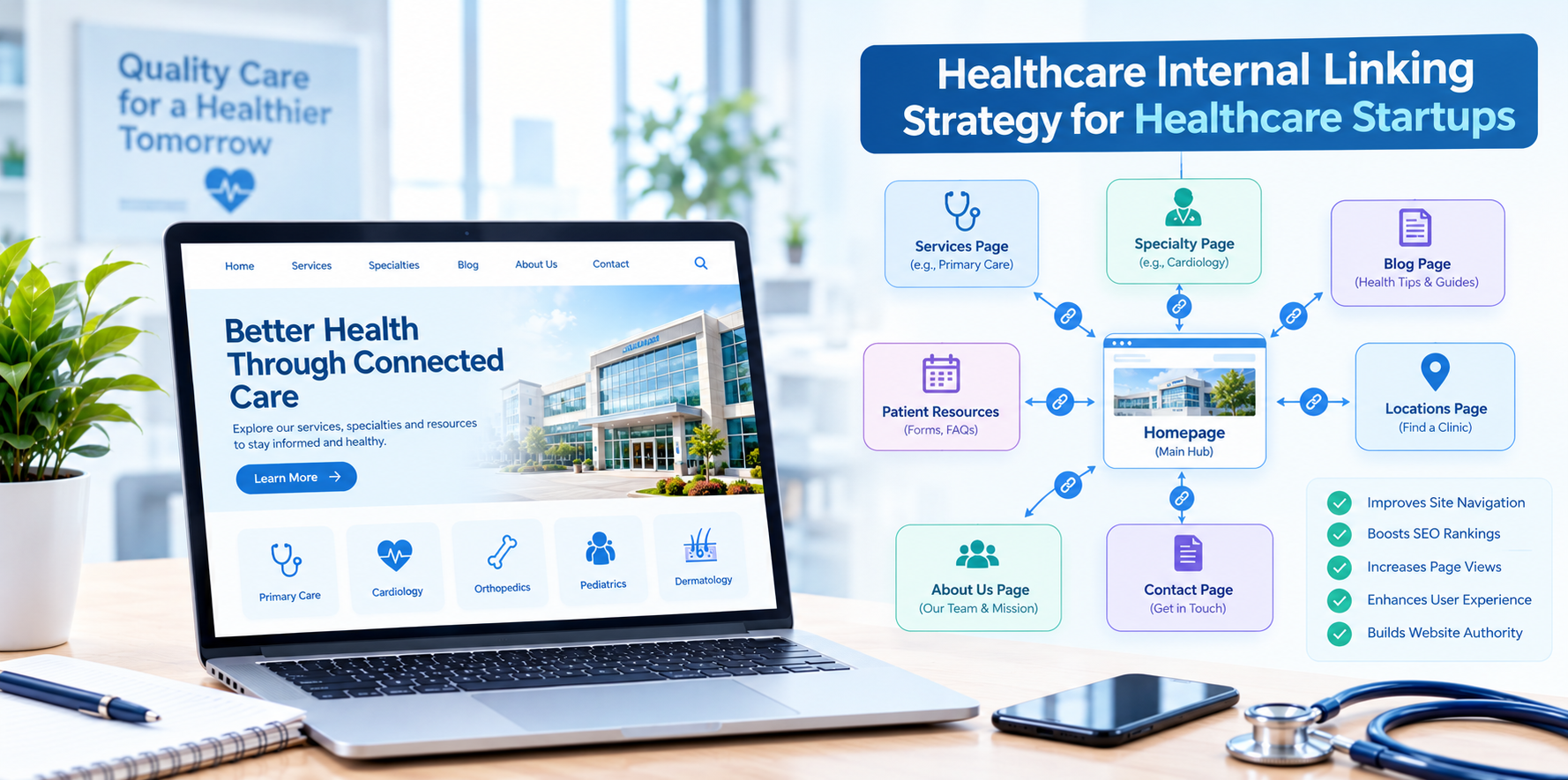
Healthcare startups, from digital health platforms and telehealth providers to new clinics, health apps and care-delivery companies, usually have the same SEO problem: a brand-new website with little authority, a small team, tight budgets and a lot of competition from established players. Internal linking is one of the few SEO advantages a startup fully controls. Done well from day one, it helps a young site look organized, helps search engines understand what the company does and helps patients and customers find what they need.
This guide explains how healthcare startups in the USA can build a simple, scalable internal linking strategy from the start, support healthcare website SEO and avoid the structural mistakes that become expensive to fix later.
Why Internal Linking Is Especially Valuable for Startups
- Few external signals: A new site has few backlinks and little brand recognition, so clear internal structure carries more weight.
- Small page count: With fewer pages, each link has more impact.
- Changing product: Startups pivot, rename features and add services quickly. A flexible link structure makes change easier.
- Trust matters: Health products and services depend on credibility. A well-organized site feels more trustworthy.
Step 1: Decide What Your Core Pages Are
Before publishing content, define the pages that explain your business. Most healthcare startups need:
- Home page: A clear statement of who you help and how.
- Product or service pages: One page for each core offering, such as virtual primary care, remote monitoring or a mental health program.
- How it works page: The patient or customer journey in simple steps.
- Who we help pages: Pages for specific audiences, such as patients, employers, health plans or provider partners.
- Clinical team and credentials: Names, qualifications and oversight.
- Safety, privacy and security: How patient information is protected.
- Pricing and insurance: What things cost and what is covered.
- FAQ and support: Common questions and how to get help.
- Contact and booking or sign-up: The main conversion path.
Step 2: Create a Simple Hub-and-Spoke Content Structure
- Pick two or three core topics your audience searches for, linked to your product. For example, a telehealth startup might choose virtual care for specific conditions, how telehealth works and insurance coverage questions.
- Create one pillar page for each topic, a thorough, accurate guide.
- Write supporting articles that answer narrower questions in detail.
- Link supporting articles to the pillar and the pillar to its supporting articles.
- Link each article to the relevant product page and sign-up or booking page where it genuinely helps the reader.
Step 3: Link Content to Conversion Paths
A startup cannot afford dead-end pages. Each page should offer a sensible next step:
- Educational articles link to the relevant service or product page.
- Product pages link to how it works, pricing and sign-up.
- Pricing pages link to insurance information and FAQs.
- Credibility pages, such as the clinical team and safety pages, link back to the services they support.
Use clear, honest calls to action. Avoid pressure tactics, exaggerated claims and promises of outcomes.
Step 4: Build Trust Through Linked Credibility Pages
Health consumers and partners look for signs that a company is legitimate. Link prominently to pages that show:
- Your clinical leadership and licensed providers, with credentials.
- Your privacy, security and data practices, written in plain language and reviewed by qualified advisors.
- Your clinical review process for content.
- Press, partnerships and independent validation where accurate and appropriate.
- Contact information and real ways to reach support.
Link these from the footer, the main navigation and the pages where trust matters most, such as sign-up and pricing.
Step 5: Handle Multiple Audiences Cleanly
Many healthcare startups serve patients and business customers at the same time. Keep the paths separate and clear:
- Create distinct sections for patients, employers, payers and providers.
- Avoid mixing messages on one page.
- Link between sections only where it helps, such as from a patient page to an employer page for people who access care through work.
Step 6: Plan for Change
Startups rename products and retire features often. To avoid broken links and lost visibility:
- Keep a simple page inventory with URLs, topics and owners.
- Use short, stable URLs that do not include dates or version names.
- When you rename or remove a page, redirect it to the closest relevant page.
- Update internal links instead of relying on redirects alone.
Step 7: Keep Your Site Fast and Accessible
- Use descriptive anchor text that makes sense to screen reader users.
- Make navigation simple on mobile.
- Test the sign-up path on several devices.
- Ensure that important links are real links in the page code, not hidden behind scripts that search engines may not follow.
Compliance and Privacy for Healthcare Startups
- Have qualified clinicians review health content, and display review information.
- Be careful with claims about outcomes, speed or effectiveness. Avoid anything you cannot support, and consult legal advisors about advertising and health claims rules.
- Review any tracking tools, pixels and analytics on sign-up, booking and portal pages with a privacy and compliance advisor before launch.
- Do not place health information in URLs, parameters or link labels.
- Be transparent about what data you collect and why.
This is general information, not legal advice. Regulatory requirements depend on your business model, services and the states where you operate.
A Practical 30-Day Startup Plan
- Week 1: Define core pages, choose pillar topics and set up a page inventory.
- Week 2: Build or improve the main navigation, footer and conversion paths. Add trust pages and link them.
- Week 3: Publish the first pillar page and two supporting articles, with internal links in both directions.
- Week 4: Run a basic link check, fix broken links, test mobile navigation and review search performance.
Metrics to Watch
- Impressions and clicks for pillar and product pages.
- Click-through from articles to product, pricing and sign-up pages.
- Sign-ups, booking requests or demo requests by source page.
- Pages per session and time on key pages.
- Broken links and orphan pages over time.
Common Mistakes
- Publishing blog posts with no links to products. Traffic without a path forward rarely converts.
- Creating too many thin pages. A smaller set of strong pages usually beats a pile of weak ones.
- Hiding trust information. Credentials and privacy pages should be easy to find.
- Changing URLs without redirects.
- Ignoring compliance until launch.
Final Thoughts
For a healthcare startup, internal linking is a low-cost way to build structure, trust and conversion paths from day one. Define core pages, build a simple hub-and-spoke content system, connect content to clear next steps and plan for change. If you would like help planning your startup's website structure and SEO foundation, Nova Reach Digital can help you design and implement it.
Frequently Asked Questions
Keep reading
Healthcare Internal Linking Strategy for Multi-Location Hospitals
How multi-location hospitals can build an internal linking strategy that connects locations, service lines and physicians, avoids page cannibalization and improves healthcare website SEO.
Healthcare Internal Linking Strategy for Private Hospitals
How private hospitals can use internal linking to build service line hubs, connect physicians and practical information, and guide patients from research to appointment while improving healthcare website SEO.
Healthcare Internal Linking Strategy for Specialty Clinics
How specialty clinics can use internal linking to connect conditions, treatments and providers, build topical depth and guide patients from research to consultation while improving healthcare website SEO.
Put These Ideas to Work with NovaReach
Automate your marketing, launch AI voice agents, and keep every lead moving, all from one dashboard.