Healthcare Patient Retention: A Complete Guide for Hospitals and Healthcare Brands
A complete guide to healthcare patient retention marketing: how hospitals use a healthcare CRM, recall campaigns and follow-up programs to keep patients engaged while protecting privacy and consent.
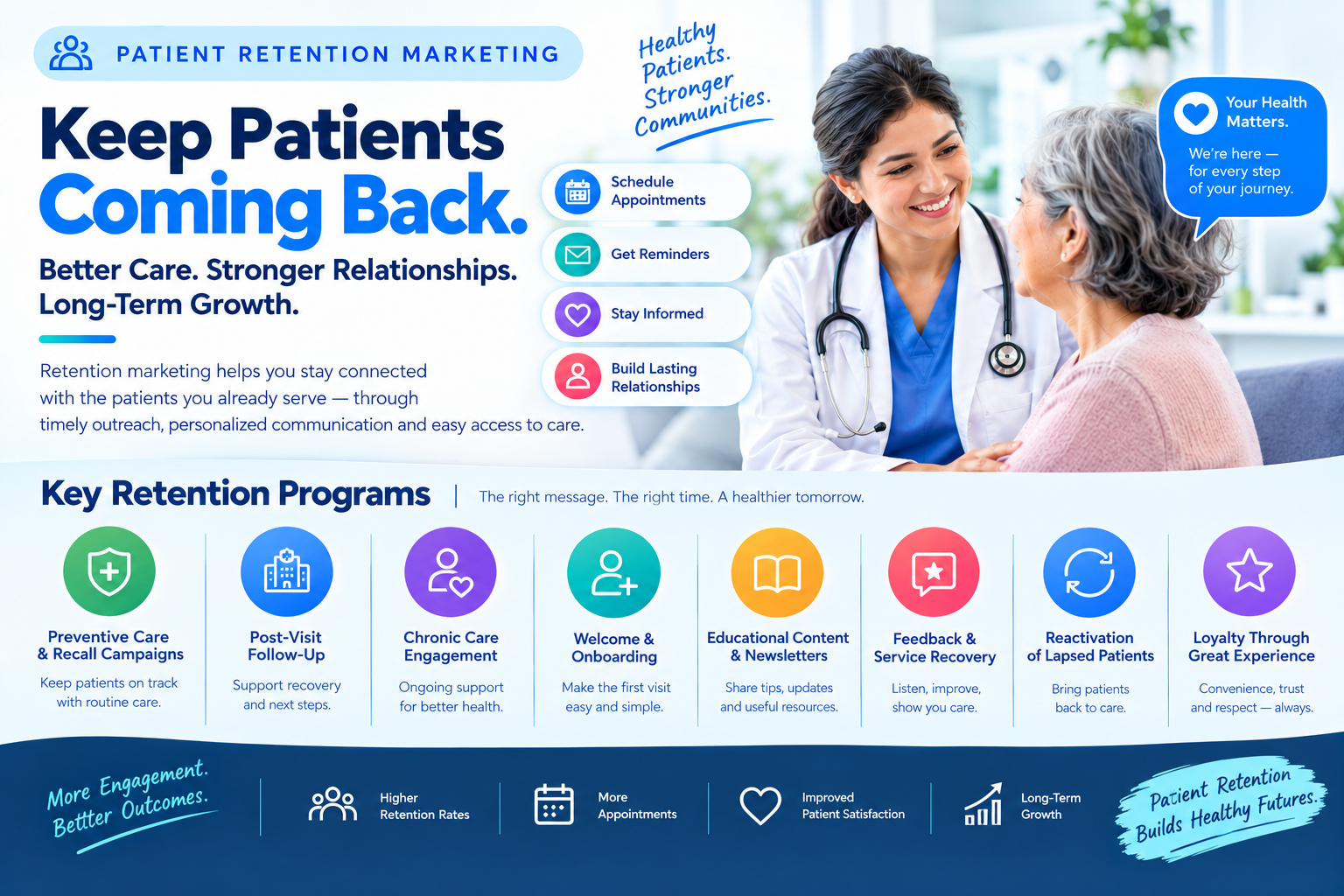
Winning a new patient takes effort, time and marketing budget. Keeping that patient engaged, returning for preventive care and confident in your organization is where long-term value is built. Patient retention is not only a financial goal. In healthcare, it supports continuity of care, better follow-through on treatment plans and stronger relationships between patients and their care teams. Yet many hospitals and clinics invest heavily in acquisition and far less in the systems that keep patients connected.
This guide explains how patient retention marketing works, why a healthcare CRM matters, how to build recall and engagement programs and how to measure results, with privacy, consent and patient trust at the center. It is written for hospitals and healthcare brands in the USA.
What Is Patient Retention in Healthcare?
Patient retention is the ability of an organization to keep patients engaged over time: returning for follow-up visits, preventive care and new needs, staying connected to a primary relationship and choosing your organization when care is needed. Retention is influenced by clinical experience, access, communication, billing clarity and trust. Marketing contributes by keeping communication timely, relevant and helpful.
Why Patients Drift Away
- Long waits and hard scheduling: If booking is difficult, patients look elsewhere.
- Poor communication: Unanswered calls, unclear instructions and slow responses erode trust.
- Billing confusion: Surprise or unclear bills damage relationships.
- Lack of follow-up: Patients forget preventive visits and follow-up appointments when no one reminds them.
- Life changes: Moves, insurance changes and family circumstances can interrupt care.
- Impersonal experience: Patients who feel like a number are less likely to stay loyal.
What Is a Healthcare CRM?
A healthcare CRM, or patient relationship management system, helps organizations manage communication with patients and prospective patients. It centralizes contact information, preferences, interaction history and outreach campaigns, and often connects with scheduling and electronic health record systems. Used well, it lets teams send the right message to the right person at the right time, while respecting consent and privacy.
Key capabilities to look for include:
- Unified patient and prospect profiles with communication preferences and consent status.
- Segmentation based on appropriate, privacy-conscious criteria such as last visit date, service line or location.
- Automated campaigns for reminders, recall and follow-up.
- Multi-channel messaging across email, text, voice and portal, according to patient preference.
- Integration with scheduling and clinical systems with proper safeguards.
- Reporting that links outreach to appointments and engagement.
- Security and compliance features such as access controls, audit logs and support for appropriate agreements.
Retention Marketing Programs That Work
1. Preventive Care and Recall Campaigns
Identify patients who are due or overdue for routine visits, screenings, immunizations or follow-up care, and reach out through their preferred channel with a simple way to schedule. Escalate higher-priority cases to personal phone calls.
2. Post-Visit and Post-Discharge Follow-Up
Check in after visits, procedures or hospital stays with general instructions, a way to ask questions and a prompt to schedule follow-up. Clinical details should go through secure channels and be guided by clinical protocols.
3. Chronic Care Engagement
For patients managing ongoing conditions, regular, supportive communication can encourage follow-up visits and use of available programs. Content and outreach should be designed with clinical teams and delivered with care and sensitivity.
4. Welcome and Onboarding Journeys
The first weeks set the tone. Send new patients information about what to expect, how to use the portal, how to reach the care team and how to prepare for the next visit.
5. Educational Content and Newsletters
Seasonal health tips, community events and new services keep your organization present and helpful. Content should be accurate, clinician-reviewed and respectful of different needs.
6. Feedback and Service Recovery
Short surveys after visits help you spot problems early. Respond quickly to negative feedback with a personal outreach, and use patterns to improve operations.
7. Reactivation of Lapsed Patients
Reach out gently to patients who have not visited in a long time, with a warm message, a reminder of services and an easy way to schedule. Respect preferences and stop outreach for patients who opt out.
8. Loyalty Through Experience, Not Gimmicks
In healthcare, strong retention is built on convenience, communication and respect. Be cautious with incentives and promotions, which can raise legal and ethical concerns. Consult legal and compliance teams before launching any rewards or referral programs.
Where AI and Automation Help
- Identifying who is due for outreach based on rules approved by clinical and compliance teams.
- Personalizing timing and channel within privacy limits.
- Drafting messages for review and approval.
- Automating reminders and follow-ups with clear stopping rules.
- Summarizing feedback to highlight recurring themes.
- Reporting on recall completion and engagement trends.
People should handle sensitive conversations and clinical decisions. Automation should support staff, not replace human care.
Privacy and Compliance Essentials
- Consent and preferences: Record and honor how each patient wants to be contacted, and respect opt-outs.
- Minimum necessary information: Keep messages general, avoid diagnoses and details in email, text and voicemail.
- Secure systems: Make sure your CRM and messaging vendors meet your security requirements and have appropriate agreements in place if they handle protected health information.
- Careful segmentation: Avoid creating outreach that could reveal or imply sensitive health conditions.
- Accessibility and language: Provide materials in formats and languages your patients need.
This is general information, not legal advice. Consult your privacy officer and legal counsel.
Building a Retention Program Step by Step
- Define retention goals. Examples include increasing preventive visit completion, reducing lost-to-follow-up rates or improving patient satisfaction scores.
- Clean and unify your data. Make sure contact details, preferences and last-visit information are accurate.
- Choose priority segments. Start with one or two, such as annual wellness visits or post-procedure follow-up.
- Write approved messages with clinical and compliance review.
- Set up automated sequences with clear timing and stopping rules, plus personal outreach for high-priority cases.
- Make scheduling effortless with direct links, phone options and flexible hours.
- Measure results and gather patient feedback.
- Refine and expand to additional segments and service lines.
Metrics to Track
- Recall completion rate and time to rebook.
- Repeat visit rate and lost-to-follow-up rate.
- Patient satisfaction and sentiment trends.
- No-show and cancellation rates.
- Portal activation and usage.
- Message response, opt-out and complaint rates.
- Referral and review growth.
Common Mistakes
- Treating retention as an afterthought. It deserves its own strategy and budget.
- Sending generic mass messages. Relevance matters.
- Over-messaging. Too many contacts cause opt-outs.
- Ignoring data quality. Wrong phone numbers and outdated preferences undermine outreach.
- Disconnected systems. Scheduling, CRM and messaging should work together.
- Skipping compliance review.
Final Thoughts
Patient retention marketing helps hospitals and healthcare brands stay connected with the patients they already serve. Build on a strong CRM foundation, respect consent and privacy, make scheduling effortless and communicate with warmth and relevance. If you would like help designing a patient retention and CRM strategy for your hospital or healthcare brand, Nova Reach Digital can help you plan and implement it.
Frequently Asked Questions
Keep reading
What Are the Top Missed-Call Text Back Setups for Clinics? Reading the Setup Table, the Five Steps and the Sample Missed-Call Follow-Up
A question-and-answer guide to the top missed-call text back setups for clinics: what it is, why missed calls cost patients, 5 setup steps, a setups table, a sample follow-up chart, texting and privacy rules and FAQs.
What Are the Top AI Chatbots for Healthcare Practices and How Do You Choose? Reading the Build Options, the Five Steps and the Sample Patient Inquiries
A question-and-answer guide to the top AI chatbots for healthcare practices: what they do, why they disappoint, 5 launch steps, a build-options table, a sample patient-inquiry chart, HIPAA and safety rules and FAQs.
What Are the Top AI Answering Services for Doctors and How Do You Choose? Reading the Service Types, the Five Steps and the Sample After-Hours Follow-Up
A question-and-answer guide to the top AI answering services for doctors: what they do, why after-hours calls get lost, 5 steps to choose, a service-types table, a sample follow-up chart, rules and FAQs.
Put These Ideas to Work with NovaReach
Automate your marketing, launch AI voice agents, and keep every lead moving, all from one dashboard.