Healthcare Reputation Management: How Hospitals and Clinics Handle Patient Reviews While Protecting Privacy
Learn how hospitals and clinics can manage online reviews and patient reputation while protecting privacy, with compliant response guidelines, review request tips and AI-assisted monitoring.
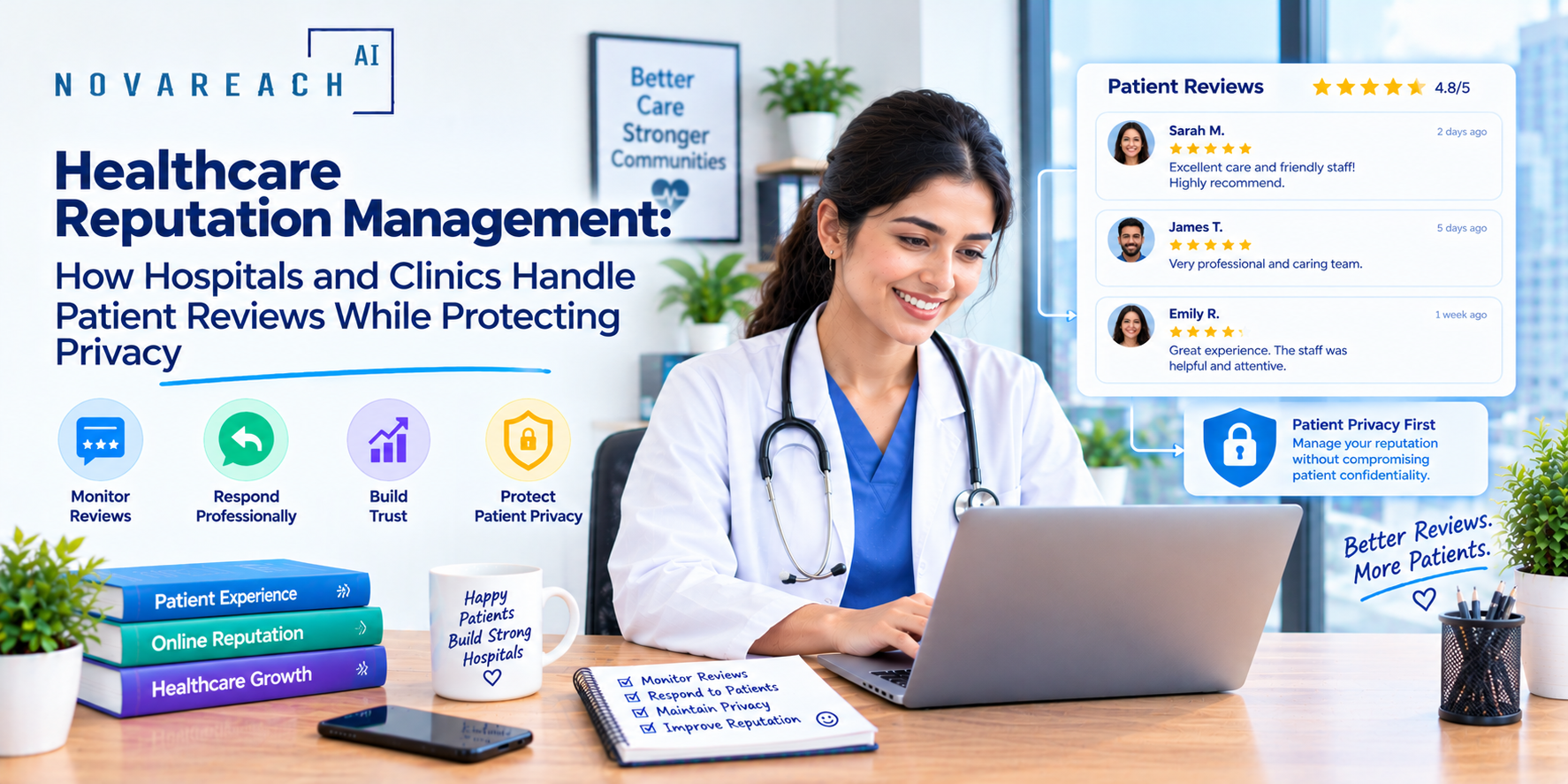
Before booking an appointment, most patients read online reviews. They want to know whether the staff is kind, whether the wait is reasonable, whether the doctor listens and whether the experience feels safe. For hospitals, clinics and private practices, online reputation is one of the strongest drivers of patient choice and of local search visibility. Yet healthcare faces a unique challenge: when a patient posts a review, privacy rules limit how you can respond. A smart reputation management strategy, supported by automation and guided by compliance, helps you earn more reviews, respond appropriately and learn from patient feedback.
This guide explains how healthcare organizations in the USA can manage online reviews and patient reputation effectively and responsibly.
Why Reviews Matter So Much in Healthcare
- Trust: Choosing a provider is a personal decision, and patients rely on the experiences of others.
- Local visibility: Review volume, rating and recency help influence local search and map results.
- Experience insights: Reviews reveal patterns in scheduling, communication, billing and facility experience that internal surveys can miss.
- Physician and staff recognition: Positive reviews can boost morale and help retain talented teams.
The Privacy Challenge: Responding Without Revealing
This is the most important rule in healthcare reputation management. Even if a reviewer shares personal health details publicly, your organization generally should not confirm that the person is a patient, discuss their care or reveal any health information in a public response. Doing so can violate privacy rules and damage trust. Responses should be general, empathetic and invite the person to continue the conversation offline. Work with your compliance and legal teams to define response guidelines and approve templates.
This article is general information and not legal advice.
Step 1: Make It Easy for Patients to Leave Feedback
Most satisfied patients never post a review unless someone asks. Create a simple, respectful process:
- Send a short post-visit message with a direct link to your Google review page, using channels the patient has agreed to receive.
- Place QR codes in waiting rooms, discharge materials and after-visit summaries.
- Train staff to mention that feedback helps others find care, without pressuring anyone.
- Ask all patients, not just those you expect to be happy. Filtering requests can violate platform policies.
- Never offer payment, gifts or incentives in exchange for reviews, which platforms prohibit.
Step 2: Collect Private Feedback First When Appropriate
A short internal survey after a visit helps you catch problems early and offers patients a private way to share concerns. Use survey results to resolve issues quickly, but do not block patients from posting public reviews or steer only happy patients toward review sites.
Step 3: Monitor Reviews Across Platforms
Patients post on Google, Yelp, Facebook, healthcare-specific directories and social media. Set up alerts so the right person is notified quickly when a new review appears. AI tools can help by categorizing reviews, flagging urgent concerns and summarizing recurring themes, which is especially useful for multi-location systems.
Step 4: Respond Thoughtfully and Consistently
A response is visible to every future patient reading the page. Aim to reply to every review within a day or two.
Positive Reviews
Thank the reviewer generally, appreciate the feedback and recognize the team. Do not mention specific treatments, conditions or appointment details. Example approach: express thanks for the kind words, share that the team is glad to hear about a positive experience and invite them to contact you for future care needs.
Negative Reviews
Stay calm, courteous and concise. Acknowledge that the experience did not meet expectations, apologize in general terms where appropriate, share a way to contact a patient relations representative and avoid debating facts. Never discuss the person's care publicly. Resolve the issue privately whenever possible.
Reviews That Violate Platform Rules
Fake reviews, spam, harassment or reviews that clearly do not relate to your organization can be reported to the platform. Document the reason and follow the platform's process, but avoid retaliating or engaging in arguments.
Where AI Helps Safely
- Drafting reply options based on approved templates for staff to review and edit.
- Sentiment and theme analysis to identify trends in wait times, billing, communication or facilities.
- Priority flagging of reviews that mention safety concerns, discrimination or other urgent issues for escalation.
- Reporting dashboards that track rating, volume and response time by location and service line.
AI should never post responses automatically in healthcare. A trained person should review each reply to ensure it protects privacy and reflects your values.
Turning Feedback Into Improvement
Reviews are most valuable when they drive change. Review themes monthly with operations, patient experience and clinical leaders. If multiple reviews mention long phone waits, consider call handling improvements. If parking confusion appears repeatedly, update directions and signage. Share positive reviews with staff to recognize great work, and close the loop by showing patients that you listened.
Metrics to Track
- Average rating and review volume by location.
- Review velocity, meaning new reviews per month.
- Response rate and average response time.
- Share of reviews mentioning key themes such as wait time, communication or billing.
- Patient satisfaction survey scores and trends.
- Calls and appointment requests from Google Business Profiles.
Mistakes to Avoid
- Revealing patient information in a reply. This is the most serious risk.
- Using generic copy-paste replies. They feel cold, especially in healthcare.
- Offering incentives for reviews. This violates platform rules.
- Ignoring negative feedback. Silence suggests indifference.
- Arguing publicly. It rarely helps and can escalate the situation.
- Automating replies without review. Human oversight is essential.
A Simple 30-Day Plan
- Week 1: Audit current reviews and set compliance-approved response guidelines.
- Week 2: Set up monitoring alerts and designate response owners for each location.
- Week 3: Launch post-visit review requests and place QR codes in key areas.
- Week 4: Review themes, share findings with leaders and set improvement priorities.
Final Thoughts
Reputation management in healthcare is about earning trust and protecting privacy at the same time. Make it easy for patients to share feedback, respond with empathy and care, learn from what you hear and keep humans involved in every reply. If you would like help setting up a compliant review management and patient reputation program for your hospital or clinic, Nova Reach Digital can help you build and run it.
Frequently Asked Questions
Keep reading
What Are the Top Missed-Call Text Back Setups for Clinics? Reading the Setup Table, the Five Steps and the Sample Missed-Call Follow-Up
A question-and-answer guide to the top missed-call text back setups for clinics: what it is, why missed calls cost patients, 5 setup steps, a setups table, a sample follow-up chart, texting and privacy rules and FAQs.
What Are the Top AI Chatbots for Healthcare Practices and How Do You Choose? Reading the Build Options, the Five Steps and the Sample Patient Inquiries
A question-and-answer guide to the top AI chatbots for healthcare practices: what they do, why they disappoint, 5 launch steps, a build-options table, a sample patient-inquiry chart, HIPAA and safety rules and FAQs.
What Are the Top AI Answering Services for Doctors and How Do You Choose? Reading the Service Types, the Five Steps and the Sample After-Hours Follow-Up
A question-and-answer guide to the top AI answering services for doctors: what they do, why after-hours calls get lost, 5 steps to choose, a service-types table, a sample follow-up chart, rules and FAQs.
Put These Ideas to Work with NovaReach
Automate your marketing, launch AI voice agents, and keep every lead moving, all from one dashboard.