Healthcare SEO Strategy for Hospitals for Healthcare Startups
A practical guide to healthcare SEO strategy for hospitals and healthcare startups: build trust signals, target the right patient searches, earn local visibility and measure results on a startup budget while staying accurate and compliant.
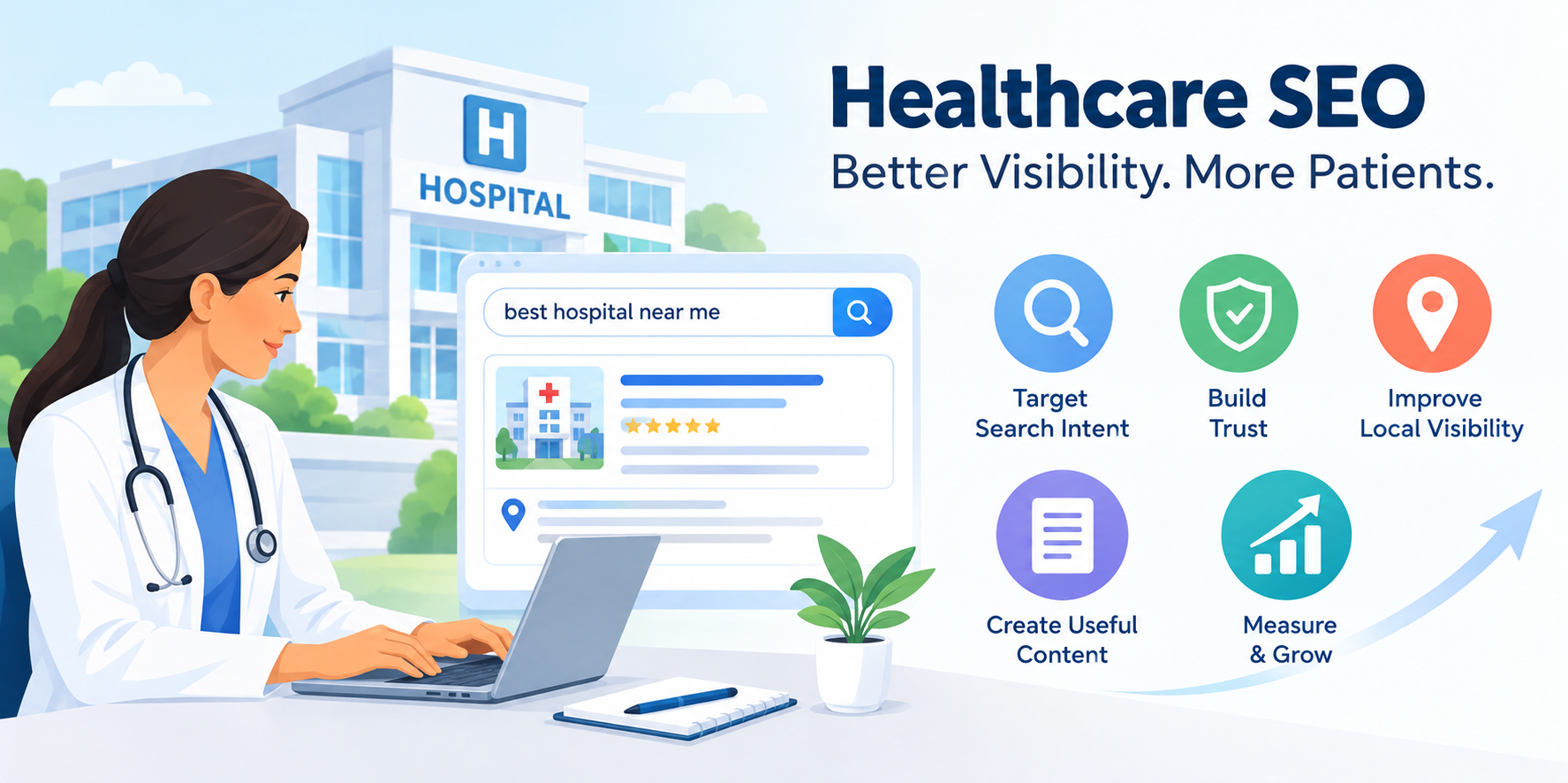
Healthcare startups face a tough search landscape. A new digital health company, specialty clinic or independent hospital group is competing with established health systems, national directories and medical publishers that have had years to build authority. At the same time, patients and referral partners search carefully before they trust a provider with their health. A clear healthcare SEO strategy helps a younger organization earn visibility where it matters most, without needing the budget of a large health system.
This guide explains how hospitals and healthcare startups can plan healthcare search optimization in a practical, phased way: what to prioritize first, how to build trust signals, how to create useful content and how to measure progress. It is written for healthcare organizations in the USA.
What Is a Healthcare SEO Strategy?
A healthcare SEO strategy is a structured plan for helping patients, caregivers and referral partners find accurate information about your services in search results. It covers your website structure, service and location pages, local listings, educational content, technical health and the credibility signals that search engines and people look for when health decisions are involved.
Why Healthcare SEO Is Different
- Higher trust expectations: Health topics are sensitive, so search engines place extra weight on experience, expertise, authoritativeness and trustworthiness.
- Accuracy matters: Outdated or unreviewed medical information can harm patients and damage credibility.
- Complex decision journeys: Patients compare symptoms, conditions, providers, insurance and location before they book.
- Strong local intent: Many searches look for care nearby, such as urgent care or a specialist in a particular city.
- Privacy and compliance: Tracking, forms and advertising practices need careful review.
Challenges Healthcare Startups Face
- A new domain with little authority and few backlinks.
- Limited content, clinician time and marketing budget.
- Competition from large systems and national health information sites.
- A need to explain a new care model that patients may not yet search for by name.
- Pressure to show results quickly while SEO takes time to build.
Core Elements of a Healthcare SEO Strategy
1. Start With Patient Search Intent
Map the questions patients and referrers ask at each stage: learning about a condition, comparing treatment options, choosing a provider and preparing for a visit. Group searches by intent, such as informational, local and appointment-ready, and match each group to a page type.
2. Build a Strong Technical Foundation
Make sure the site is secure, fast on mobile, easy to crawl and accessible. Use clean URLs, logical navigation, XML sitemaps and structured data where appropriate. Fixing basics early prevents problems as the site grows.
3. Create Service Line and Location Pages
Each major service, specialty or location deserves a dedicated page with clear descriptions, who it helps, what to expect, insurance information, contact details and next steps. Avoid thin or copied pages.
4. Show Trust and Expertise
Add clinician profiles with credentials, medical review dates, clear editorial standards, accurate contact details and transparent information about your organization. These signals help visitors and search engines understand who is behind the content.
5. Publish Helpful, Clinician-Reviewed Content
Focus on plain-language guides, condition and treatment explainers, preparation checklists and answers to common questions. Have qualified clinicians review medical content and update it regularly.
6. Strengthen Local Visibility
Claim and complete your Google Business Profile, keep name, address and phone details consistent across directories and encourage patients to share honest reviews. Local signals are often the fastest path to visibility for a new provider.
7. Earn Credible Mentions
Partnerships with universities, community organizations, professional associations and local media can lead to relevant links and mentions. Quality and relevance matter more than quantity.
8. Prepare for AI Search
Clear answers, well-structured pages and trustworthy sources make it easier for AI-powered search experiences to understand and surface your content. Write for people first, with direct answers near the top of key pages.
Where AI Can Help Healthcare SEO Teams
- Research: Grouping keywords, spotting content gaps and summarizing competitor coverage.
- Drafting support: Creating outlines and first drafts that clinicians and editors review.
- Optimization: Suggesting titles, headings and internal links.
- Monitoring: Flagging technical issues, ranking changes and review trends.
- Reporting: Turning data into plain-language summaries for leadership.
AI should assist skilled people, not replace clinical judgment. Medical statements must always be verified by qualified professionals.
A Phased Roadmap for Healthcare Startups
- Phase 1: Audit and plan (weeks 1 to 4). Review the site, listings, competitors and search demand. Choose a small set of priority services and locations.
- Phase 2: Foundation (weeks 5 to 10). Fix technical issues, publish core service and location pages, complete local listings and add clinician profiles.
- Phase 3: Content and authority (weeks 11 to 20). Launch clinician-reviewed educational content, build helpful resources and pursue relevant partnerships and mentions.
- Phase 4: Measure and expand (ongoing). Track results monthly, update content, expand to new services and refine based on what drives appointments.
Privacy, Compliance and Ethics
- Review tracking technologies carefully, especially on appointment pages and patient portals.
- Do not collect or send protected health information to marketing tools without appropriate safeguards and agreements.
- Avoid exaggerated claims, guarantees of outcomes and misleading comparisons.
- Make sure all medical content is accurate, dated and clinician-reviewed.
- Involve compliance and legal teams early.
This is general information, not legal advice.
Metrics to Track
- Organic visibility for priority services and locations.
- Google Business Profile views, calls and direction requests.
- Organic appointment requests and calls, where measurable.
- Engagement on key pages, such as time on page and next-step clicks.
- Review rating, volume and response time.
- Page speed and technical health indicators.
Common Mistakes
- Trying to rank for everything at once. Focus on a few services and locations first.
- Publishing unreviewed medical content. Accuracy builds trust and protects patients.
- Ignoring local SEO. Many patients search for care nearby.
- Expecting instant results. SEO compounds over months, so plan accordingly.
- Neglecting compliance. Tracking and forms need careful review.
- Copying competitor pages. Original, specific content stands out.
Final Thoughts
A healthcare SEO strategy gives hospitals and healthcare startups a durable way to earn patient trust and visibility. Start with search intent and a strong foundation, build credibility through accurate content and local presence and measure what leads to real appointments. If you would like help planning or implementing a healthcare SEO strategy for your hospital or healthcare startup, Nova Reach Digital can help you design, launch and optimize it.
Frequently Asked Questions
Keep reading
Hospital SEO Services for Competitive Markets for Local Healthcare Providers
How local healthcare providers use hospital SEO services in competitive markets: accurate listings, Google Business Profile, community service pages, reviews and mobile-first booking.
Hospital SEO Services for Competitive Markets for Hospital Marketing Teams
How hospital marketing teams use hospital SEO services in competitive markets: service line priorities, content standards, clinical review workflows, technical coordination and leadership reporting.
Hospital SEO Services for Competitive Markets for Medical Practices
How medical practices use hospital SEO services in competitive markets: clear service and provider pages, accurate local listings, reviews, easy booking and privacy-aware reporting.
Put These Ideas to Work with NovaReach
Automate your marketing, launch AI voice agents, and keep every lead moving, all from one dashboard.