Healthcare Social Media Marketing: How Hospitals and Clinics Use Social Media Management and Automation Responsibly
Learn how hospitals and clinics can use social media management and automation responsibly to educate patients, build trust and support patient acquisition while protecting privacy and following compliance rules.
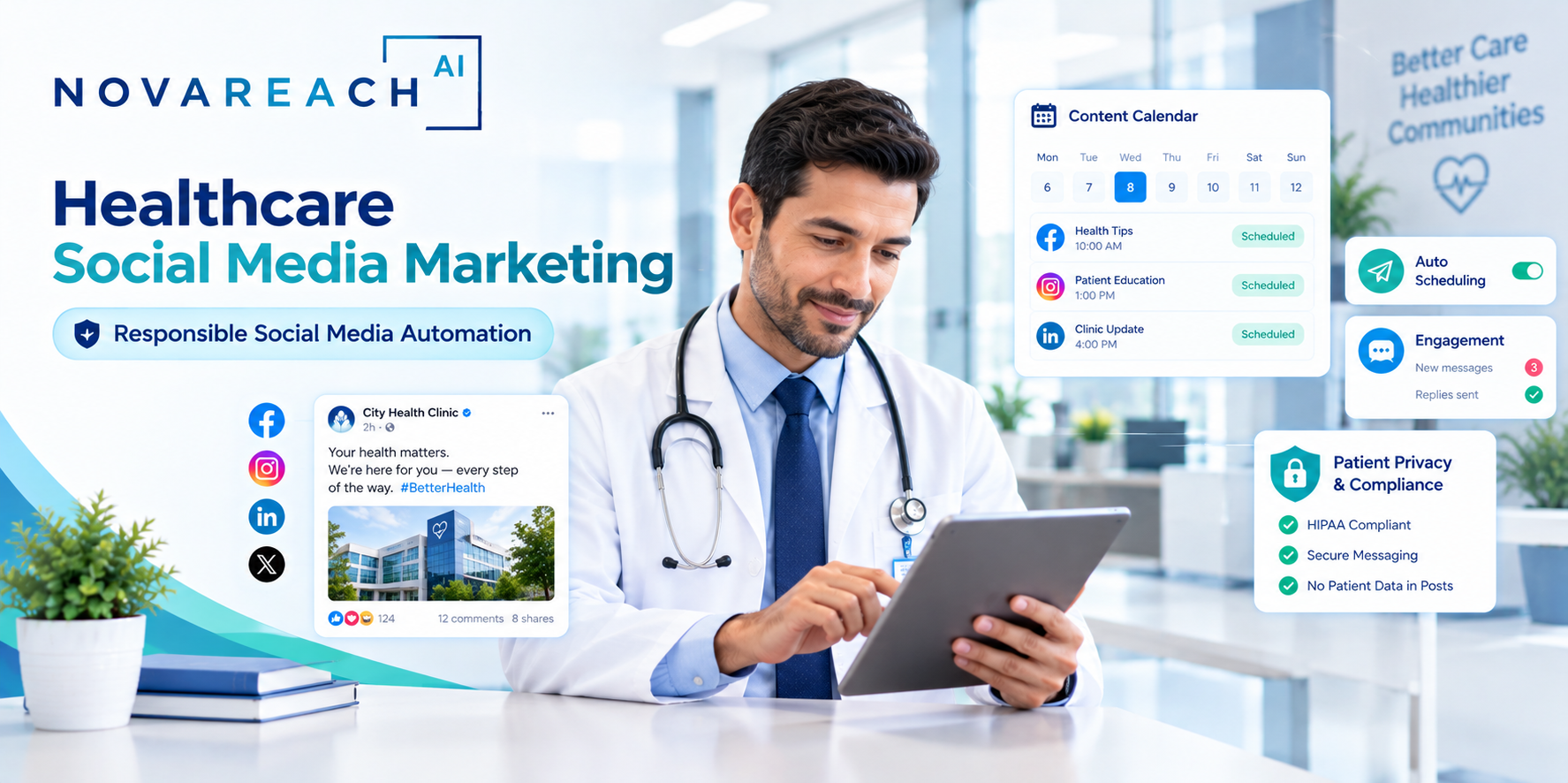
Social media is where many patients, caregivers and community members spend their time. They follow local hospitals for health tips, check clinics for updates, read about new physicians and look for signs that an organization is trustworthy before they call. For hospitals and healthcare providers, social media can build awareness, educate the community and humanize your care teams. But healthcare is not like retail or restaurants. Privacy rules, accuracy standards and patient sensitivity mean every post needs more thought. Social media automation and AI tools can reduce the workload, as long as they are used with clear guardrails.
This guide explains how hospitals, clinics and private practices in the USA can use social media management and automation responsibly to educate patients, strengthen their brand and support patient acquisition.
Why Social Media Matters for Healthcare Providers
- Community connection: Social channels help hospitals share news, events and health resources with local residents.
- Trust and transparency: Showing the people behind the care helps patients feel comfortable before their first visit.
- Health education: Short, clear posts about prevention, screenings and seasonal topics reach people who may not search for them.
- Recruitment: Social presence supports hiring of nurses, physicians and staff.
- Search visibility support: Active, consistent profiles reinforce your brand across the web.
Choose Platforms Based on Your Audience
- Facebook: Strong for community updates, events and reaching families and older adults.
- Instagram: Useful for visual storytelling, staff spotlights and short educational content.
- LinkedIn: Valuable for recruitment, thought leadership and partnerships with other organizations.
- YouTube: Effective for longer educational videos, physician introductions and facility tours.
- X and other channels: Useful for public health updates and local news engagement where relevant.
Start with one or two platforms you can maintain well rather than spreading too thin.
Content Ideas That Work for Healthcare
- Preventive health reminders: Seasonal screenings, vaccination awareness and wellness tips, reviewed by clinicians.
- Meet the team: Physician and staff introductions that help patients feel familiar before they visit.
- Behind the scenes: New equipment, facility updates and community events.
- Myth-busting and FAQs: Clear answers to common questions with credible, clinician-reviewed information.
- Community involvement: Health fairs, charity events and partnerships.
- Service announcements: New clinics, extended hours, telehealth options and new providers.
- Employee recognition: Celebrating nurses, volunteers and milestones, with consent.
Rules You Must Follow
- Protect patient privacy. Never post identifiable patient information, photos or stories without proper written authorization. Be careful with background details in staff photos and videos, such as screens, charts or visible patients.
- Do not diagnose or give individual medical advice. Social posts should educate in general terms and encourage people to speak with their healthcare providers.
- Avoid exaggerated claims. Do not promise results, use unsupported superlatives or make misleading comparisons.
- Handle comments and messages carefully. Do not discuss individual care publicly. Direct people to call or use secure patient channels.
- Follow advertising rules. Healthcare advertising often has platform-specific and legal requirements.
- Respect copyright. Use only images, music and content you have rights to use.
This is general information, not legal advice. Work with your compliance and legal teams to set a social media policy.
How AI and Automation Can Help
- Idea generation: Suggest topic calendars based on seasonal health themes and community events.
- Drafting captions: Create first versions of posts for clinical and marketing review.
- Repurposing: Turn an approved blog article into several short posts, graphics ideas and video scripts.
- Scheduling: Plan and publish posts at consistent times across platforms.
- Comment monitoring: Flag questions, complaints or potentially sensitive comments for staff attention.
- Reporting: Summarize reach, engagement and follow-up actions each month.
What should not be fully automated: replies to patient concerns, anything involving individual care, crisis communications and posts about sensitive topics. A trained person should always review those.
A Safe Social Media Workflow for Hospitals
- Set goals. Examples include growing community awareness, promoting a new service line, increasing event attendance or supporting recruitment.
- Create a content calendar with a mix of education, community, team and service posts.
- Draft with AI support and keep a style guide to maintain a warm, professional voice.
- Clinical review for any health-related content.
- Compliance check for privacy, consent and claims.
- Schedule posts using a management tool.
- Monitor comments and messages daily and route concerns to the right team.
- Review performance monthly and adjust the calendar.
Handling Comments, Messages and Crises
Create clear guidelines for how your team responds to comments and direct messages. For general questions, reply helpfully. For anything involving a patient's care, move the conversation to phone or a secure channel without revealing details. Have a plan for negative comments, misinformation and public health emergencies, including who approves messages, how quickly responses are posted and when posts are paused. Moderate respectfully and remove content that is abusive or violates community rules, following your policy.
Social Media and Patient Acquisition
Social media is rarely the final step in a patient's decision, but it influences trust. Make the path from social to care easy: include clear links to appointment booking, location pages and phone numbers, and keep your profile information consistent with your website and Google Business Profile. Use paid social carefully. Healthcare advertising has restrictions on targeting and messaging, and sensitive health conditions should not be implied in ways that could expose users. Review platform policies and consult compliance before running ads.
Metrics to Track
- Follower growth and reach in your service area.
- Engagement rate on educational and community posts.
- Website visits and appointment requests from social links.
- Event registrations and recruitment inquiries.
- Response time to comments and messages.
- Sentiment and common questions.
Common Mistakes
- Posting patient photos or stories without authorization.
- Giving personal medical advice in comments.
- Over-automating replies. Patients expect empathy, not canned responses.
- Inconsistent posting. Sporadic activity weakens trust and reach.
- Ignoring accessibility. Add captions, alt text and readable graphics so everyone can access your content.
- No crisis plan. Delays and mixed messages during emergencies can harm credibility.
Final Thoughts
Social media can help healthcare organizations educate their communities, build trust and make care more approachable. AI and automation can lighten the workload, but clinical accuracy, privacy and empathy must stay at the center. If you would like help building a compliant social media management and automation plan for your hospital or clinic, Nova Reach Digital can help you plan and run it.
Frequently Asked Questions
Keep reading
What Are the Top Missed-Call Text Back Setups for Clinics? Reading the Setup Table, the Five Steps and the Sample Missed-Call Follow-Up
A question-and-answer guide to the top missed-call text back setups for clinics: what it is, why missed calls cost patients, 5 setup steps, a setups table, a sample follow-up chart, texting and privacy rules and FAQs.
What Are the Top AI Chatbots for Healthcare Practices and How Do You Choose? Reading the Build Options, the Five Steps and the Sample Patient Inquiries
A question-and-answer guide to the top AI chatbots for healthcare practices: what they do, why they disappoint, 5 launch steps, a build-options table, a sample patient-inquiry chart, HIPAA and safety rules and FAQs.
What Are the Top AI Answering Services for Doctors and How Do You Choose? Reading the Service Types, the Five Steps and the Sample After-Hours Follow-Up
A question-and-answer guide to the top AI answering services for doctors: what they do, why after-hours calls get lost, 5 steps to choose, a service-types table, a sample follow-up chart, rules and FAQs.
Put These Ideas to Work with NovaReach
Automate your marketing, launch AI voice agents, and keep every lead moving, all from one dashboard.