Local SEO for Local Businesses: The Complete Guide to Improving Local Search Visibility, Google Maps Rankings and Local Ranking
A practical local SEO guide for US businesses: how local rankings work, the factors that matter most and a 90-day plan to improve local search visibility and Google Maps results.
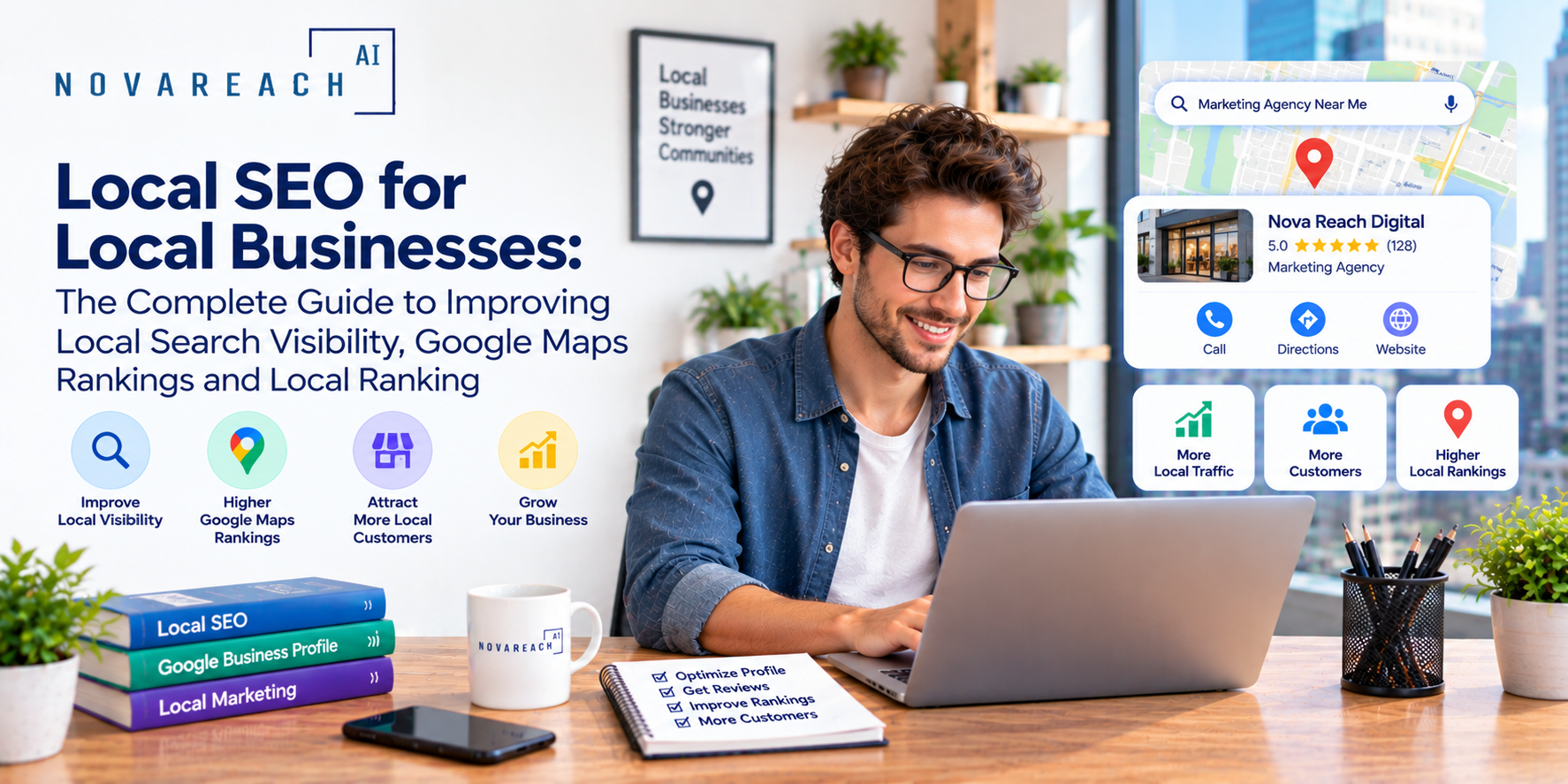
When someone searches for a service near them, Google shows a map and three businesses first. Those three listings capture a large share of the calls, directions requests and website visits. If your business is not among them, you are effectively invisible to many ready-to-buy customers. Local SEO is the practice of earning those top positions, and it is one of the most cost-effective marketing channels available to local businesses.
This guide explains how local search rankings work, the factors that matter most, and a practical plan for improving local search visibility and Google Maps marketing results. It is written for US-based small businesses, startups and service providers.
What Is Local SEO?
Local SEO is the process of optimizing your online presence so that your business appears in search results for people in your area. It covers the local map pack, regular organic results for location-based searches, and increasingly the answers produced by AI assistants and search features. Typical searches include "plumber near me," "dentist in Austin" or "best coffee shop open now."
The Three Pillars of Local Ranking
Google has publicly described three main factors for local results:
- Relevance: How well your business matches what the person searched for.
- Distance: How close your business is to the searcher or the location in the query.
- Prominence: How well known and trusted your business is, based on reviews, links, mentions and overall web presence.
You cannot change where you are located, but you can strongly influence relevance and prominence.
Step 1: Build a Complete Google Business Profile
Your Google Business Profile is the foundation of local search visibility. Make it as complete and accurate as possible:
- Choose the most accurate primary category and add relevant secondary categories.
- Use your real business name, address and phone number exactly as they appear elsewhere.
- Add hours, including holiday hours, and keep them updated.
- List your services and products with clear descriptions.
- Upload real photos of your team, location, work and products regularly.
- Add your service areas if you travel to customers.
- Post updates, offers and events to show activity.
- Answer questions and keep the description helpful and natural, not stuffed with keywords.
Step 2: Earn and Manage Reviews
Reviews influence both rankings and customer decisions. Quantity, recency, rating and the content of reviews all matter. Ask every happy customer for a review right after the service, make it easy with a direct link and respond to every review professionally. Never buy reviews or offer incentives that violate platform rules, as it can put your listing at risk.
Step 3: Make Your Name, Address and Phone Consistent
Your business details should match across your website, Google Business Profile, social profiles and online directories. Inconsistent information confuses both customers and search systems. Claim and correct listings on major directories relevant to your industry, and remove or merge duplicates.
Step 4: Optimize Your Website for Local Searches
- Service pages: Create a separate page for each core service with clear, helpful detail.
- Location pages: If you serve multiple cities, create unique pages for each, with genuine local information rather than copied text.
- Title tags and headings: Include the service and location naturally.
- Contact details: Show your address, phone number and hours on every page, and embed a map on your contact page.
- Schema markup: Add local business structured data to help search engines understand your details.
- Mobile experience: Make sure pages load fast and calls or directions are one tap away.
Step 5: Create Helpful Local Content
Content that reflects your community can strengthen relevance and prominence. Ideas include guides to local regulations or seasonal issues, case studies from neighborhoods you serve, answers to questions customers ask, event participation and partnerships with nearby businesses. Always prioritize usefulness and accuracy over keyword repetition.
Step 6: Build Local Authority
Links and mentions from trusted local sources help prominence. Consider sponsoring a local event, joining the chamber of commerce, partnering with complementary businesses, contributing expert comments to local media or being listed in reputable community directories. Quality and relevance matter far more than volume.
Step 7: Track Your Results
Measure what matters rather than guessing:
- Calls, direction requests and website clicks from your Google Business Profile.
- Rankings for your top local search terms in different parts of your service area.
- Organic traffic and leads from local pages.
- Number, rating and recency of reviews.
- Calls and form submissions that turn into customers.
Review monthly and focus on actions that move these numbers.
Where AI Helps With Local SEO
AI can speed up routine work: drafting review responses for approval, suggesting post ideas, creating first drafts of service and location pages, finding gaps in listings and summarizing performance reports. It can also help your business appear in AI-driven search answers by encouraging clear, structured and accurate information. Still, local SEO depends on real-world signals such as genuine reviews and an accurate presence, so AI should support your work rather than replace it.
A 90-Day Local SEO Plan
- Days 1 to 30: Complete your Google Business Profile, fix name, address and phone inconsistencies, set up review requests and audit your website pages.
- Days 31 to 60: Publish or improve service and location pages, add schema, upload fresh photos and publish weekly profile updates.
- Days 61 to 90: Build local links and partnerships, publish helpful local content and review performance to decide what to double down on.
Mistakes That Hold Local Rankings Back
- Keyword stuffing the business name. It violates guidelines and can lead to suspension.
- Using a fake address or virtual office. Listings must represent real locations.
- Ignoring negative reviews. Professional replies show potential customers how you handle problems.
- Duplicate location pages. Thin, copied pages add little value.
- Setting it and forgetting it. Local SEO rewards steady activity.
Final Thoughts
Local SEO improves local search visibility by strengthening relevance, proximity signals and prominence. Start with a complete Google Business Profile, build reviews, keep your details consistent and publish helpful content for your community. If you would like expert help with Google Maps marketing and local ranking improvement, Nova Reach Digital can build and manage a local SEO plan for your business.
Frequently Asked Questions
Keep reading
AI Marketing Strategy for Small and Local Businesses: How to Choose AI Marketing Tools and Map the Customer Journey
Learn how to build an AI marketing strategy for your small or local business: set goals, map the customer journey, choose AI marketing tools wisely and follow a practical 90-day roadmap.
AI Marketing Workflow and Business Process Automation: How Small Businesses Save Hours Every Week and Boost Productivity
Learn how AI marketing workflows and business process automation improve marketing efficiency and productivity for small businesses, with a task audit, five workflows to build first and a four-week rollout plan.
AI Voice Agent for Small Businesses: The Complete Guide to Automated Phone Answering, Appointment Booking and Missed-Call Recovery
Learn how an AI voice agent handles automated phone answering, books appointments and qualifies leads for small businesses, plus setup steps, legal considerations and mistakes to avoid.
Put These Ideas to Work with NovaReach
Automate your marketing, launch AI voice agents, and keep every lead moving, all from one dashboard.