How Do You Build Marketing Funnel Automation That Moves Leads From Awareness to Purchase? Reading the Funnel Stages, the Five Steps and the Sample Stage Conversion
A question-and-answer guide to marketing funnel automation in the United States: how to move leads from awareness to purchase, why funnels leak, 5 steps to build one, a weak vs stronger table, a sample stage-conversion chart, rules and FAQs.
Marketing funnel automation is the practice of using software and AI to move people through the stages of buying, from first awareness to a purchase, by sending the right content and offers at each stage and alerting your team when someone is ready to talk. In the United States, many businesses attract plenty of attention but lose people between stages, such as after a first visit or after a quote, because nobody follows up in a planned way. This guide explains, in a question-and-answer format, how to build marketing funnel automation that moves leads from awareness to purchase, how to find and plug the leaks and how to start in five steps, with a sample stage-conversion result and a checklist of rules. It makes no promise of specific results.
Key Findings
- 5 steps build a working funnel: define stages and exit criteria, match content and offers to each stage, automate stage moves and triggers, find and plug the biggest leaks, and review every month.
- In the illustrative model below, the share of leads that reach a booked consultation rises from 12% to 30% when all five steps are in place.
- Fixing the biggest leak first gives a large share of the gain in the sample, because one weak stage can cancel the effort of every stage before it.
- 4 numbers are enough to judge a funnel: leads entering, conversion between stages, time in each stage and customers won.
- All figures in this article are illustrative examples, not guaranteed results.
What Is Marketing Funnel Automation?
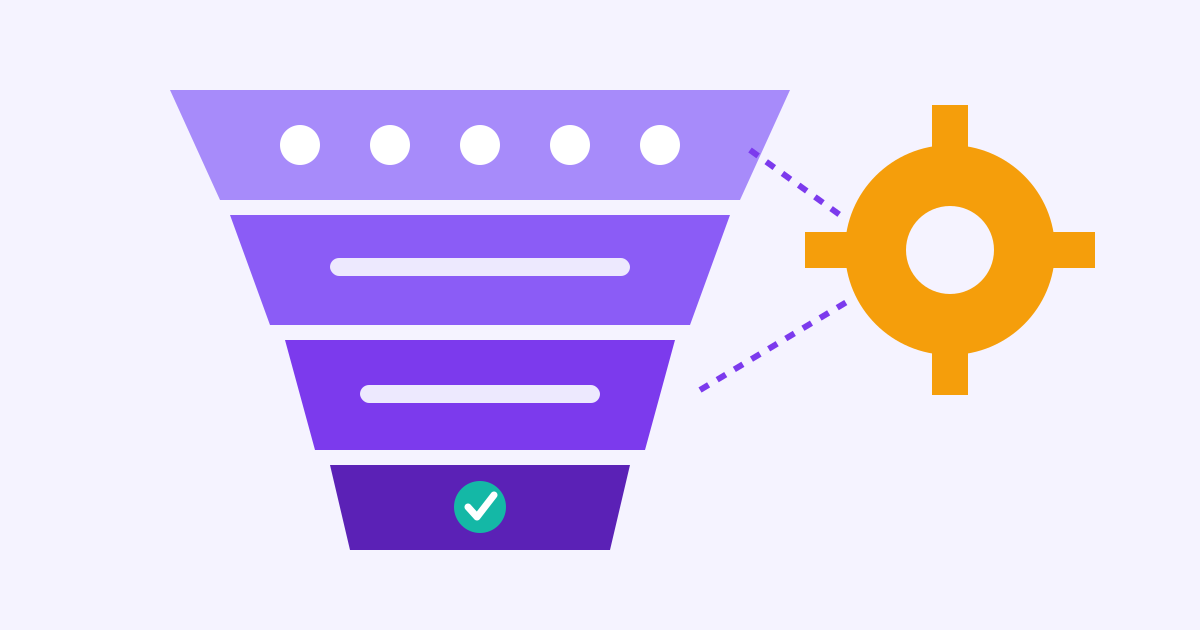
It is a planned path with automatic steps. A funnel has stages, for example awareness, interest, consideration, decision and customer. At each stage, a person needs different information. Automation sends it, whether that is a helpful guide after a first visit, a case study to someone comparing options or a booking link to someone who has returned several times. It also moves people from one stage to the next based on what they do and tells your team when action is needed. For the follow-up inside the funnel, read our guide to AI lead nurturing.
Why Do Funnels Leak?
Most funnels leak because stages are assumed rather than defined and follow-up depends on memory. Common causes include:
- Nobody agrees on what moves a person from one stage to the next.
- Every visitor sees the same offer, whatever stage they are in.
- Leads are captured, but the first reply is slow.
- Quotes and proposals go out and are never followed up.
- No one measures conversion between stages, so the biggest leak stays hidden. Our article on common AI marketing automation mistakes describes similar issues.
How Can a Business Build Marketing Funnel Automation? 5 Steps
1. Define Stages and Exit Criteria
Write down what each stage means. For each stage, state who is in it, what they want to know and what action shows they are ready to move on, such as downloading a guide, requesting a quote or booking a call. Keep the number of stages small, usually four or five. These definitions become the rules for automation.
2. Match Content and Offers to Each Stage
Give people what they need now. At the awareness stage, offer useful articles and answers. At interest, offer a guide or checklist in exchange for contact details. At consideration, share examples, comparisons and honest pricing guidance. At decision, make it easy to book or buy and answer last doubts. Our guide to which automated emails to set up first shows how to build the messages.
3. Automate Stage Moves and Triggers
Let behavior move people forward. Set rules in your customer record, such as tagging someone as interested after a guide download and as ready after a pricing page visit and a reply. Trigger the right message and alert a person when someone reaches the decision stage. A marketing automation service can build and test these rules.
4. Find and Plug the Biggest Leaks
Look for the stage where people disappear. Measure how many people move between each pair of stages and how long they wait. If most are lost between inquiry and first reply, fix response speed. If they are lost after the quote, add a follow-up sequence. See our guide to automated lead follow-up for practical fixes.
5. Review Every Month
Keep the funnel tuned. Each month, check leads entering, conversion between stages, time in each stage and customers won, and test one change at a time. Retire content that does not help. Use the approach in AI marketing analytics and campaign automation to keep the review simple.
| Area | Common weakness | Stronger approach |
|---|---|---|
| Stages | Assumed, unwritten | Four or five stages with clear exit criteria |
| Content | Same offer for everyone | Content and offers matched to each stage |
| Triggers | Follow-up depends on memory | Behavior-based moves and instant alerts |
| Leaks | Unknown | Conversion and wait time measured between stages |
| Review | Set and forget | Monthly review and one test at a time |
How Many More Leads Can Reach a Booking? A Sample Graph
In this illustrative example for a service business, the share of leads that reach a booked consultation rises from 12% to 30%. The bars run from top to bottom in the same order as the table below, and each block (█) equals 2 percentage points.
| Stage | Leads that reach a booked consultation | Bar chart |
|---|---|---|
| Unplanned follow-up | 12% | ██████ |
| Plus defined stages and stage-based content | 18% | █████████ |
| Plus automated triggers and alerts | 24% | ████████████ |
| Plus leak fixes and monthly review | 30% | ███████████████ |
What Should You Measure?
Four measures show whether the funnel works.
- Leads entering the funnel by source.
- Conversion from each stage to the next.
- Time spent in each stage, especially before the first reply and after a quote.
- Customers won and cost per customer.
What Rules Should You Follow?
A funnel handles personal data and sends many messages.
- Get consent before marketing texts or automated calls, follow the TCPA and CAN-SPAM, and honor opt-outs in every tool.
- Collect only the data you need, explain how it is used and follow applicable privacy laws, including state laws.
- Make sure content and offers are truthful, and do not use fake urgency, invented testimonials or misleading comparisons.
- Follow platform rules for ads and audience data, and do not share customer data in ways people would not expect.
- Give people an easy way to reach a person, and do not promise outcomes in funnel messages.
Methodology and Limitations
The numbers in this article come from an illustrative model created by Nova Reach Digital to show how each step may affect the share of leads that reach a booking. They are not drawn from a published study or a specific client, and no one can guarantee results. Outcomes depend on your offer, price, sales cycle, audience and how quickly your team follows up. This article is general information and not legal, financial or professional advice.
Related Reading
- How digital marketing automation connects ads, email and follow-up
- How customer engagement automation keeps customers coming back
- Which lead generation tasks you can automate
Conclusion
Marketing funnel automation works when stages are defined, content fits each stage, triggers move people forward and the biggest leak is fixed first. Define your stages, match your content, automate the moves, plug the leaks and review the numbers every month. If you want help with marketing funnel automation, contact Nova Reach Digital or read more about our marketing automation services.
Get Directions
Frequently Asked Questions
Keep reading
How Does Review Request Automation Help a Small Business Get More Honest Customer Reviews? Reading the Request Timing, the Five Steps and the Sample Reviews Per Month
A question-and-answer guide to review request automation in the United States: when to ask customers, why review efforts fail, 5 steps to set it up, a weak vs stronger table, a sample reviews-per-month chart, honesty rules and FAQs.
How Does AI Lead Scoring Help a Small Sales Team Call the Right People First? Reading the Score Rules, the Five Steps and the Sample Response Time
A question-and-answer guide to AI lead scoring in the United States: how it helps a small sales team call the right people first, why scores go wrong, 5 steps to build one, a weak vs stronger table, a sample response-time chart, rules and FAQs.
How Can Customer Engagement Automation Keep Customers Coming Back Without Feeling Spammy? Reading the Touchpoint Map, the Five Steps and the Sample Repeat Visits
A question-and-answer guide to customer engagement automation in the United States: how to keep customers coming back without feeling spammy, which touchpoints to build first, 5 steps to start, a weak vs stronger table, a sample repeat-visit chart, rules and FAQs.
Put These Ideas to Work with NovaReach
Automate your marketing, launch AI voice agents, and keep every lead moving, all from one dashboard.