How Can Customer Engagement Automation Keep Customers Coming Back Without Feeling Spammy? Reading the Touchpoint Map, the Five Steps and the Sample Repeat Visits
A question-and-answer guide to customer engagement automation in the United States: how to keep customers coming back without feeling spammy, which touchpoints to build first, 5 steps to start, a weak vs stronger table, a sample repeat-visit chart, rules and FAQs.
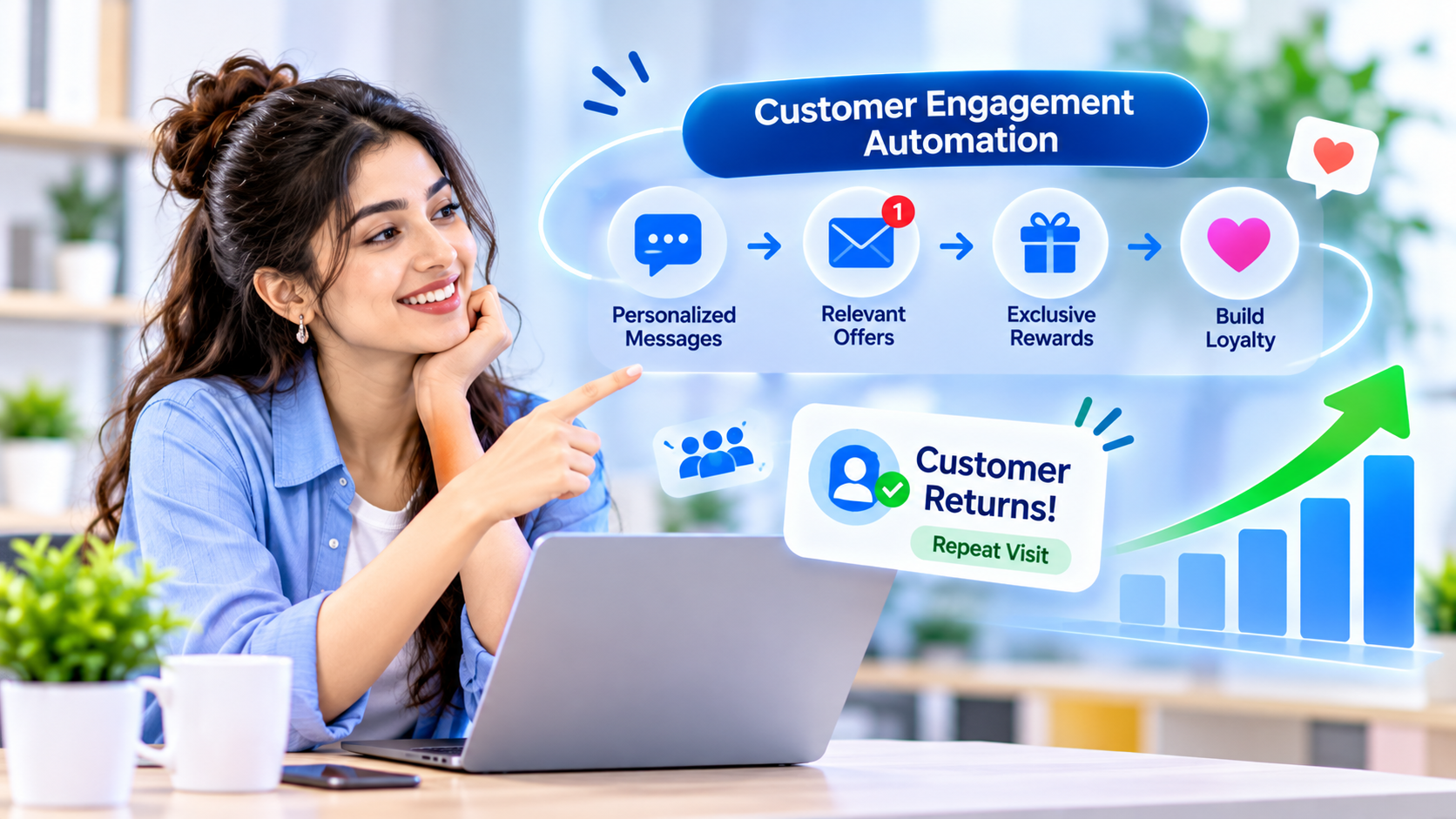
Customer engagement automation is the practice of using software and AI to stay in touch with existing customers at the right moments, such as after a purchase, before a renewal, when a review would help or when a customer has gone quiet, so that relationships continue without constant manual effort. In the United States, many small businesses spend heavily to win a customer once and then lose touch, even though repeat customers are often easier and cheaper to keep than new ones are to find. This guide explains, in a question-and-answer format, how customer engagement automation can keep customers coming back without feeling spammy, which touchpoints to build first and how to start in five steps, with a sample repeat-visit result and a checklist of rules. It makes no promise of specific results.
Key Findings
- 5 steps build respectful engagement: map the customer lifecycle, choose a few high-value touchpoints, personalize with consent, set frequency limits and keep humans on replies, and measure and adjust every month.
- In the illustrative model below, repeat visits per 100 customers each quarter rise from 20 to 44 when all five steps are in place.
- Timely, relevant messages after the first purchase give the largest share of the gain in the sample, because that is when many businesses go silent.
- 4 numbers are enough to judge engagement: repeat customers, response to messages, review rate and opt-out rate.
- All figures in this article are illustrative examples, not guaranteed results.
What Is Customer Engagement Automation?
It is a set of planned, triggered contacts that follow the customer after they buy. Examples include a thank-you message, a check-in after a service, a reminder when a repeat purchase or appointment is due, a request for a review, a birthday or anniversary note and a gentle win-back message after months of silence. Messages can go by email, text, app or chat, according to what the customer prefers. AI can help draft messages, choose timing and flag customers who may be about to leave. For how engagement begins before the sale, read our guide to AI lead nurturing.
Why Does Automated Engagement Sometimes Feel Spammy?
It feels spammy when the business talks more than it helps. Common causes include:
- Every customer gets the same promotions, whatever they bought or care about.
- Messages arrive too often or at odd times.
- Customers are asked for reviews or offered discounts for things they already did.
- Replies go to a no-reply address, so a customer with a problem hits a wall.
- No one checks opt-outs and complaints, so the same people keep getting messages. Our article on common AI marketing automation mistakes describes similar issues.
How Can a Business Build Customer Engagement Automation? 5 Steps
1. Map the Customer Lifecycle
Draw what happens after the sale. List the moments in a customer's life with you, such as first purchase, first use, follow-up service, renewal or repeat purchase and long silence. Note where customers usually drop off. This map shows where a message would be welcome and where it would be intrusive.
2. Choose a Few High-Value Touchpoints
Start with three to five. Good first touchpoints are a thank-you and next-steps message right after purchase, a check-in a few days later, a review request after a good experience, a reminder when something is due and a win-back message for customers who have gone quiet. Keep each message short and useful. Our guide to which automated emails to set up first shows how to build these flows.
3. Personalize With Consent
Use what customers have told you. Ask for preferences, such as interests and how they like to be contacted, and use them to choose content and channel. Let customers update their choices easily. AI can help tailor wording and timing, but review the output for accuracy and tone. A marketing automation service can connect these messages to your customer record.
4. Set Frequency Limits and Keep Humans on Replies
Protect the relationship. Cap how many messages one customer can receive in a week or month across all flows, and pause promotions when a customer has an open problem. Make sure replies reach a person, and have someone answer complaints and questions quickly.
5. Measure and Adjust Every Month
Treat engagement as a conversation. Each month, review repeat customers, response rates, review rates, opt-outs and complaints, and change or remove messages that do not help. Use the approach in AI marketing analytics and campaign automation to keep the review simple.
| Area | Common weakness | Stronger approach |
|---|---|---|
| Timing | Silence after the sale | Thank-you, check-in, reminder and review request at set moments |
| Content | Same promotion for everyone | Messages shaped by purchase and stated preferences |
| Consent | Assumed permission | Clear opt-in, preference center and easy opt-out |
| Frequency | Several flows at once | Cap across all flows, pause when a problem is open |
| Replies | No-reply address | Replies reach a person who answers quickly |
How Many More Customers Can Return? A Sample Graph
In this illustrative example for a local service business, repeat visits per 100 customers each quarter rise from 20 to 44. The bars run from top to bottom in the same order as the table below, and each block (█) equals 2 visits.
| Stage | Repeat visits per 100 customers per quarter | Bar chart |
|---|---|---|
| No structured contact after the first visit | 20 | ██████████ |
| Plus thank-you and check-in messages | 28 | ██████████████ |
| Plus reminders and personalized offers | 36 | ██████████████████ |
| Plus frequency limits, human replies and monthly review | 44 | ██████████████████████ |
What Should You Measure?
Four measures show whether engagement is working.
- Repeat customers or repeat visits compared with your baseline.
- Response rate to messages, such as replies, bookings and clicks.
- Review rate and average rating from engaged customers.
- Opt-out and complaint rates, which warn you about frequency and relevance.
What Rules Should You Follow?
Staying in touch requires permission and care.
- Get consent before marketing texts and calls, follow the TCPA, follow CAN-SPAM for email and honor opt-outs across every tool.
- Collect only the preference data you need, explain how it is used and follow applicable privacy laws, including rights to access and delete data.
- Ask for reviews honestly, never offer rewards only for positive reviews and follow the Federal Trade Commission's rules on reviews and endorsements.
- Review AI-written messages for accuracy, and do not invent urgency, scarcity or offers.
- Give customers an easy way to reach a person, and treat complaints seriously.
Methodology and Limitations
The numbers in this article come from an illustrative model created by Nova Reach Digital to show how each step may affect repeat visits. They are not drawn from a published study or a specific client, and no one can guarantee results. Outcomes depend on your product or service, price, how often customers naturally return and how well the messages are designed. This article is general information and not legal, financial or professional advice.
Related Reading
- Do AI-powered marketing solutions deliver value beyond the hype?
- How appointment booking automation reduces no-shows
- How AI keeps your CRM updated without manual data entry
Conclusion
Customer engagement automation works when it helps customers at the right moment, respects their preferences and leaves room for a real reply. Map the lifecycle, choose a few touchpoints, personalize with consent, set frequency limits and review the numbers every month. If you want help with customer engagement automation, contact Nova Reach Digital or read more about our marketing automation services.
Get Directions
Frequently Asked Questions
Keep reading
How Does Review Request Automation Help a Small Business Get More Honest Customer Reviews? Reading the Request Timing, the Five Steps and the Sample Reviews Per Month
A question-and-answer guide to review request automation in the United States: when to ask customers, why review efforts fail, 5 steps to set it up, a weak vs stronger table, a sample reviews-per-month chart, honesty rules and FAQs.
How Does AI Lead Scoring Help a Small Sales Team Call the Right People First? Reading the Score Rules, the Five Steps and the Sample Response Time
A question-and-answer guide to AI lead scoring in the United States: how it helps a small sales team call the right people first, why scores go wrong, 5 steps to build one, a weak vs stronger table, a sample response-time chart, rules and FAQs.
How Do You Build Marketing Funnel Automation That Moves Leads From Awareness to Purchase? Reading the Funnel Stages, the Five Steps and the Sample Stage Conversion
A question-and-answer guide to marketing funnel automation in the United States: how to move leads from awareness to purchase, why funnels leak, 5 steps to build one, a weak vs stronger table, a sample stage-conversion chart, rules and FAQs.
Put These Ideas to Work with NovaReach
Automate your marketing, launch AI voice agents, and keep every lead moving, all from one dashboard.