What Should a Business Know Before Investing in AI Chatbot Development? Reading the Build Options, the Five Steps and the Sample Lead Capture
A question-and-answer guide to AI chatbot development for businesses in the United States: what to know before investing, why projects disappoint, 5 steps to build, a weak vs stronger table, a sample lead-capture chart, rules and FAQs.
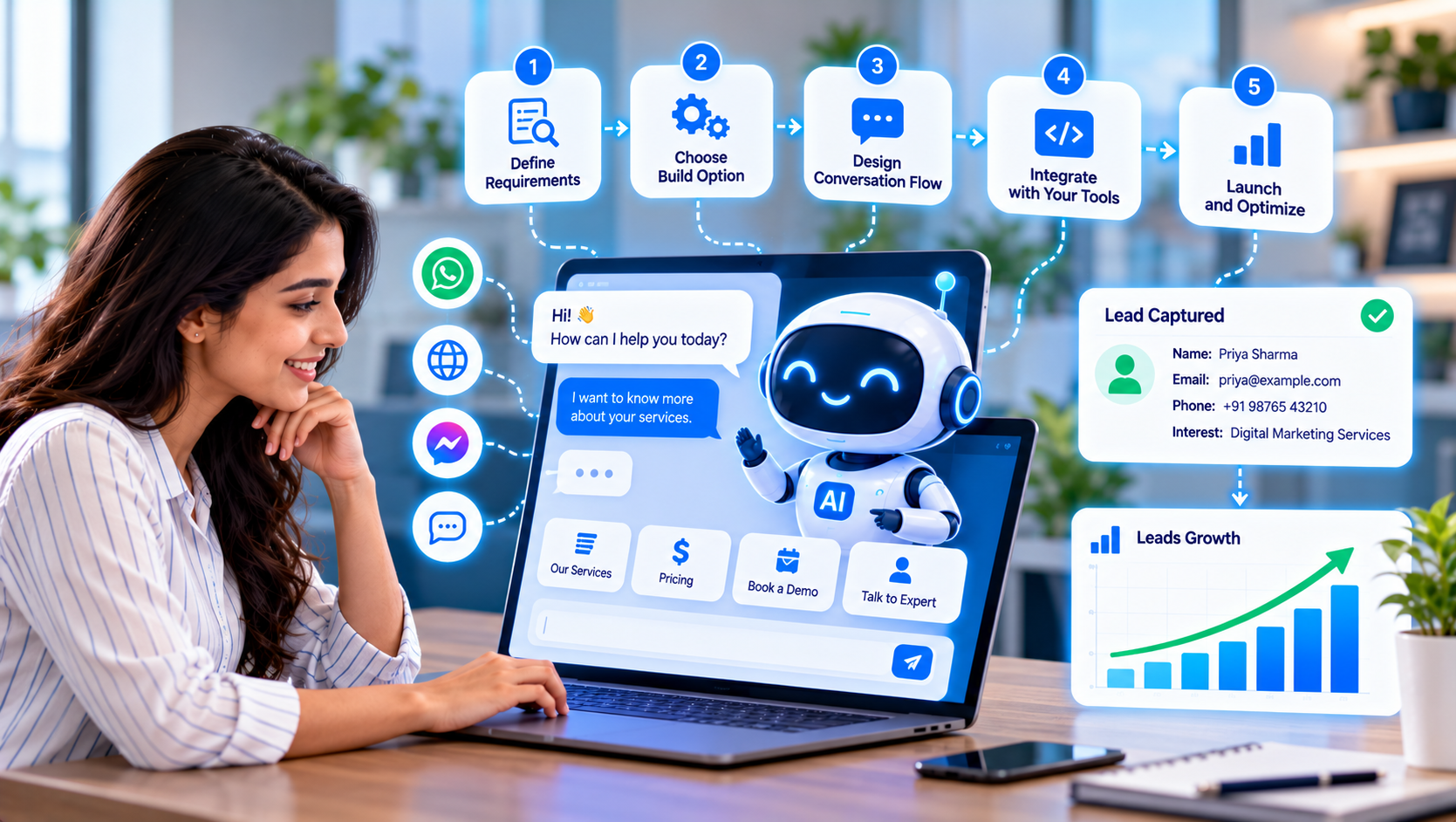
AI chatbot development for businesses is the process of designing, building, connecting and maintaining a chat assistant that uses artificial intelligence to answer questions, capture leads, book appointments or guide customers on a website, in messaging apps or in an app. In the United States, businesses can choose between ready-made chatbot tools, no-code builders and fully custom builds, and the right choice depends on what the chatbot is supposed to do. This guide explains, in a question-and-answer format, what a business should know before investing in AI chatbot development, how to pick a build approach and how to start in five steps, with a sample lead-capture result and a checklist of rules. It makes no promise of specific results.
Key Findings
- 5 steps reduce wasted spend: define one job for the chatbot, choose a build approach, prepare approved content and integrations, test and add a human hand-off and guardrails, and launch small and review.
- In the illustrative model below, the share of chat conversations that capture a lead or booking rises from 8% to 26% when all five steps are in place.
- A single, clear job gives a large share of the gain in the sample, because focused chatbots give better answers and are easier to test.
- 4 numbers are enough to judge a chatbot: conversations handled, leads or bookings captured, escalations and customer satisfaction.
- All figures in this article are illustrative examples, not guaranteed results.
What Is AI Chatbot Development?
It is the work of turning a chat idea into a reliable assistant. That includes deciding what the chatbot should and should not do, preparing the information it answers from, choosing a platform or building custom software, connecting it to your calendar, customer record and email, designing the conversation and hand-off, testing and maintaining it. Modern chatbots use large language models to understand free-text questions, but they work best when limited to your approved information. For the support-focused view, read our guide to AI customer support automation.
Why Do Some Chatbot Projects Disappoint?
Most disappoint because the chatbot was built to impress rather than to do a job. Common causes include:
- The goal is vague, such as "have a chatbot," so nobody can say whether it works.
- The chatbot is allowed to answer anything, so it makes things up.
- It is not connected to a calendar or customer record, so it can chat but cannot help.
- There is no easy way to reach a person.
- No one owns it after launch, so answers go out of date. Our article on common AI automation mistakes describes similar issues.
How Can a Business Approach AI Chatbot Development? 5 Steps
1. Define One Job for the Chatbot
Choose the single most valuable task. Examples are answering pricing and hours questions, qualifying new inquiries, booking consultations or collecting details before a call. Write the goal as a number, such as "book more consultations from the website." A chatbot with one job is easier to build, test and improve.
2. Choose a Build Approach
Match the approach to your needs and skills. Ready-made chatbot tools are fastest and cheapest for common jobs. No-code builders offer more control over conversation and integrations. Custom development makes sense when you need unusual integrations, strict data control or a product feature built around chat. Ask what you must own, what data leaves your systems and what happens if you change vendors.
3. Prepare Approved Content and Integrations
Give the chatbot good material and useful connections. Write the answers it should use, such as services, prices, areas, policies and frequently asked questions, and connect it to your calendar, customer record and notification tools so it can book and hand off. Our guide to lead generation automation shows how captured leads should be routed.
4. Test, Add a Human Hand-Off and Guardrails
Make it safe before it is public. Test with real past questions and try to break it with odd or hostile ones. Limit it to topics you approve, forbid promises about prices, timelines or outcomes you cannot back up and always offer a way to reach a person. A marketing automation service can handle the follow-up when a chat becomes a lead.
5. Launch Small and Review
Start on one page or channel. Launch where the chatbot's job matters most, read conversations daily at first and weekly later, and fix gaps. Track conversations handled, leads captured and escalations. See AI marketing analytics and campaign automation for a simple review routine.
| Area | Common weakness | Stronger approach |
|---|---|---|
| Goal | "We need a chatbot" | One job measured by leads, bookings or answers |
| Build | Custom build when a tool would do | Tool, no-code or custom chosen by need and data control |
| Knowledge | Answers anything, guesses often | Approved content and limited topics |
| Integration | Chat with no connection to calendar or CRM | Booking and hand-off connected |
| Upkeep | Launch and forget | Owner, regular review and updated answers |
How Many More Leads Can a Chatbot Capture? A Sample Graph
In this illustrative example for a service business website, the share of chat conversations that capture a lead or booking rises from 8% to 26%. The bars run from top to bottom in the same order as the table below, and each block (█) equals 2 percentage points.
| Stage | Conversations that capture a lead or booking | Bar chart |
|---|---|---|
| Generic chat widget with no clear job | 8% | ████ |
| Plus one defined job and approved content | 14% | ███████ |
| Plus calendar and CRM integration | 20% | ██████████ |
| Plus testing, hand-off and weekly review | 26% | █████████████ |
What Should You Measure?
Four measures show whether the chatbot is worth keeping.
- Conversations handled and how many end with a helpful answer.
- Leads or bookings captured, and their quality.
- Escalations to a person and how quickly they are answered.
- Customer feedback and the total monthly cost of the chatbot.
What Rules Should You Follow?
A chatbot speaks for your business and handles personal data.
- Tell people they are talking to an automated assistant where laws or good practice require it, as some states do, and offer a way to reach a person.
- Collect only the data you need, explain how it is used and follow privacy laws that apply to your business, including state laws and, where relevant, HIPAA.
- Check the vendor's security, data storage and whether conversations are used to train models, and keep the right to export and delete your data.
- Get consent before marketing texts or automated calls that follow a chat, and honor opt-outs.
- Do not let the chatbot give legal, medical or financial advice or make promises your business cannot keep.
Methodology and Limitations
The numbers in this article come from an illustrative model created by Nova Reach Digital to show how each step may affect lead capture. They are not drawn from a published study or a specific client, and no one can guarantee results. Outcomes depend on your traffic, offer, content quality and how well the chatbot is maintained. This article is general information and not legal, financial or professional advice.
Related Reading
- How AI workflow automation handles messy tasks
- How AI lead generation finds customers who are ready to buy
- What to expect from an AI automation agency before you sign
Conclusion
AI chatbot development pays off when the chatbot has one clear job, answers from approved content, connects to your tools and hands off to people. Define the job, choose the approach, prepare the content, test with guardrails and review the conversations. If you want help with an AI chatbot, contact Nova Reach Digital or read more about our automation services.
Get Directions
Frequently Asked Questions
Keep reading
How Does Review Request Automation Help a Small Business Get More Honest Customer Reviews? Reading the Request Timing, the Five Steps and the Sample Reviews Per Month
A question-and-answer guide to review request automation in the United States: when to ask customers, why review efforts fail, 5 steps to set it up, a weak vs stronger table, a sample reviews-per-month chart, honesty rules and FAQs.
How Does AI Lead Scoring Help a Small Sales Team Call the Right People First? Reading the Score Rules, the Five Steps and the Sample Response Time
A question-and-answer guide to AI lead scoring in the United States: how it helps a small sales team call the right people first, why scores go wrong, 5 steps to build one, a weak vs stronger table, a sample response-time chart, rules and FAQs.
How Do You Build Marketing Funnel Automation That Moves Leads From Awareness to Purchase? Reading the Funnel Stages, the Five Steps and the Sample Stage Conversion
A question-and-answer guide to marketing funnel automation in the United States: how to move leads from awareness to purchase, why funnels leak, 5 steps to build one, a weak vs stronger table, a sample stage-conversion chart, rules and FAQs.
Put These Ideas to Work with NovaReach
Automate your marketing, launch AI voice agents, and keep every lead moving, all from one dashboard.