Hospital SEO Services for Competitive Markets for Healthcare Startups
How healthcare startups use hospital SEO services in competitive markets: build trust signals, focus on priority services, earn local visibility and measure results on a startup budget while staying compliant.
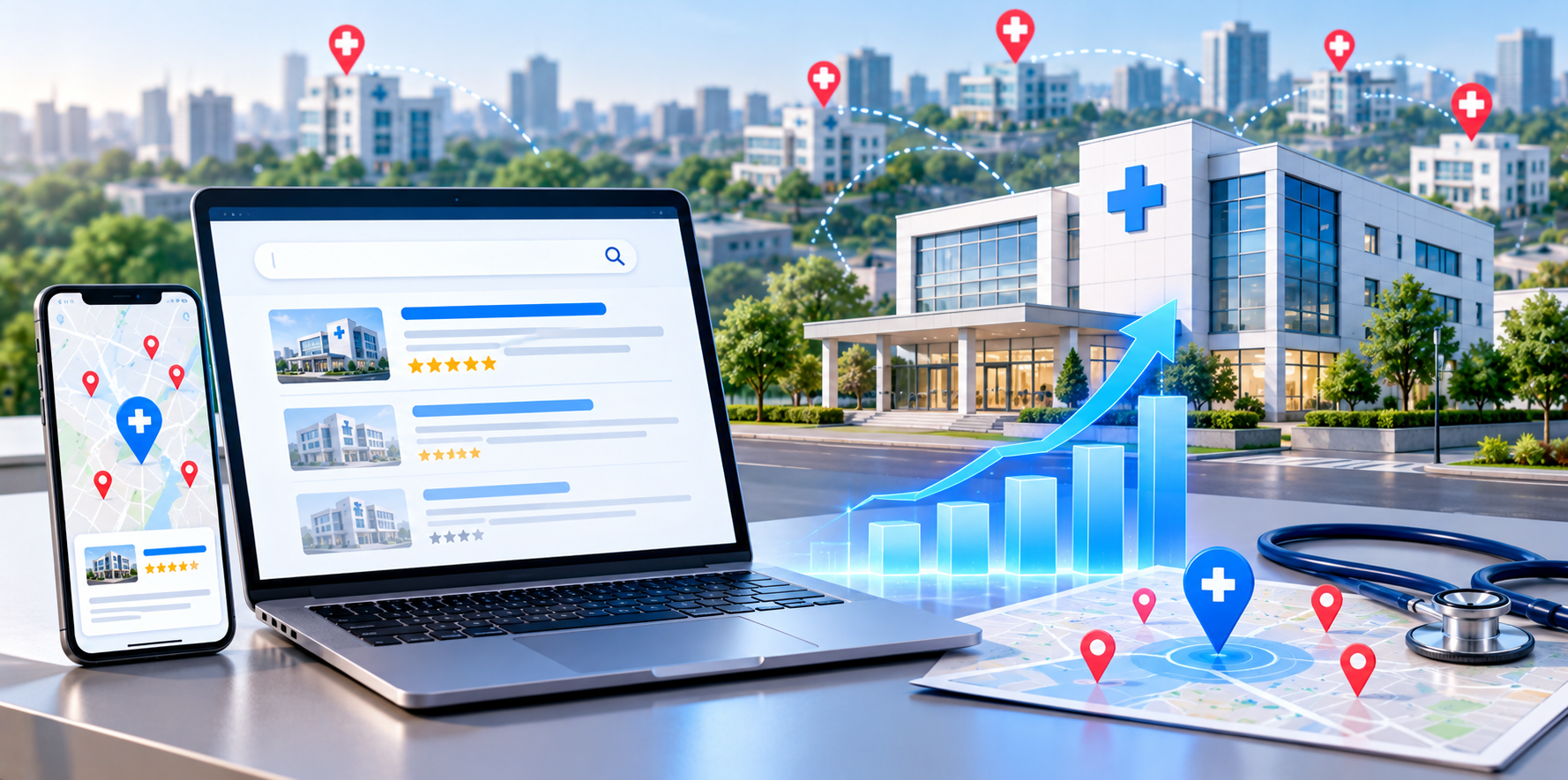
A healthcare startup entering a competitive market faces an uphill search landscape. Established health systems, national directories and medical publishers have spent years building authority, while a new clinic, digital health company or independent hospital group has a new domain, a small team and a limited budget. Patients and referral partners still search carefully before they trust a new provider with their health. Hospital SEO services help a younger organization appear clearly and credibly when people look for care.
This guide explains how healthcare startups can use hospital SEO services to compete: what to prioritize, how to build trust, how to evaluate a provider and how to keep content accurate and compliant. It is written for healthcare organizations in the USA. For a broader planning view, see our guide to healthcare SEO strategy for hospitals and healthcare startups.
What Are Hospital SEO Services?
Hospital SEO services are specialized search optimization activities designed for hospitals and healthcare organizations. They typically include technical website improvements, service line and location pages, local listing management, clinician-reviewed content, review and reputation support, and reporting tied to appointments and inquiries rather than rankings alone.
Why Competitive Markets Are Hard for Healthcare Startups
- Low authority: A new domain has few backlinks and little search history.
- Brand gap: Patients often recognize established systems first.
- Limited resources: Clinician time, content capacity and budget are tight.
- New care models: Patients may not yet search for your model by name.
- Pressure for fast results: SEO compounds over months, but investors and leaders want early signals.
Where Healthcare Startups Can Win
1. Pick a Narrow Starting Focus
Choose a small set of services and locations where you have real capacity and a clear point of difference. Depth on a few topics beats thin coverage of many. Larger organizations covering many service lines, like the ones described in our guide for small hospitals, use the same focus-first principle.
2. Build a Clean Technical Foundation
Make sure the site is secure, fast on mobile, easy to crawl and accessible. Clean URLs, logical navigation and sitemaps prevent problems as the site grows.
3. Create Specific Service and Location Pages
Explain what you treat, who it helps, what to expect, insurance information and how to book. Specific pages that describe your actual care model stand out against generic competitor copy.
4. Show Trust and Expertise Early
Add clinician profiles with credentials, medical review dates, clear editorial standards and accurate contact details. New organizations need to make it obvious who is behind the care.
5. Claim Local Visibility
Complete your Google Business Profile, keep listings consistent and encourage honest reviews. Local signals are often the fastest route to visibility for a new provider. Our local SEO guide for hospitals, clinics and healthcare practices covers the basics in detail, and our article on healthcare reputation management explains how to handle reviews while protecting privacy.
6. Publish Clinician-Reviewed Education
Answer common patient questions in plain language and show reviewer credentials and dates. A smaller library of accurate, maintained content builds more trust than a large library of unreviewed pages.
7. Earn Credible Mentions
Partnerships with universities, community organizations, professional associations and local media can lead to relevant links. Quality and relevance matter more than volume.
8. Prepare for AI Search
Clear answers and well-structured pages make it easier for AI-powered search experiences to understand your content. Read more in our guide to healthcare AI Overviews.
Where AI Can Help a Startup Team
- Keyword and topic research grouped by service and patient intent.
- Outlines and first drafts that clinicians and editors review.
- Technical monitoring for broken pages, slow load times and indexing issues.
- Review summaries that highlight common themes.
- Report drafting that saves hours each month.
AI supports your team but should never replace clinical review of medical statements.
How to Evaluate Hospital SEO Services
- Look for healthcare experience. Ask for examples with hospitals, clinics or digital health companies.
- Ask about priorities. A good partner recommends a focused plan that fits a startup budget.
- Review compliance practices. Ask how tracking, forms and advertising are handled.
- Check reporting. You should see appointments, calls and inquiries, not only rankings.
- Understand workload. Clarify what is needed from your clinicians and staff.
- Confirm ownership. Your content, accounts and data should remain yours.
Roadmap for a Healthcare Startup
- Weeks 1 to 4: Audit the site, listings and competitors and choose priority services and locations.
- Weeks 5 to 10: Fix technical issues, publish core service pages and complete local profiles.
- Weeks 11 to 20: Launch clinician-reviewed content and build reviews and credible mentions.
- Ongoing: Review results monthly and expand to new services and locations.
To connect search with the rest of your patient journey, see our complete guide to healthcare patient acquisition.
Privacy, Compliance and Ethics
- Review tracking tools on appointment and portal pages with your compliance team.
- Avoid sending protected health information to marketing platforms without safeguards and agreements.
- Do not make unsupported claims about outcomes or quality rankings.
- Keep medical content accurate, dated and clinician-reviewed.
Our HIPAA-conscious marketing guide covers these topics in more depth. This is general information, not legal advice.
Metrics to Track
- Calls, direction requests and profile views from local listings.
- Appointment requests from organic search.
- Visibility for priority services and target locations.
- Review rating, volume and response time.
Common Mistakes
- Trying to rank for everything. Focus beats breadth for small teams.
- Publishing unreviewed medical content. Accuracy builds trust and protects patients.
- Ignoring local listings. Incorrect hours or phone numbers lose patients.
- Expecting instant results. Plan for months, not weeks.
Final Thoughts
Healthcare startups do not need to outspend established systems to be found. With focused hospital SEO services, strong local presence and accurate, helpful content, a new provider can earn patient trust where it counts. If you would like help planning hospital SEO services for your healthcare startup, Nova Reach Digital can help you design, launch and optimize them.
Frequently Asked Questions
Keep reading
What Are the Top Email Marketing Automation Tools for Small Businesses? Reading the Tool Comparison, the Five Steps and the Sample Email Bookings
A question-and-answer guide to choosing among the top email marketing automation tools for small businesses: what they do, why programs underperform, 5 steps, a weak vs stronger table, a sample bookings chart, rules and FAQs.
What Are the Top Social Media Automation Tools for Small Businesses? Reading the Tool Comparison, the Five Steps and the Sample Posting Time
A question-and-answer guide to choosing among the top social media automation tools for small businesses: what to automate, why accounts feel robotic, 5 steps, a weak vs stronger table, a sample time-savings chart, rules and FAQs.
How Do You Choose Among the Top Digital Marketing Agencies in NYC? Reading the Agency Types, the Five Steps and the Sample Cost Per Customer
A question-and-answer guide to choosing among the top digital marketing agencies in NYC: what agencies do, why businesses switch, 5 steps to choose, an agency-types table, a sample cost-per-customer chart, rules and FAQs.
Put These Ideas to Work with NovaReach
Automate your marketing, launch AI voice agents, and keep every lead moving, all from one dashboard.